Department of Plant Pathology, North Dakota State University, Fargo, North Dakota, United States of America.
USDA-APHIS, Riverdale, Maryland, United States of America.
PLoS One. 2020 Mar 11;15(3):e0229844. doi: 10.1371/journal.pone.0229844. eCollection 2020.
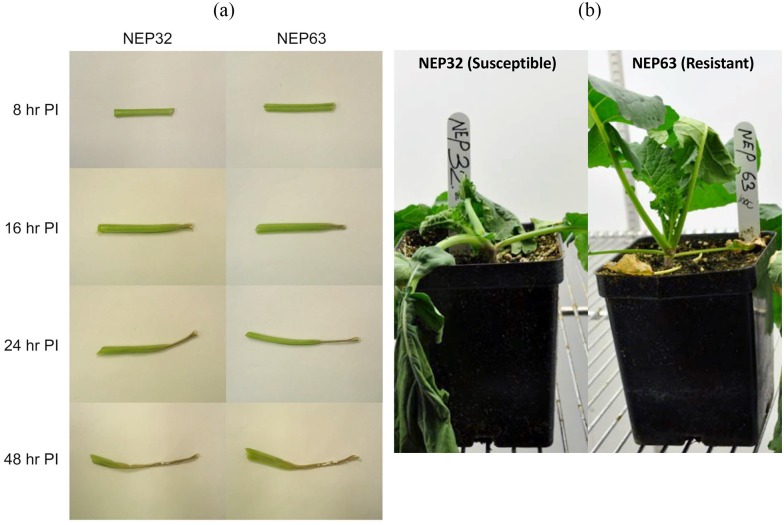
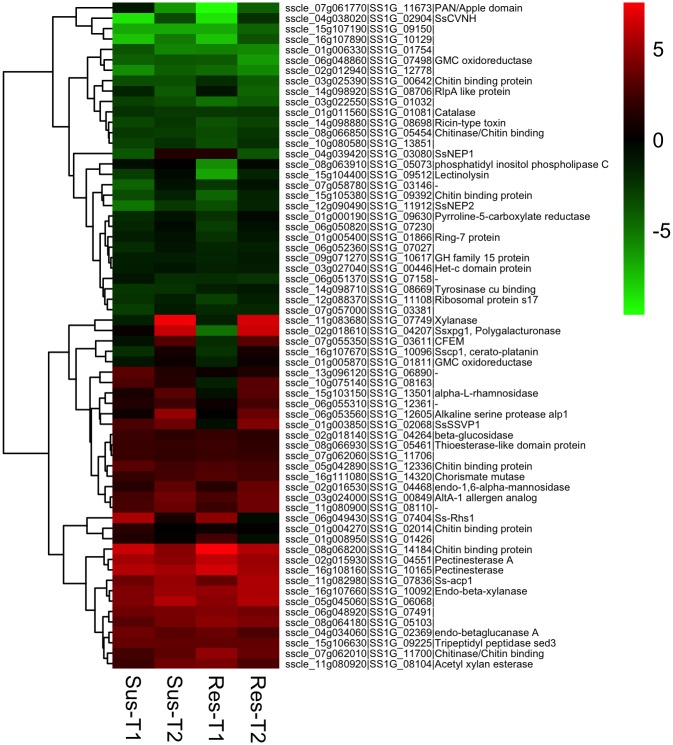
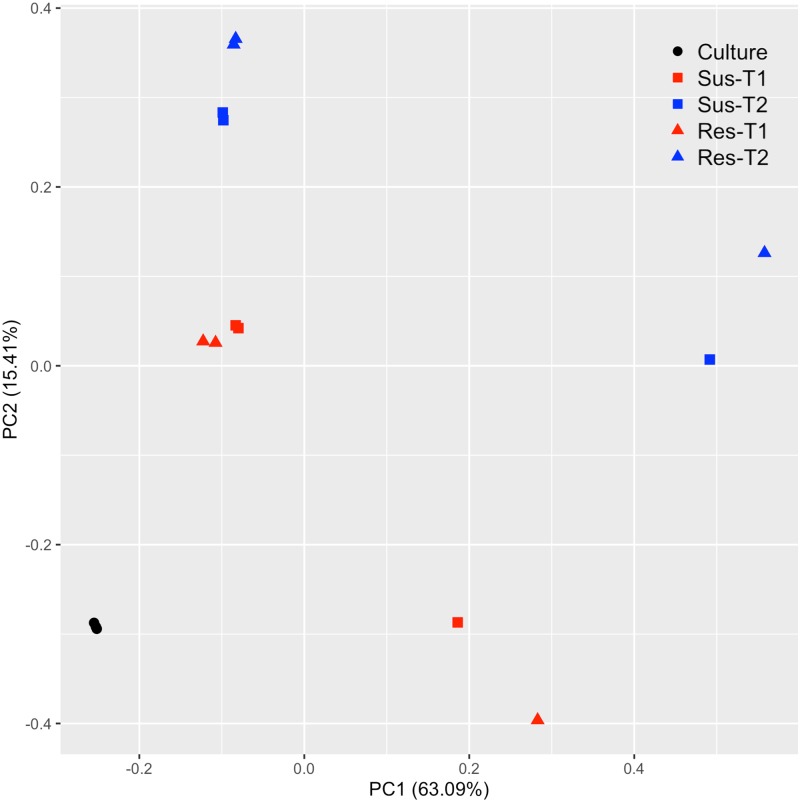
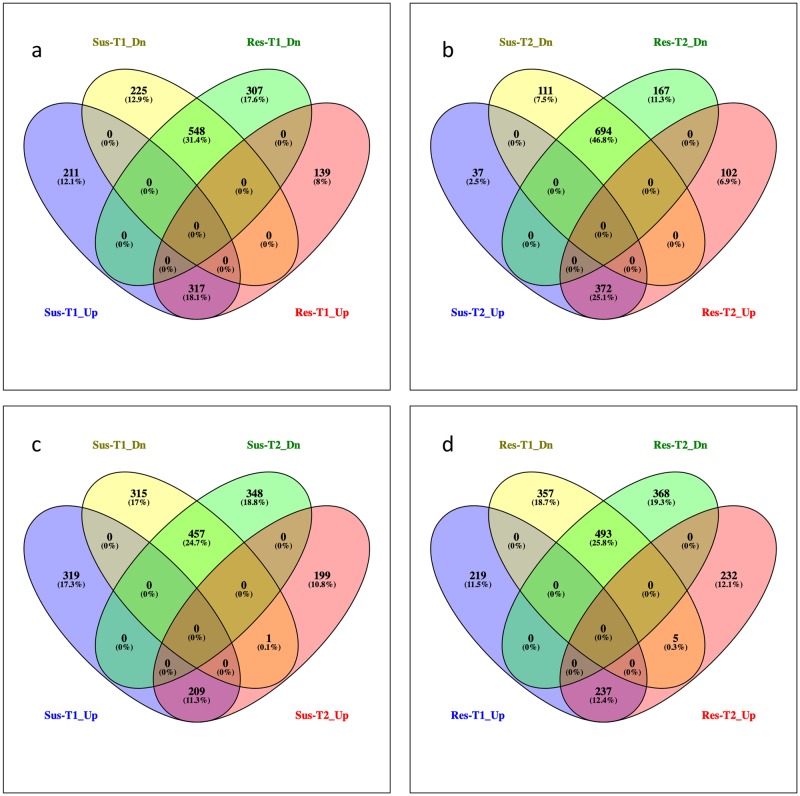
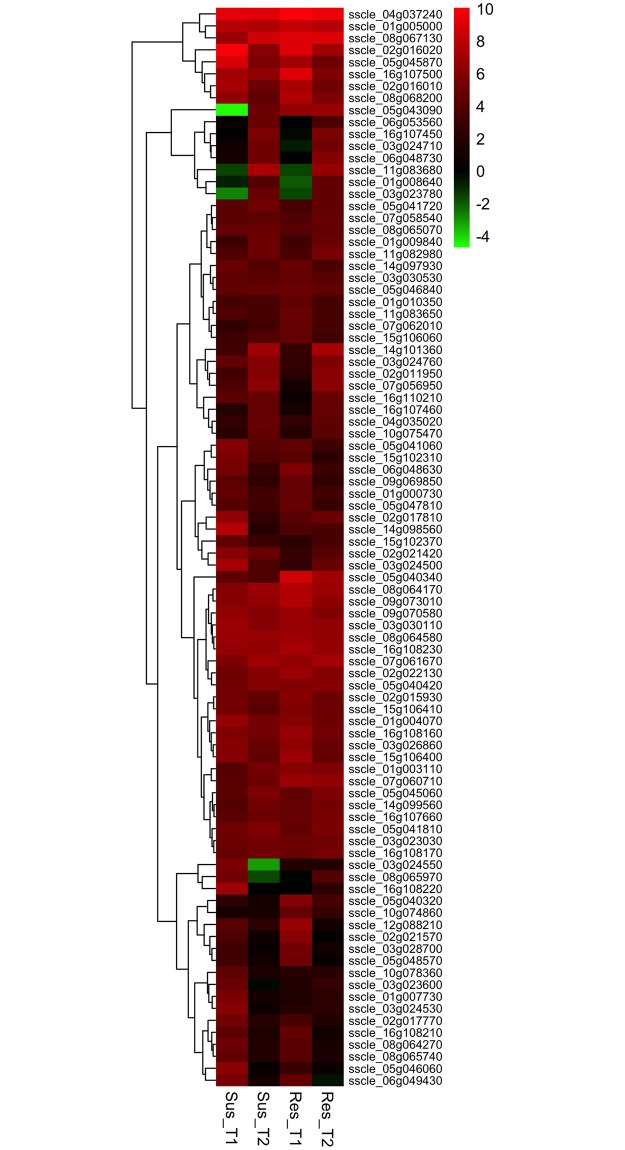
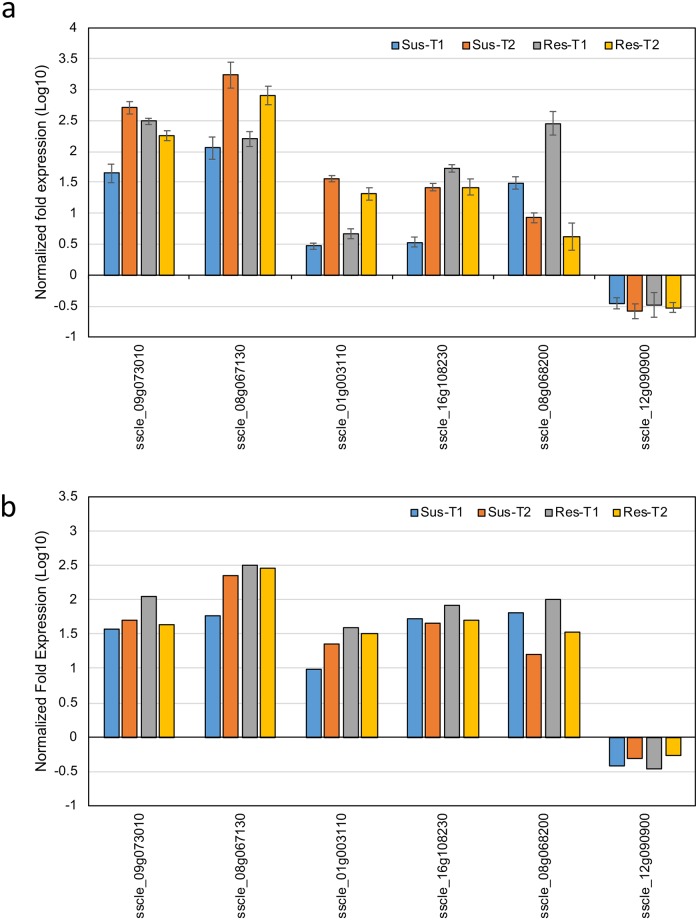
Sclerotinia stem rot is an economically important disease of canola (Brassica napus) and is caused by the fungal pathogen Sclerotinia sclerotiorum. This study evaluated the differential gene expression patterns of S. sclerotiorum during disease development on two canola lines differing in susceptibility to this pathogen. Sequencing of the mRNA libraries derived from inoculated petioles and mycelium grown on liquid medium generated approximately 164 million Illumina reads, including 95 million 75-bp-single reads, and 69 million 50-bp-paired end reads. Overall, 36% of the quality filter-passed reads were mapped to the S. sclerotiorum reference genome. On the susceptible line, 1301 and 1214 S. sclerotiorum genes were differentially expressed at early (8-16 hours post inoculation (hpi)) and late (24-48 hpi) infection stages, respectively, while on the resistant line, 1311 and 1335 genes were differentially expressed at these stages, respectively. Gene ontology (GO) categories associated with cell wall degradation, detoxification of host metabolites, peroxisome related activities like fatty acid ß-oxidation, glyoxylate cycle, oxidoreductase activity were significantly enriched in the up-regulated gene sets on both susceptible and resistant lines. Quantitative RT-PCR of six selected DEGs further validated the RNA-seq differential gene expression analysis. The regulation of effector genes involved in host defense suppression or evasion during the early infection stage, and the expression of effectors involved in host cell death in the late stage of infection provide supporting evidence for a two-phase infection model involving a brief biotrophic phase during early stages of infection. The findings from this study emphasize the role of peroxisome related pathways along with cell wall degradation and detoxification of host metabolites as the key mechanisms underlying pathogenesis of S. sclerotiorum on B. napus.
菌核病是一种对油菜(甘蓝型油菜)有重要经济影响的病害,由真菌病原菌核盘菌引起。本研究评估了在两种对该病原体易感性不同的油菜品系上,病原菌在发病过程中的差异基因表达模式。从接种的叶柄和在液体培养基中生长的菌丝体的 mRNA 文库测序中,生成了大约 1.64 亿个 Illumina reads,包括 9500 万个 75-bp 单端 reads 和 6900 万个 50-bp 配对末端 reads。总的来说,经过质量过滤的 reads 中有 36%被映射到 S. sclerotiorum 参考基因组上。在易感品系中,在早期(接种后 8-16 小时(hpi))和晚期(24-48 hpi)感染阶段,有 1301 和 1214 个 S. sclerotiorum 基因差异表达,而在抗性品系中,分别有 1311 和 1335 个基因差异表达。与细胞壁降解、宿主代谢物解毒、过氧化物酶体相关活性(如脂肪酸β-氧化、乙醛酸循环、氧化还原酶活性)相关的基因本体(GO)类别在易感和抗性品系的上调基因集中均显著富集。对六个选定的 DEG 进行定量 RT-PCR 进一步验证了 RNA-seq 差异基因表达分析。在早期感染阶段,涉及宿主防御抑制或逃避的效应子基因的调控,以及在感染后期涉及宿主细胞死亡的效应子基因的表达,为涉及感染早期短暂的生物营养阶段的两相感染模型提供了支持证据。本研究的结果强调了过氧化物酶体相关途径以及细胞壁降解和宿主代谢物解毒在 S. sclerotiorum 引起油菜发病机制中的关键作用。