Culture Medicine, Department of Learning, Informatics, Management and Ethics, Karolinska Institutet, Stockholm, Sweden.
Department of Computer and Systems Sciences, Stockholm University, Stockholm, Sweden.
BMC Fam Pract. 2020 Mar 11;21(1):49. doi: 10.1186/s12875-020-01120-1.
The informal curriculum is a seemingly well-explored concept in the realm of medical education. However, it is a concept with multiple definitions and the term "the hidden curriculum" is often used interchangeably. In short, they both refer to the implicit learning taking place outside the formal curriculum, encompassing both a trickling down effect of organizational values and attitudes passed on by a mentor or colleague. While the informal curriculum is a recurrent theme in medical education literature; it is seldom discussed in Family Medicine. As the informal curriculum is likely to be highly influential in the forming of future family practitioners, our aim was to explore the area further, with respect to the following: which elements of the informal curriculum are applicable in a Family Medicine context and what educational interventions for Family Medicine residents, visualizing the various educational elements of it, have been performed?
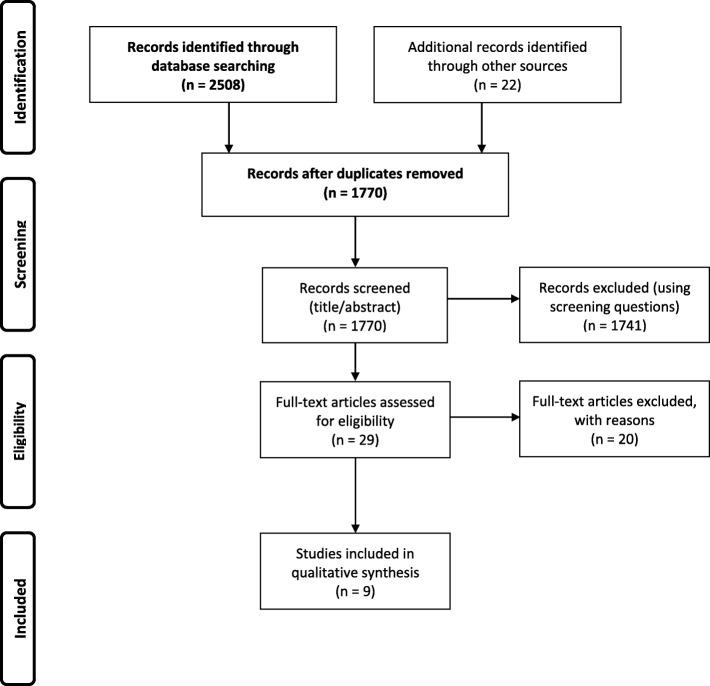
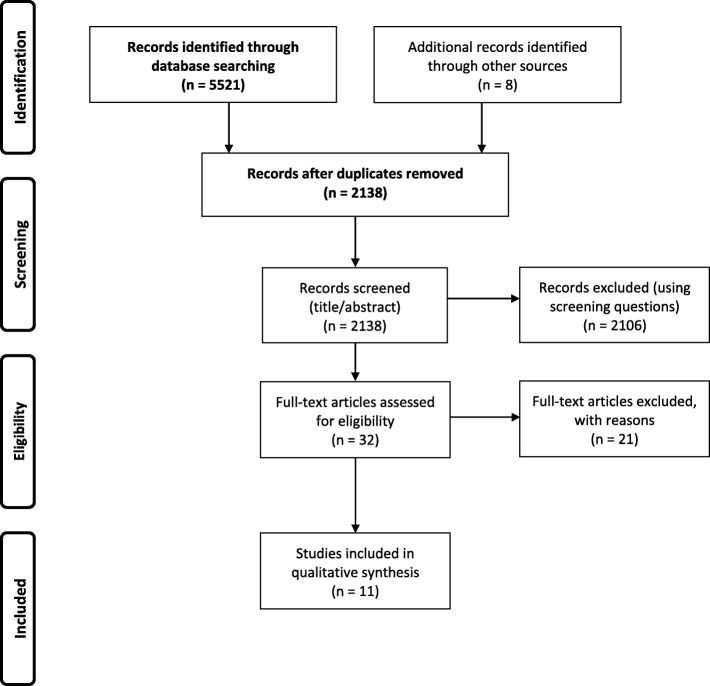
We conducted a systematic review comprising iterative literature searches and a narrative synthesis of the results.
Twenty articles, published between 2000 and 2019, were included in the analysis which resulted in three partly interrelated themes comprising the informal curriculum in Family Medicine: gaining cultural competence, achieving medical professionalism and dealing with uncertainty. The themes on cultural competence and uncertainty seemed to be more contextual than professionalism, the latter being discussed in relation to the informal curriculum across other medical disciplines as well. Formalized training for Family Medicine residents in aspects of the informal curriculum appeared to be lacking, and in general, the quality of the few interventional studies found was low.
Important aspects of being a family practitioner, such as cultural competence and dealing with uncertainty, are learned through a context-dependent informal curriculum. In order to ensure a more uniform base for all residents and to reduce the impact of the individual supervisor's preferences, complementary formalized training would be beneficial. However, to date there are too few studies published to conclude how to best teach the informal curriculum.
The systematic review was registered with Prospero; registration number CRD42018104819.
在医学教育领域,非正式课程是一个看似已经得到充分探索的概念。然而,它是一个具有多种定义的概念,并且“隐性课程”一词经常被互换使用。简而言之,它们都指的是在正式课程之外发生的隐性学习,包括组织价值观和态度通过导师或同事潜移默化的影响。虽然非正式课程是医学教育文献中的一个反复出现的主题,但在家庭医学中很少讨论。由于非正式课程很可能对未来家庭医生的形成产生深远影响,我们的目标是进一步探讨这一领域,具体涉及以下方面:哪些非正式课程元素适用于家庭医学背景,以及针对家庭医学住院医师实施了哪些教育干预措施,以可视化其各种教育元素?
我们进行了一项系统综述,包括迭代文献搜索和结果的叙述性综合。
共纳入 20 篇发表于 2000 年至 2019 年的文章,分析结果得出三个部分相关的主题,包括家庭医学中的非正式课程:获得文化能力、实现医学职业精神和应对不确定性。关于文化能力和不确定性的主题似乎比职业精神更具背景,后者不仅在家庭医学领域,而且在其他医学学科中也都在讨论非正式课程。家庭医学住院医师在非正式课程方面的正式培训似乎缺乏,而且一般来说,所发现的少数干预性研究的质量都较低。
作为家庭医生的重要方面,如文化能力和应对不确定性,是通过依赖背景的非正式课程来学习的。为了确保所有住院医师都有更统一的基础,并减少个别导师偏好的影响,补充正式培训将是有益的。然而,到目前为止,发表的研究太少,无法得出如何最好地教授非正式课程的结论。
该系统综述在 Prospero 上进行了注册;注册号为 CRD42018104819。