Hawkesbury Institute for the Environment, Western Sydney University, Penrith, NSW, Australia.
Division of Cell & Developmental Biology, Center for Anatomy and Cell Biology, Medical University of Vienna, Austria.
Genome Biol Evol. 2020 May 1;12(5):720-735. doi: 10.1093/gbe/evaa050.
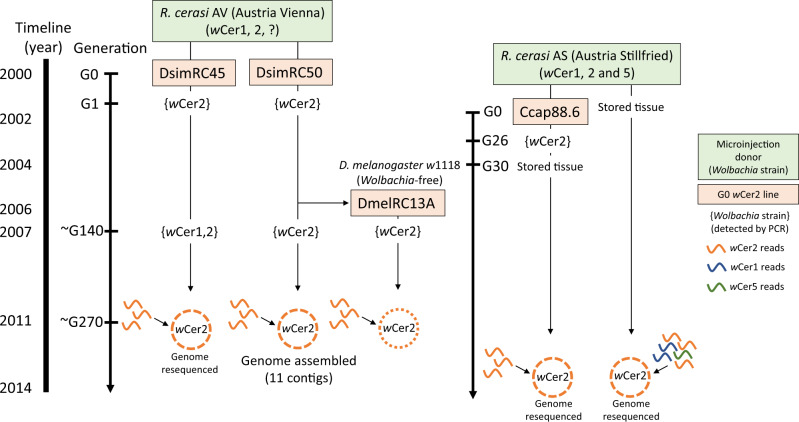
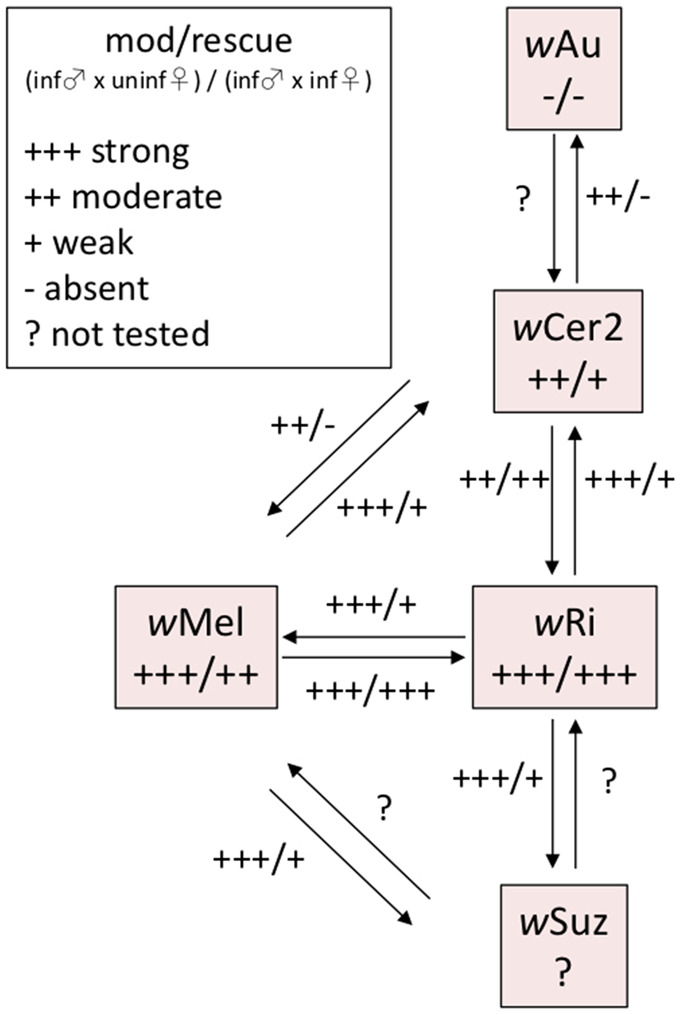
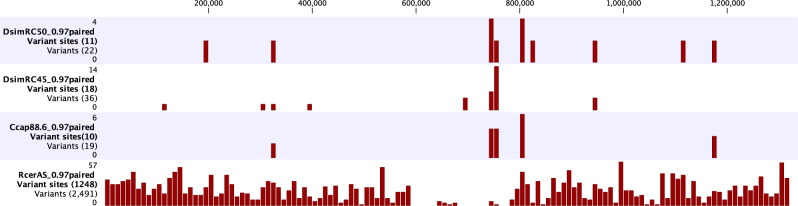
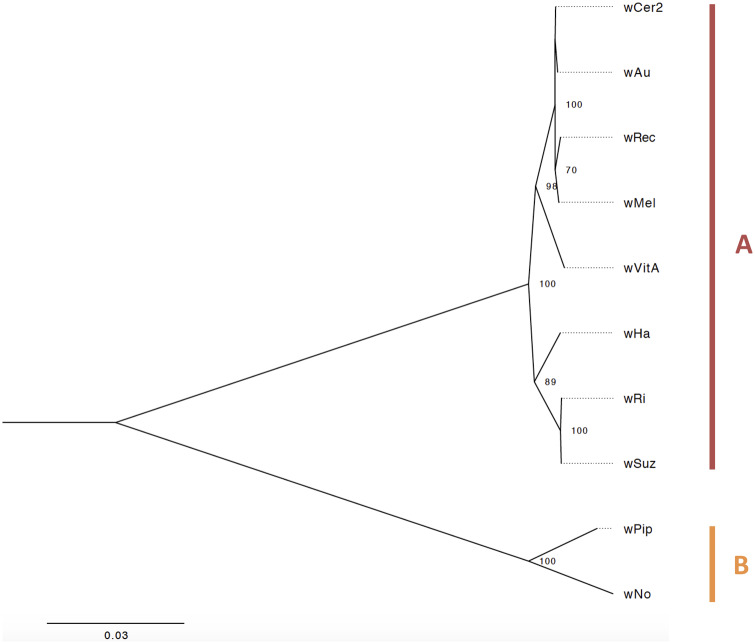
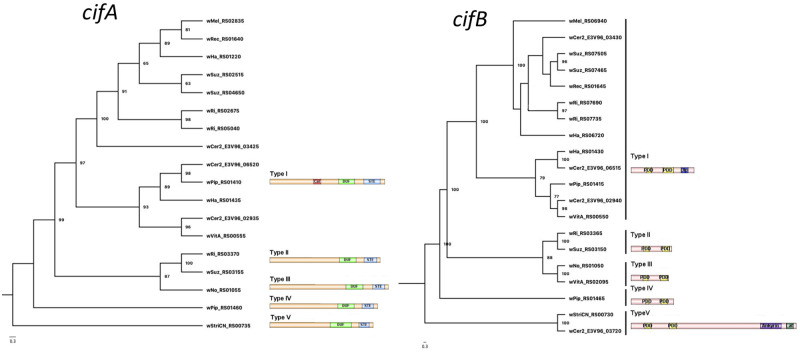
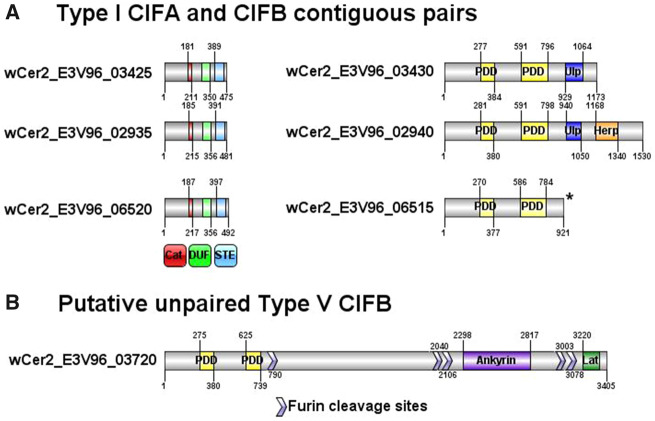
The application of Wolbachia in insect pest and vector control requires the establishment of genotypically stable host associations. The cytoplasmic incompatibility (CI) inducing Wolbachia strain wCer2 naturally occurs in the cherry fruit fly Rhagoletis cerasi as co-infection with other strains and was transferred to other fruit fly species by embryonic microinjections. We obtained wCer2 genome data from its native and three novel hosts, Drosophila simulans, Drosophila melanogaster, and Ceratitis capitata and assessed its genome stability, characteristics, and CI factor (cif) genes. De novo assembly was successful from Wolbachia cell-enriched singly infected D. simulans embryos, with minimal host and other bacterial genome traces. The low yield of Wolbachia sequence reads from total genomic extracts of one multiply infected R. cerasi pupa and one singly infected C. capitata adult limited de novo assemblies but was sufficient for comparative analyses. Across hosts wCer2 was stable in genome synteny and content. Polymorphic nucleotide sites were found in wCer2 of each host; however, only one nucleotide was different between R. cerasi and C. capitata, and none between replicated D. simulans lines. The wCer2 genome is highly similar to wAu (D. simulans), wMel (D. melanogaster), and wRec (Drosophila recens). In contrast to wMel and wRec (each with one cif gene pair) and wAu (without any cif genes), wCer2 has three pairs of Type I cif genes, and one Type V cifB gene without a cifA complement. This may explain previously reported CI patterns of wCer2, including incomplete rescue of its own CI modification in three novel host species.
应用于昆虫害虫和病媒控制的沃尔巴克氏体需要建立基因型稳定的宿主关联。细胞质不兼容(CI)诱导的沃尔巴克氏体菌株 wCer2 自然存在于樱桃实蝇 Rhagoletis cerasi 中,与其他菌株共同感染,并通过胚胎显微注射转移到其他果蝇物种中。我们从其天然和三个新宿主(Drosophila simulans、Drosophila melanogaster 和 Ceratitis capitata)获得了 wCer2 基因组数据,并评估了其基因组稳定性、特征和 CI 因子(cif)基因。从单独感染的 D. simulans 胚胎中成功地进行了沃尔巴克氏体细胞富集的从头组装,只有最小的宿主和其他细菌基因组痕迹。从一个多感染的 R. cerasi 蛹和一个单独感染的 C. capitata 成虫的总基因组提取物中获得的沃尔巴克氏体序列读取物的低产量限制了从头组装,但足以进行比较分析。在宿主之间,wCer2 的基因组同线性和内容是稳定的。在每个宿主的 wCer2 中都发现了多态性核苷酸位点;然而,R. cerasi 和 C. capitata 之间只有一个核苷酸不同,而在重复的 D. simulans 系之间则没有不同。wCer2 基因组与 wAu(D. simulans)、wMel(D. melanogaster)和 wRec(Drosophila recens)高度相似。与 wMel 和 wRec(每个都有一对 cif 基因对)和 wAu(没有任何 cif 基因)不同,wCer2 有三对 Type I cif 基因,以及一对没有 cifA 互补的 Type V cifB 基因。这可能解释了之前报道的 wCer2 的 CI 模式,包括在三个新宿主物种中不完全拯救其自身的 CI 修饰。