Molecular Signaling Lab, Faculty of Medicine and Health Technology, Tampere University, P.O. Box 553, 33101 Tampere, Finland.
BioMediTech Institute and Faculty of Medicine and Health Technology, Tampere University, Arvo Ylpön katu 34, 33520 Tampere, Finland.
Cells. 2020 Mar 10;9(3):681. doi: 10.3390/cells9030681.
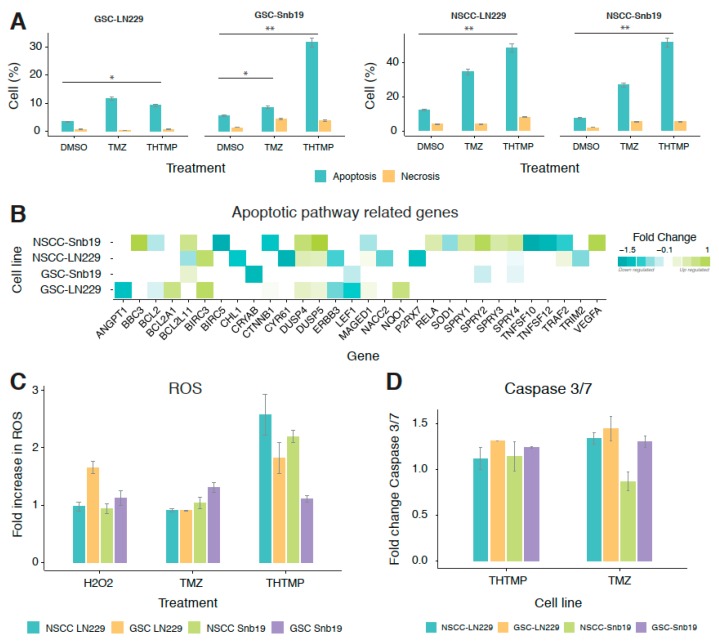
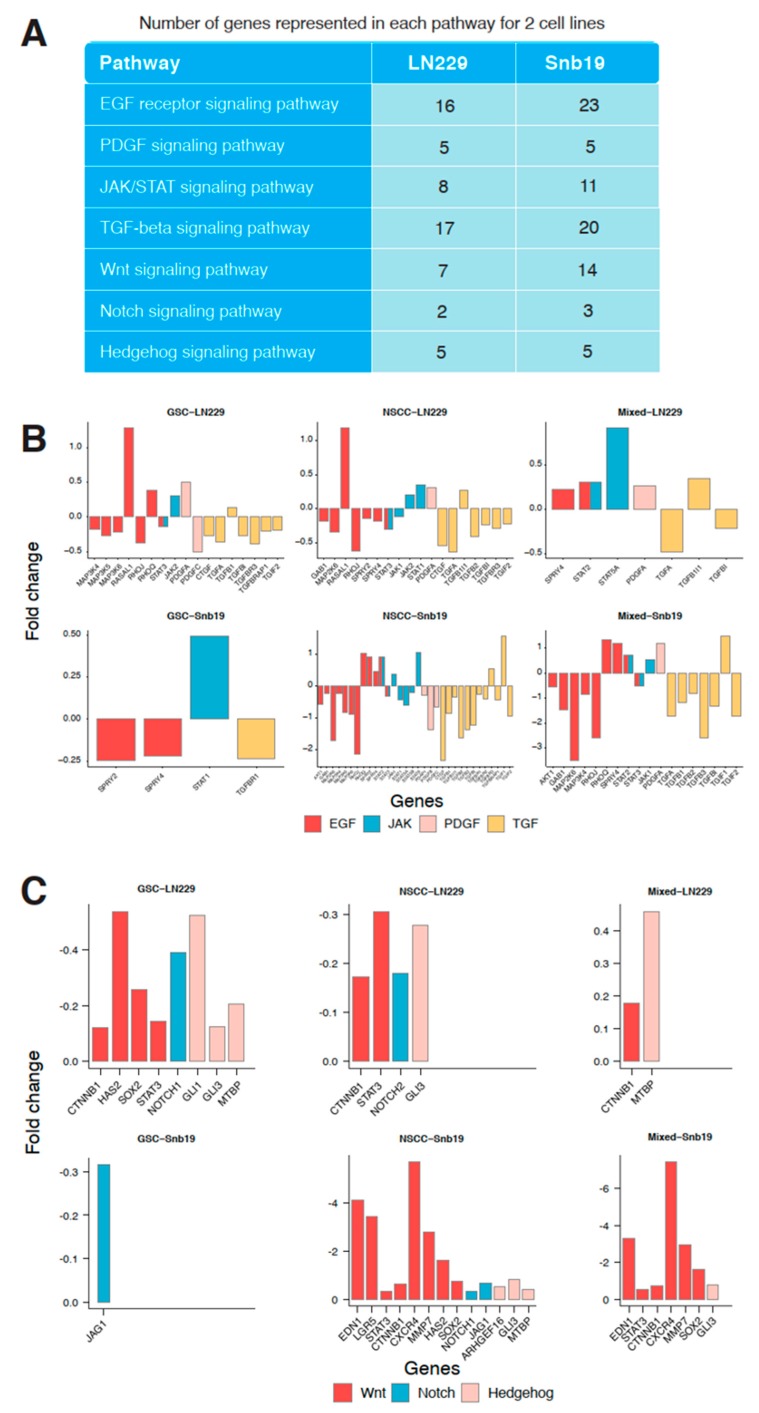
Cancer stem cells (CSCs), a small subpopulation of cells existing in the tumor microenvironment promoting cell proliferation and growth. Targeting the stemness of the CSC population would offer a vital therapeutic opportunity. 3,4-Dihydroquinolin-1(2)-yl)(-tolyl)methyl)phenol (THTMP), a small synthetic phenol compound, is proposed to play a significant role in controlling the CSC proliferation and survival. We assessed the potential therapeutic effects of THTMP on glioblastoma multiforme (GBM) and its underlying mechanism in various signaling pathways. To fully comprehend the effect of THTMP on the CSCs, CD133 GBM stem cell (GSC) and CD133 GBM Non-stem cancer cells (NSCC) population from LN229 and SNB19 cell lines was used. Cell cycle arrest, apoptosis assay and transcriptome analysis were performed for individual cell population. THTMP strongly inhibited NSCC and in a subtle way for GSC in a time-dependent manner and inhibit the resistance variants better than that of temozolomide (TMZ). THTMP arrest the CSC cell population at both G1/S and G2/M phase and induce ROS-mediated apoptosis. Gene expression profiling characterize THTMP as an inhibitor of the p53 signaling pathway causing DNA damage and cell cycle arrest in CSC population. We show that the THTMP majorly affects the EGFR and CSC signaling pathways. Specifically, modulation of key genes involved in Wnt, Notch and Hedgehog, revealed the significant role of THTMP in disrupting the CSCs' stemness and functions. Moreover, THTMP inhibited cell growth, proliferation and metastasis of multiple mesenchymal patient-tissue derived GBM-cell lines. THTMP arrests GBM stem cell cycle through the modulation of EGFR and CSC signaling pathways.
癌症干细胞(CSC)是肿瘤微环境中存在的一小部分细胞,促进细胞增殖和生长。针对 CSC 的干性将提供重要的治疗机会。3,4-二氢喹啉-1(2)-基)(-甲苯基)甲基)苯酚(THTMP),一种小分子合成苯酚化合物,被认为在控制 CSC 增殖和存活方面发挥重要作用。我们评估了 THTMP 对多形性胶质母细胞瘤(GBM)的潜在治疗效果及其在各种信号通路中的潜在机制。为了充分了解 THTMP 对 CSCs 的影响,我们使用了来自 LN229 和 SNB19 细胞系的 CD133 GBM 干细胞(GSC)和 CD133 GBM 非干细胞(NSCC)群体。对单个细胞群体进行细胞周期阻滞、凋亡测定和转录组分析。THTMP 强烈抑制 NSCC,并以时间依赖性方式轻微抑制 GSC,并比替莫唑胺(TMZ)更好地抑制耐药变体。THTMP 将 CSC 细胞群阻滞在 G1/S 和 G2/M 期,并诱导 ROS 介导的细胞凋亡。基因表达谱特征表明 THTMP 是 p53 信号通路的抑制剂,导致 CSC 群体中的 DNA 损伤和细胞周期阻滞。我们表明,THTMP 主要影响 EGFR 和 CSC 信号通路。具体而言,参与 Wnt、Notch 和 Hedgehog 的关键基因的调节,揭示了 THTMP 在破坏 CSCs 的干性和功能方面的重要作用。此外,THTMP 抑制了多种间充质患者组织衍生的 GBM 细胞系的细胞生长、增殖和转移。THTMP 通过调节 EGFR 和 CSC 信号通路来阻滞 GBM 干细胞的细胞周期。