Teffo Lesiba A, Tabit Frederick T
Department of Life and Consumer Sciences, University of South Africa, Cnr Christiaan de Wet Road and Pioneer Avenue, Florida, Roodepoort, 1710, South Africa.
BMC Public Health. 2020 Mar 12;20(1):311. doi: 10.1186/s12889-020-8430-5.
The possession of inadequate food safety knowledge (FSK) by food handlers poses a serious threat to food safety in service establishments. The aim of this research was to investigate factors that influenced the FSK and food safety attitudes (FSA) of employees involved in the preparation and/or the serving of food from nine hospitals in the Capricorn District Municipality (CDM) in Limpopo Province, South Africa.
Up to 210 individuals (18-65 years) who were employed in these hospitals, and who were involved in the preparation and serving of food to patients were purposefully selected. Data collection was by means of an interview using a questionnaire design for this study. The FSK and FSA scores of hospital food handlers were obtained by adding the correct response to FSK or FSA questions.
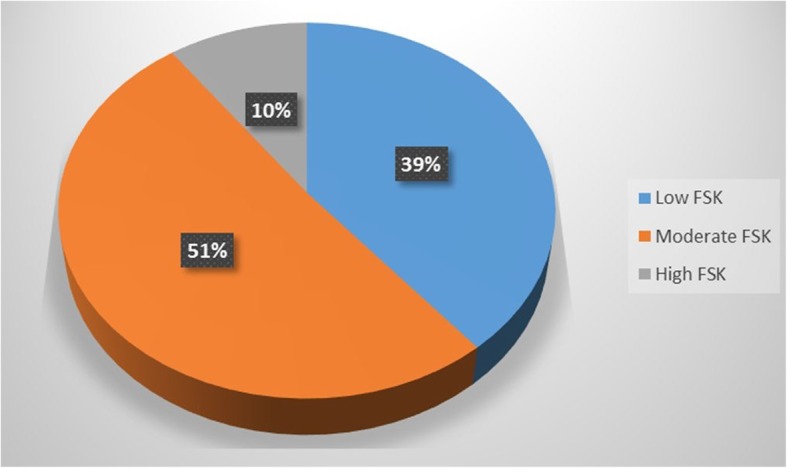
Only 29% of the hospital food handlers have attended a food safety-training course. Many food handlers were not knowledgeable on the correct temperature for handling foods, and on the correct minimum internal cooking temperature for poultry, seafood and egg. Only the minority of food handlers knew that Salmonella is the main foodborne bacteria pathogen mostly associated with poultry products (47.1%) and that food borne bacteria will grow quickly in food at a temperature of 37 °C (38.1%). Hospital food handlers with higher academic qualifications do not possess more FSK than those with lower academic qualifications. 51% of the hospital food handlers possessed a Satisfactory FSK while 10% possessed a Good FSK and 39% possessed an Inadequate FSK.
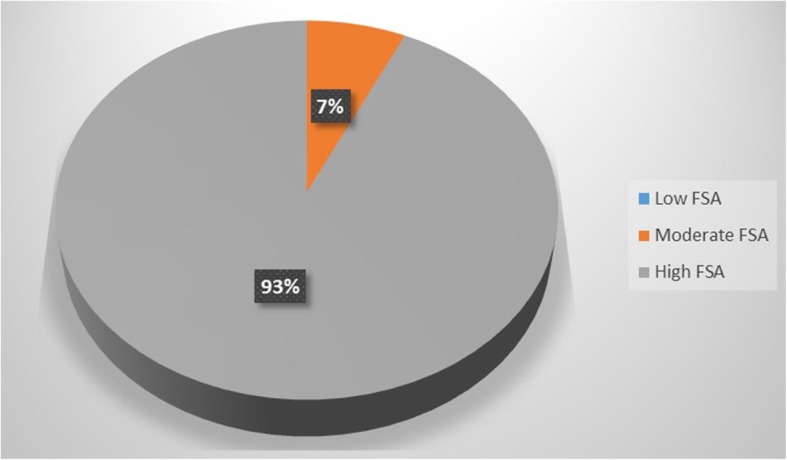
More than 60% of the hospital food handlers possesses either Good FSK or Satisfactory FSK. Higher levels of education, experience in food handling and job position did not lead to better FSK outcome. All the hospital food handlers possess at least a Satisfactory FSA. There was a weak positive but significant correlation between the FSK and FSA of hospital food handlers. It is recommended all employees involved in food handlers be subjected to food safety training programmes on a regular basis irrespective of their academic, employment and training details.
食品从业人员食品安全知识(FSK)不足对服务场所的食品安全构成严重威胁。本研究旨在调查影响南非林波波省摩羯座地区市政当局(CDM)九家医院中参与食品制备和/或供应的员工的FSK和食品安全态度(FSA)的因素。
有目的地选取了这些医院中210名年龄在18至65岁之间、参与为患者制备和供应食品的员工。通过使用为本研究设计的问卷进行访谈来收集数据。医院食品从业人员的FSK和FSA得分通过对FSK或FSA问题的正确回答相加得出。
只有29%的医院食品从业人员参加过食品安全培训课程。许多食品从业人员不了解处理食品的正确温度以及家禽、海鲜和蛋类的正确最低内部烹饪温度。只有少数食品从业人员知道沙门氏菌是主要与家禽产品相关的食源细菌病原体(47.1%),并且食源细菌在37°C的温度下会在食品中快速生长(38.1%)。学历较高的医院食品从业人员并不比学历较低的人员拥有更多的FSK。51%的医院食品从业人员拥有令人满意的FSK,10%拥有良好的FSK,39%拥有不足的FSK。
超过60%的医院食品从业人员拥有良好或令人满意的FSK。较高的教育水平、食品处理经验和工作岗位并未带来更好的FSK结果。所有医院食品从业人员至少拥有令人满意的FSA。医院食品从业人员的FSK和FSA之间存在微弱的正相关但显著相关。建议所有参与食品处理的员工无论其学历、就业和培训情况如何,都应定期接受食品安全培训计划。