Steardo Luca, Luciano Mario, Sampogna Gaia, Zinno Francesca, Saviano Pasquale, Staltari Filippo, Segura Garcia Cristina, De Fazio Pasquale, Fiorillo Andrea
1Department of Psychiatry, University of Campania "Luigi Vanvitelli", Largo Madonna Delle Grazie, 80138 Naples, Italy.
2Psychiatric Unit, Department of Health Sciences, University Magna Graecia, Catanzaro, Italy.
Ann Gen Psychiatry. 2020 Mar 9;19:15. doi: 10.1186/s12991-020-00266-7. eCollection 2020.
Bipolar disorder (BD) is one of the most burdensome mental disorders, with a lifetime prevalence of 2.4%, with a prevalence of 0.6% for bipolar type I and 0.4% for bipolar type II. Several interventions have been developed to implement the treatment strategy of bipolar disorder, including the Interpersonal and Social Rhythm Therapy (IPSRT). This intervention has been specifically developed to manage patients' stressful life events, improve the disruptions of social and circadian rhythms and increase adherence to medications. The aim of the present study is to assess the efficacy of IPSRT on affective and anxiety psychopathology, social functioning, response to pharmacological treatment and affective morbidity index (AMI) in BD patients.
BD patients were consecutively recruited at the Mood Disorder Unit of the University of Campania "Luigi Vanvitelli" and randomly assigned to the experimental group receiving the IPSRT or to the Treatment as Usual (TAU) group. Patients were assessed at baseline, after 3 and 6 months with several validated assessment tools and with the affective morbidity index.
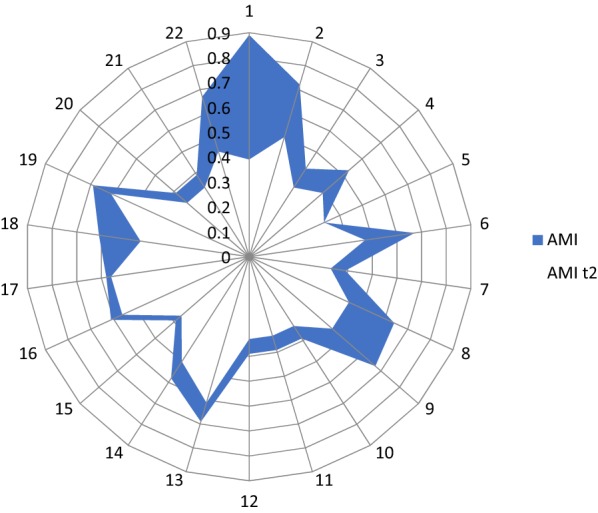
At the end of the intervention, compared to controls, patients from the experimental group reported a significant improvement in anxious depressive and manic symptomatology, global functioning; and response to mood stabilizers. Patients in the IPSRT group reported a reduction at the AMI score.
IPSRT has been confirmed to be effective in improving the clinical symptomology of BD patients and in improving the affective morbidity index. Further studies with longer follow-up are needed in order to assess the stability of the results. The study was approved by the local ethical review board (N001567/28.01.2018).
双相情感障碍(BD)是最具负担的精神障碍之一,终生患病率为2.4%,其中I型双相情感障碍患病率为0.6%,II型双相情感障碍患病率为0.4%。已经开发了几种干预措施来实施双相情感障碍的治疗策略,包括人际与社会节律疗法(IPSRT)。这种干预措施是专门为管理患者的应激性生活事件、改善社会和昼夜节律紊乱以及提高药物依从性而开发的。本研究的目的是评估IPSRT对BD患者的情感和焦虑精神病理学、社会功能、药物治疗反应以及情感发病率指数(AMI)的疗效。
在坎帕尼亚大学“路易吉·万维泰利”情绪障碍科连续招募BD患者,并随机分配到接受IPSRT的实验组或常规治疗(TAU)组。在基线、3个月和6个月后,使用几种经过验证的评估工具和情感发病率指数对患者进行评估。
在干预结束时,与对照组相比,实验组患者的焦虑抑郁和躁狂症状、整体功能以及对心境稳定剂的反应有显著改善。IPSRT组患者的AMI评分降低。
IPSRT已被证实可有效改善BD患者的临床症状并改善情感发病率指数。需要进行更长时间随访的进一步研究以评估结果的稳定性。该研究已获得当地伦理审查委员会的批准(编号:N001567/28.01.2018)。