Department of Biomedical Data Science, Geisel School of Medicine, Dartmouth College, Lebanon, NH, USA.
Department of Microbiology and Immunology, Geisel School of Medicine, Dartmouth College, Lebanon, NH, USA.
Microbiologyopen. 2020 May;9(5):e1018. doi: 10.1002/mbo3.1018. Epub 2020 Mar 12.
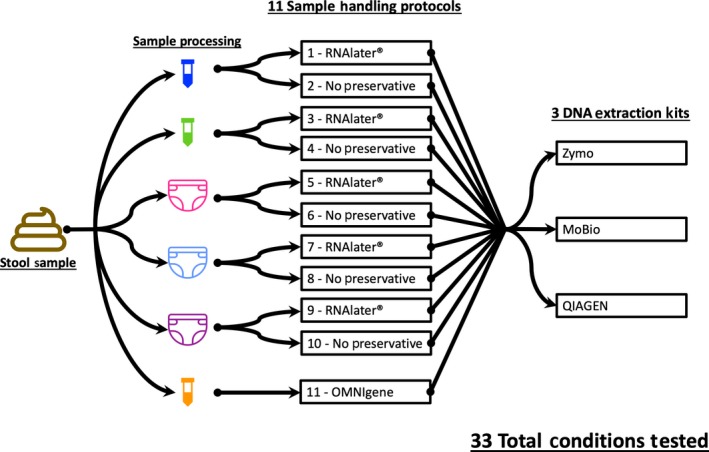
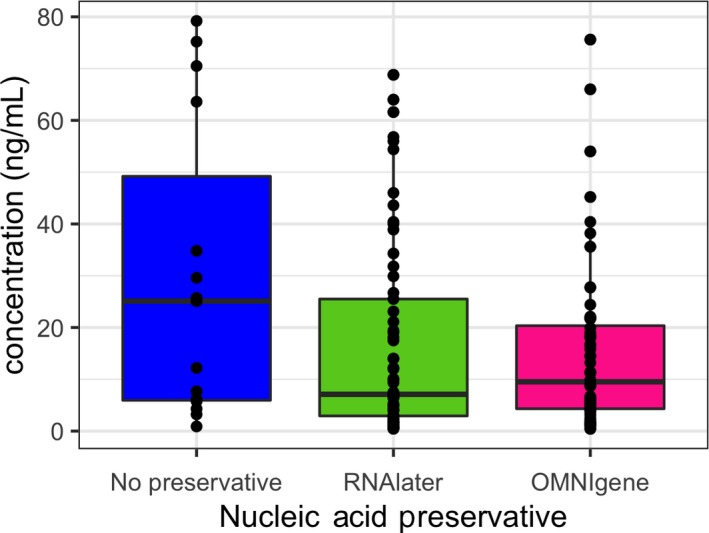
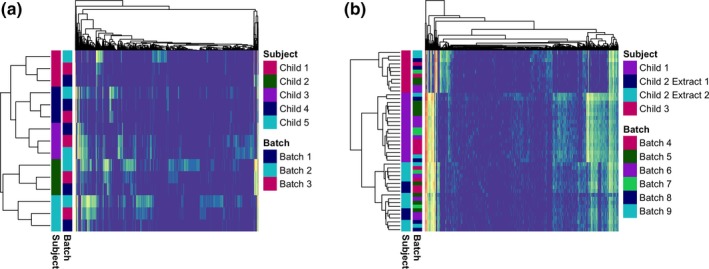
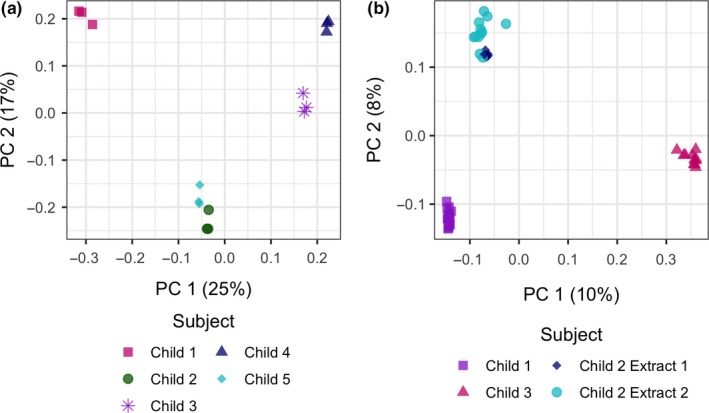
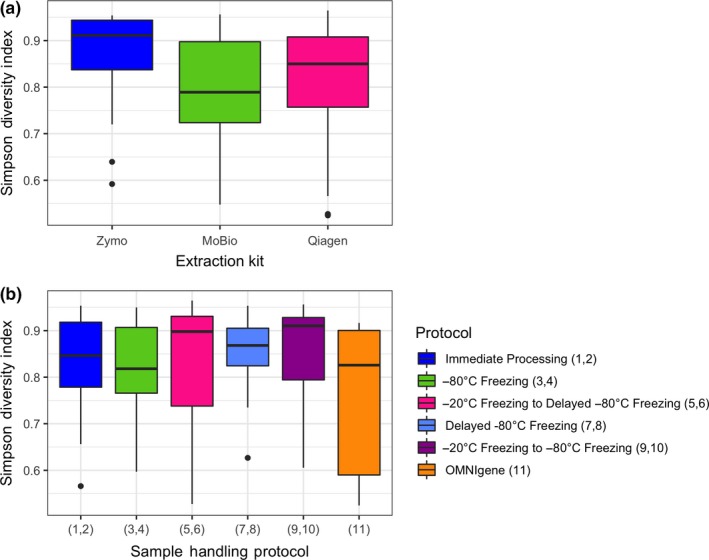
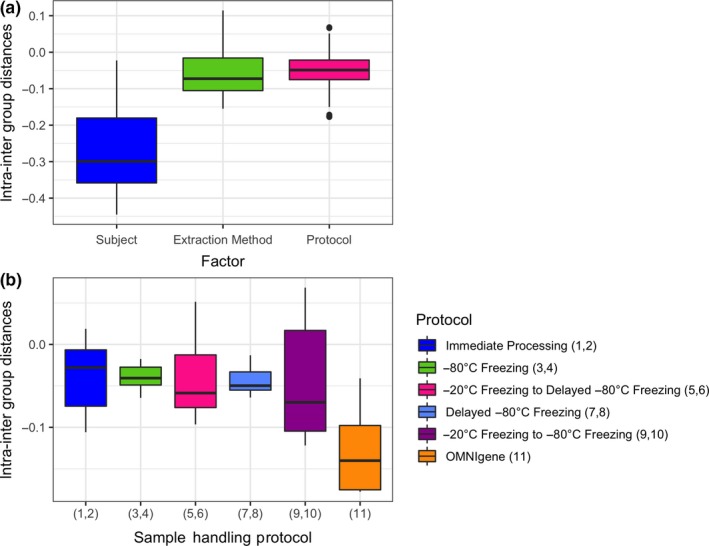
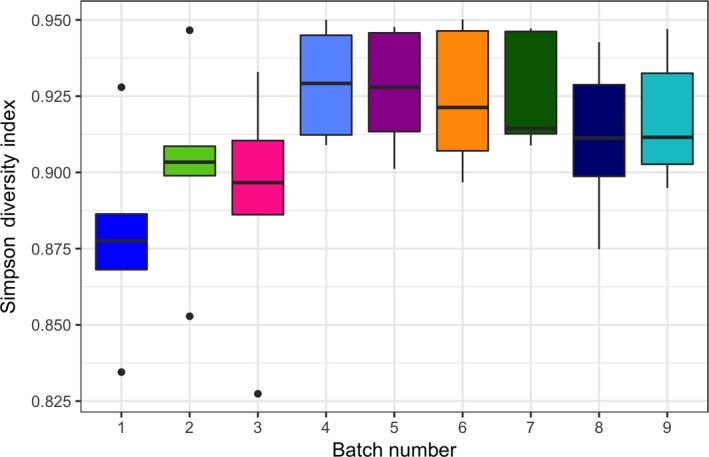
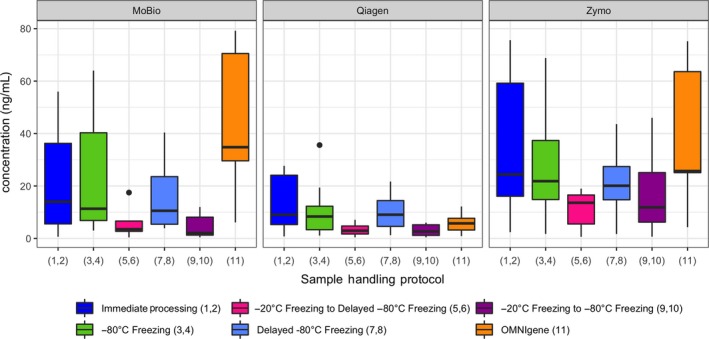
With the emergence of large-scale epidemiologic human microbiome studies, there is a need to understand the reproducibility of microbial DNA sequencing and the impact of specimen collection and processing methods on measures of microbial community composition and structure, with reproducibility studies in infants and young children particularly lacking. Here, we examined batch-to-batch variability and reliability of collection, handling, and processing protocols, testing replicate stool samples from infants and young children using Illumina MiSeq sequencing of the bacterial 16S rRNA gene V4-V5 hypervariable region, evaluating 33 conditions with different protocols and extraction methods. We detected no evidence of batch effects in replicate DNA samples or extractions from the same stool sample. Variability in DNA yield and alpha diversity was observed between the different collection, handling, and processing protocols. However, across all protocols, subject variability was the dominant contributor to microbiome structure, with comparatively little impact of the protocol used. While collection method and DNA extraction kit may affect DNA yield, and correspondingly alpha diversity, our findings suggest that characterization of the structure and composition of the fecal microbiome of infants and young children are reliably measurable by standardized collection, handling, and processing protocols and DNA extraction methods within an individual longitudinal study.
随着大规模的流行病学人类微生物组研究的出现,有必要了解微生物 DNA 测序的可重复性,以及样本采集和处理方法对微生物群落组成和结构测量的影响,而婴儿和幼儿的可重复性研究尤其缺乏。在这里,我们使用 Illumina MiSeq 对细菌 16S rRNA 基因 V4-V5 高变区进行测序,检测了来自婴儿和幼儿的重复粪便样本,以检查采集、处理和处理方案的批次间变异性和可靠性,测试了 33 种不同方案和提取方法的条件。我们没有在重复的 DNA 样本或来自同一粪便样本的提取中检测到批次效应的证据。在不同的采集、处理和处理方案之间观察到 DNA 产量和 alpha 多样性的可变性。然而,在所有方案中,主体变异性是微生物组结构的主要贡献者,而使用的方案的影响相对较小。虽然采集方法和 DNA 提取试剂盒可能会影响 DNA 产量,以及相应的 alpha 多样性,但我们的研究结果表明,在个体纵向研究中,通过标准化的采集、处理和处理方案以及 DNA 提取方法,可以可靠地测量婴儿和幼儿粪便微生物组的结构和组成。