Department of Epidemiology, Geisel School of Medicine at Dartmouth College, Hanover, NH, USA.
School of Dental Medicine, Rutgers, The State University of New Jersey, Newark, NJ, USA.
Pediatr Res. 2022 Aug;92(2):580-591. doi: 10.1038/s41390-021-01785-z. Epub 2021 Nov 4.
A link between the gut microbiome and behavior is hypothesized, but most previous studies are cross-sectional or in animal models. The modifying role of host sex is poorly characterized. We aimed to identify sex-specific prospective associations between the early-life gut microbiome and preschool-age neurobehavior.
In a prospective cohort, gut microbiome diversity and taxa were estimated with 16S rRNA sequencing at 6 weeks, 1 year, and 2 years. Species and gene pathways were inferred from metagenomic sequencing at 6 weeks and 1 year. When subjects were 3 years old, parents completed the Behavioral Assessment System for Children, second edition (BASC-2). A total of 260 children contributed 523 16S rRNA and 234 metagenomics samples to analysis. Models adjusted for sociodemographic characteristics.
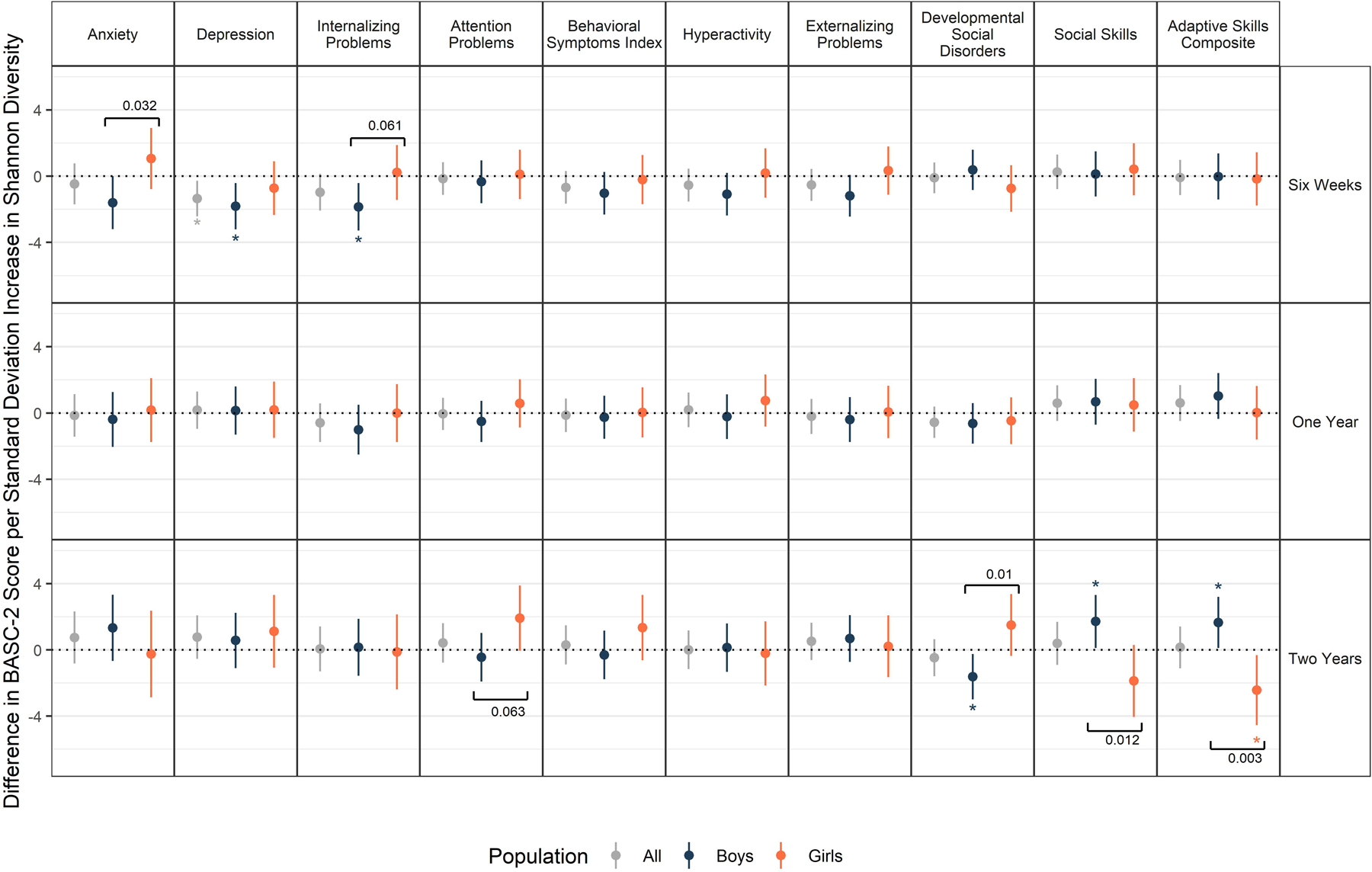
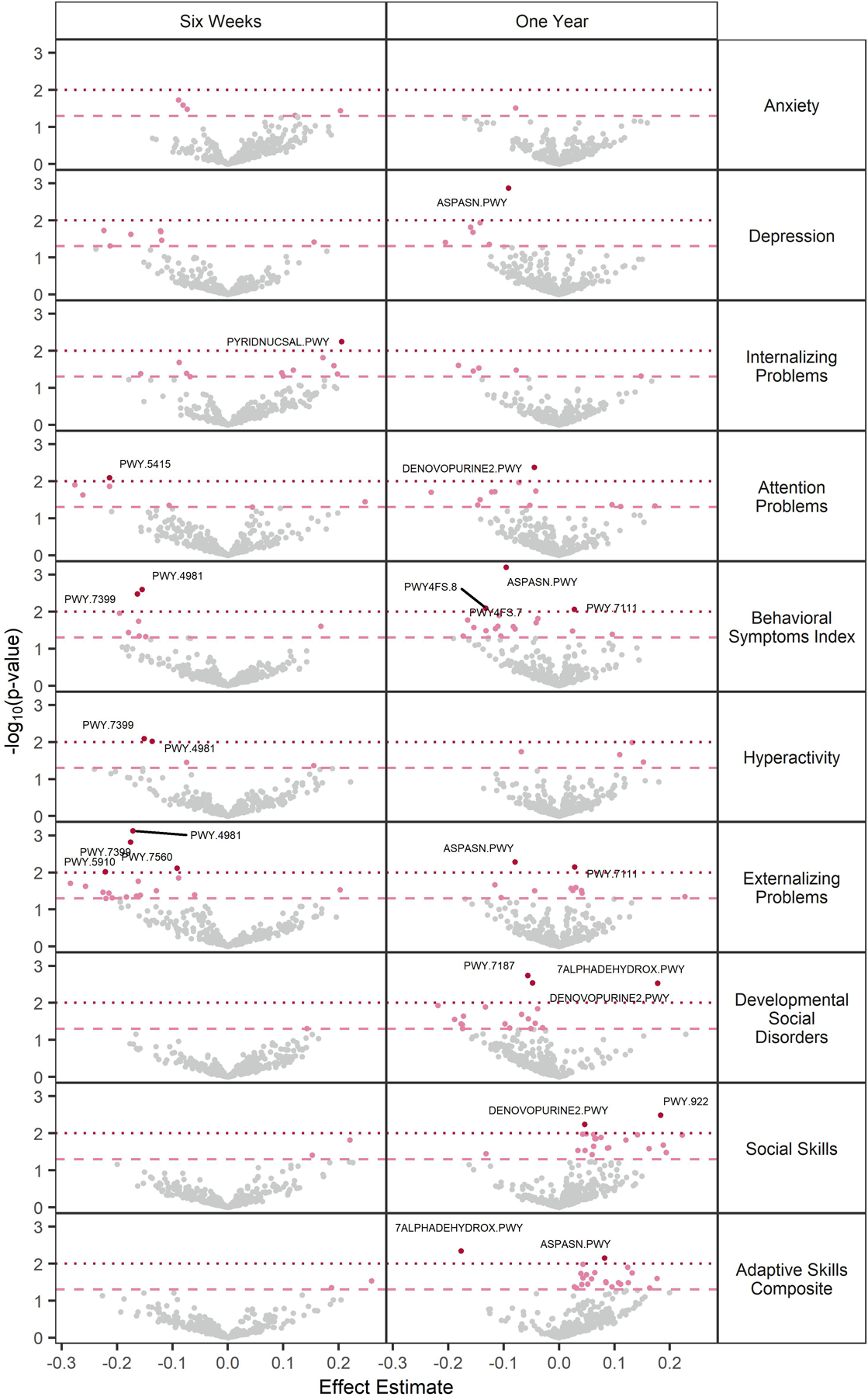
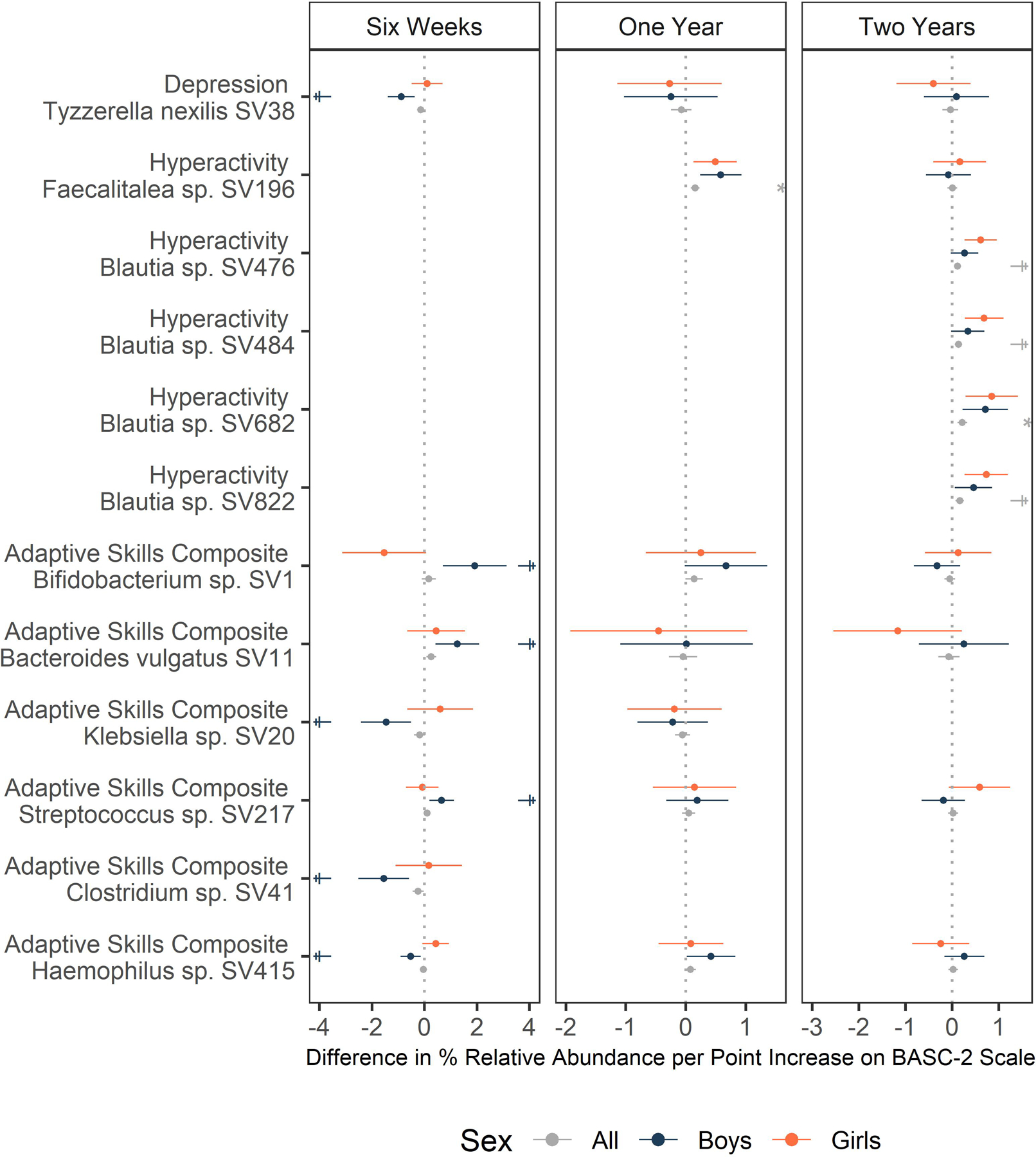
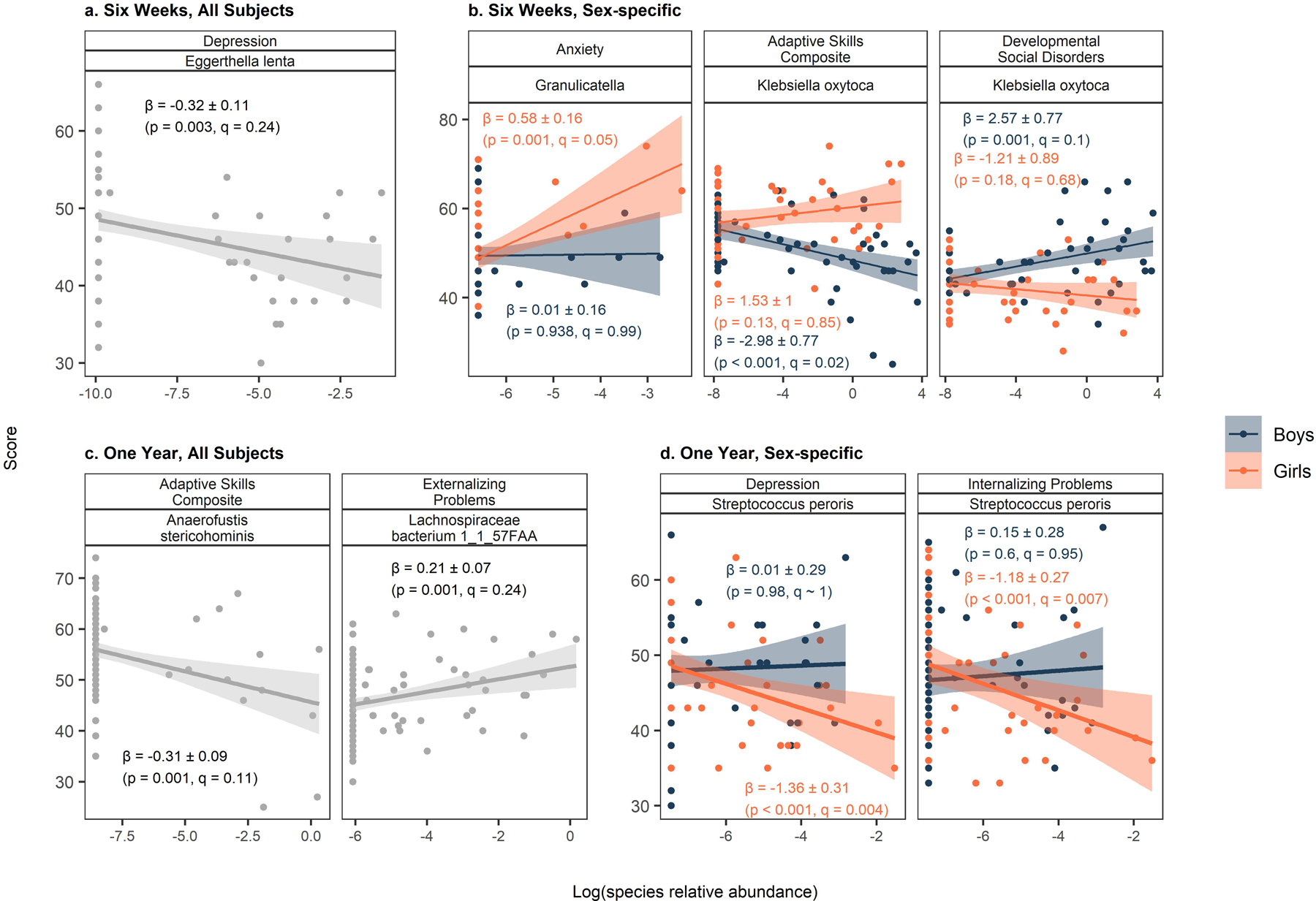
Higher diversity at 6 weeks was associated with better internalizing problems among boys, but not girls [β = -1.86 points/SD Shannon diversity; 95% CI (-3.29, -0.42), p = 0.01, β = 0.22 (-1.43, 1.87), p = 0.8, p = 0.06]. Among other taxa-specific associations, Bifidobacterium at 6 weeks was associated with Adaptive Skills scores in a sex-specific manner. We observed relationships between functional features and BASC-2 scores, including vitamin B6 biosynthesis pathways and better Depression scores.
This study advances our understanding of microbe-host interactions with implications for childhood behavioral health.
This is one of the first studies to examine the early-life microbiome and neurobehavior, and the first to examine prospective sex-specific associations. Infant and early-childhood microbiomes relate to neurobehavior including anxiety, depression, hyperactivity, and social behaviors in a time- and sex-specific manner. Our findings suggest future studies should evaluate whether host sex impacts the relationship between the gut microbiome and behavioral health outcomes.
人们假设肠道微生物群与行为之间存在联系,但大多数先前的研究都是横断面研究或在动物模型中进行的。宿主性别对其的修饰作用尚未得到充分描述。我们旨在确定生命早期肠道微生物群与学龄前神经行为之间具有性别特异性的前瞻性关联。
在一项前瞻性队列研究中,通过 16S rRNA 测序在 6 周、1 年和 2 年时估计肠道微生物组的多样性和分类群。通过 6 周和 1 年时的宏基因组测序推断物种和基因途径。当被试者 3 岁时,父母完成了《儿童行为评估系统第二版》(BASC-2)的评估。共有 260 名儿童提供了 523 个 16S rRNA 和 234 个宏基因组样本进行分析。模型调整了社会人口特征。
6 周时的多样性较高与男孩的内化问题改善有关,但与女孩无关[β=-1.86 分/SD 香农多样性;95%CI(-3.29,-0.42),p=0.01,β=0.22(-1.43,1.87),p=0.8,p=0.06]。在其他特定于分类群的关联中,双歧杆菌在 6 周时与特定性别有关的适应技能评分有关。我们观察到功能特征与 BASC-2 评分之间的关系,包括维生素 B6 生物合成途径与抑郁评分的改善有关。
这项研究增进了我们对微生物-宿主相互作用的理解,这对儿童行为健康具有重要意义。
这是研究生命早期微生物组和神经行为的首批研究之一,也是首个研究前瞻性性别特异性关联的研究。婴儿和幼儿的微生物组与神经行为有关,包括焦虑、抑郁、多动和社会行为,且具有时间和性别特异性。我们的研究结果表明,未来的研究应该评估宿主性别是否会影响肠道微生物组与行为健康结果之间的关系。