Department of Life Sciences, Imperial College London, Sir Alexander Fleming Building, South Kensington Campus, London, United Kingdom.
Department of Entomology, Robert H. Smith Faculty of Agriculture, Food and Environment, Hebrew University of Jerusalem, Rehovot, Israel.
PLoS Genet. 2020 Mar 13;16(3):e1008647. doi: 10.1371/journal.pgen.1008647. eCollection 2020 Mar.
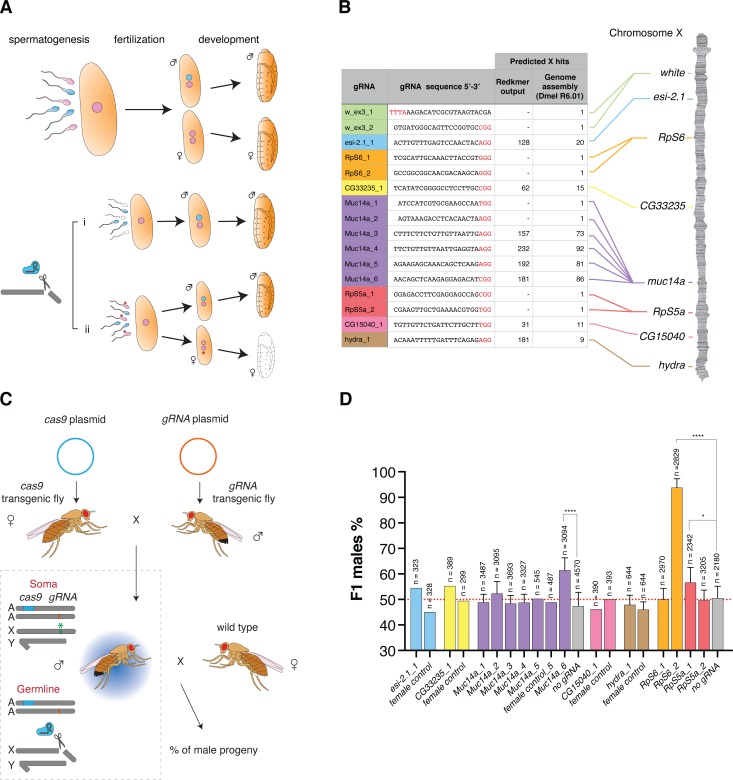
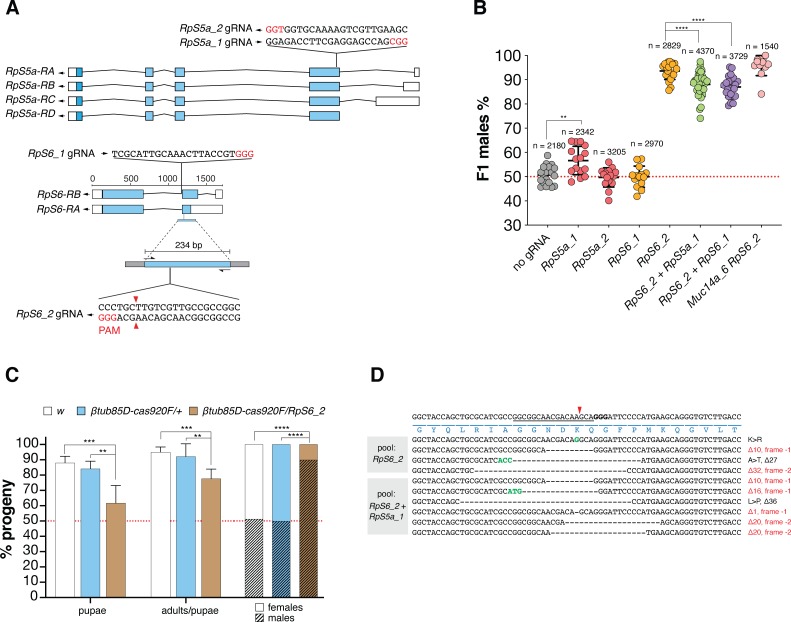
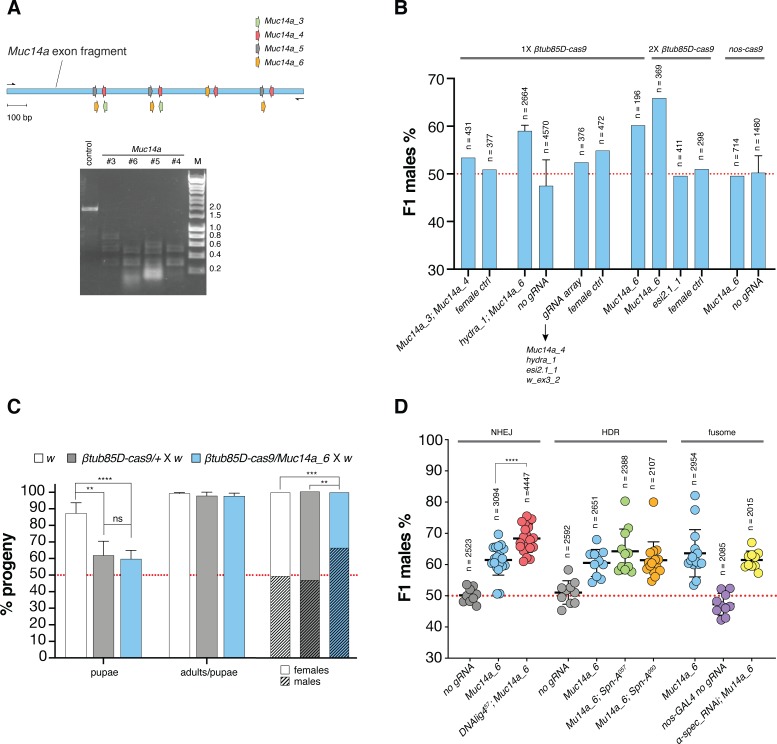
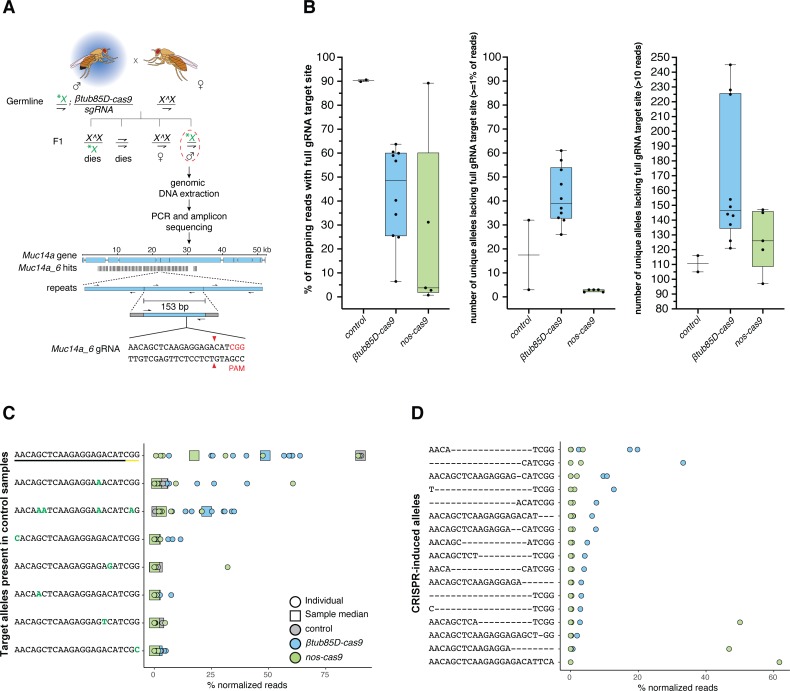
Synthetic sex distorters have recently been developed in the malaria mosquito, relying on endonucleases that target the X-chromosome during spermatogenesis. Although inspired by naturally-occurring traits, it has remained unclear how they function and, given their potential for genetic control, how portable this strategy is across species. We established Drosophila models for two distinct mechanisms for CRISPR/Cas9 sex-ratio distortion-"X-shredding" and "X-poisoning"-and dissected their target-site requirements and repair dynamics. X-shredding resulted in sex distortion when Cas9 endonuclease activity occurred during the meiotic stages of spermatogenesis but not when Cas9 was expressed from the stem cell stages onwards. Our results suggest that X-shredding is counteracted by the NHEJ DNA repair pathway and can operate on a single repeat cluster of non-essential sequences, although the targeting of a number of such repeats had no effect on the sex ratio. X-poisoning by contrast, i.e. targeting putative haplolethal genes on the X chromosome, induced a high bias towards males (>92%) when we directed Cas9 cleavage to the X-linked ribosomal target gene RpS6. In the case of X-poisoning sex distortion was coupled to a loss in reproductive output, although a dominant-negative effect appeared to drive the mechanism of female lethality. These model systems will guide the study and the application of sex distorters to medically or agriculturally important insect target species.
合成性别的干扰因子最近已在疟蚊中开发出来,它们依赖于在精子发生过程中靶向 X 染色体的内切酶。尽管它们受到自然发生的特征的启发,但仍不清楚它们的功能,以及鉴于它们在遗传控制方面的潜力,这种策略在物种间的可移植性如何。我们建立了用于 CRISPR/Cas9 性别比例失真的两种不同机制的果蝇模型-"X 粉碎"和"X 中毒"-并剖析了它们的靶位要求和修复动力学。当 Cas9 内切酶活性发生在精子发生的减数分裂阶段而不是当 Cas9 从干细胞阶段开始表达时,X 粉碎导致性别失真。我们的结果表明,X 粉碎被 NHEJ DNA 修复途径所拮抗,并且可以作用于单个非必需序列的重复簇上,尽管靶向许多这样的重复对性别比例没有影响。相比之下,X 中毒,即靶向 X 染色体上假定的单倍致死基因,当我们将 Cas9 切割导向 X 连锁核糖体靶基因 RpS6 时,会导致雄性偏向性(>92%)。在 X 中毒导致性别失真的情况下,与生殖输出的损失相关联,尽管显性负效应似乎驱动了雌性致死的机制。这些模型系统将指导对医学或农业上重要的昆虫靶标物种的性干扰因子的研究和应用。