Kane Nanci S, Vora Mehul, Varre Krishna J, Padgett Richard W
Waksman Institute, Department of Molecular Biology and Biochemistry, Cancer Institute of New Jersey, Rutgers University, Piscataway, New Jersey 08854-8020.
Waksman Institute, Department of Molecular Biology and Biochemistry, Cancer Institute of New Jersey, Rutgers University, Piscataway, New Jersey 08854-8020
G3 (Bethesda). 2017 Jan 5;7(1):87-93. doi: 10.1534/g3.116.036723.
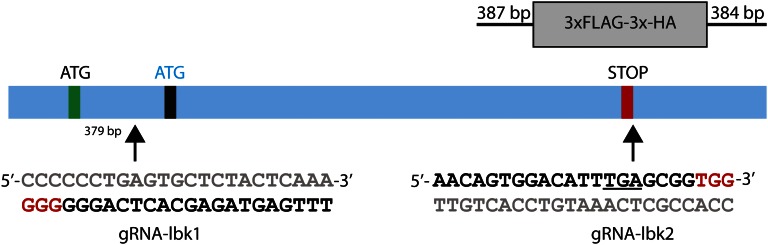
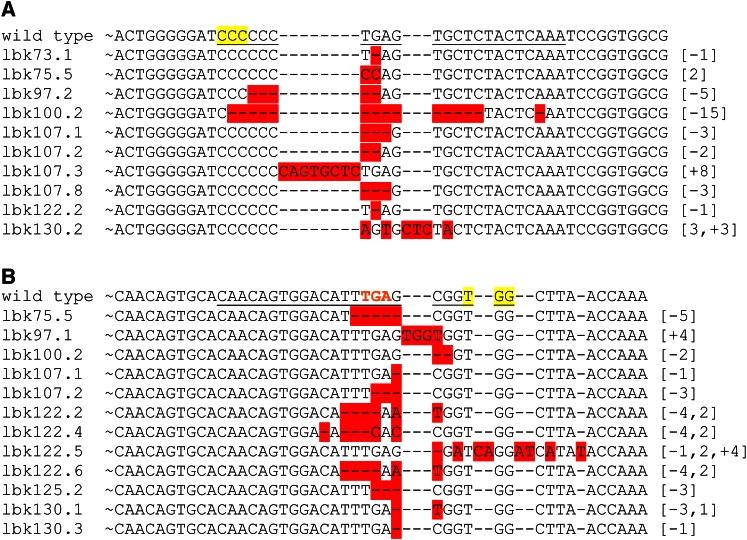
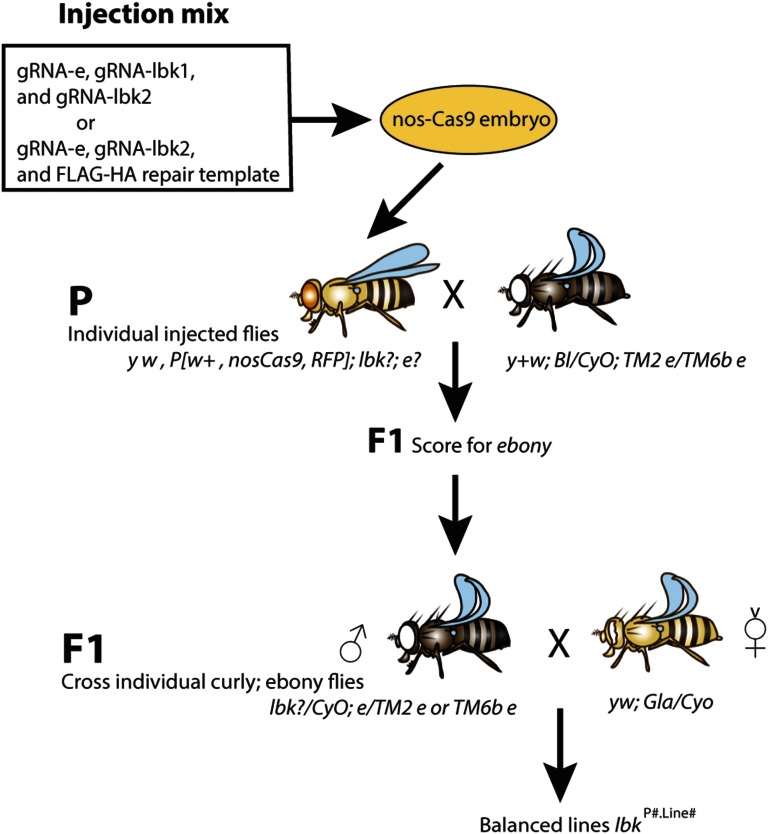
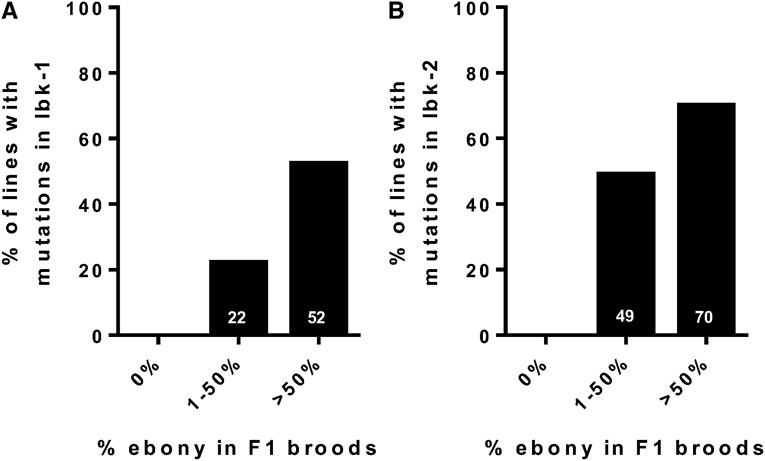
Genome editing using the Clustered Regularly Interspaced Short Palindromic Repeats (CRISPR) and associated nuclease (Cas9) enables specific genetic modifications, including deletions, insertions, and substitutions in numerous organisms, such as the fruit fly Drosophila melanogaster One challenge of the CRISPR/Cas9 system can be the laborious and time-consuming screening required to find CRISPR-induced modifications due to a lack of an obvious phenotype and low frequency after editing. Here we apply the successful co-CRISPR technique in Drosophila to simultaneously target a gene of interest and a marker gene, ebony, which is a recessive gene that produces dark body color and has the further advantage of not being a commonly used transgenic marker. We found that Drosophila broods containing higher numbers of CRISPR-induced ebony mutations ("jackpot" lines) are significantly enriched for indel events in a separate gene of interest, while broods with few or no ebony offspring showed few mutations in the gene of interest. Using two different PAM sites in our gene of interest, we report that ∼61% (52-70%) of flies from the ebony-enriched broods had an indel in DNA near either PAM site. Furthermore, this marker mutation system may be useful in detecting the less frequent homology-directed repair events, all of which occurred in the ebony-enriched broods. By focusing on the broods with a significant number of ebony flies, successful identification of CRISPR-induced events is much faster and more efficient. The co-CRISPR technique we present significantly improves the screening efficiency in identification of genome-editing events in Drosophila.
使用成簇规律间隔短回文重复序列(CRISPR)及相关核酸酶(Cas9)进行基因组编辑能够实现特定的基因修饰,包括在众多生物体(如黑腹果蝇)中进行缺失、插入和替换。CRISPR/Cas9系统面临的一个挑战可能是,由于缺乏明显的表型且编辑后频率较低,寻找CRISPR诱导的修饰需要进行费力且耗时的筛选。在此,我们在果蝇中应用成功的共CRISPR技术,同时靶向一个感兴趣的基因和一个标记基因——乌木基因,它是一个隐性基因,会产生深色体色,并且还有一个优势,即它不是常用的转基因标记。我们发现,含有较多CRISPR诱导的乌木突变的果蝇群体(“头奖”品系)在另一个感兴趣的基因中显著富集了插入缺失事件,而乌木后代很少或没有的果蝇群体在感兴趣的基因中显示出很少的突变。在我们感兴趣的基因中使用两个不同的原间隔序列临近基序(PAM)位点,我们报告称,来自乌木富集群体的果蝇中约61%(52 - 70%)在靠近任一PAM位点的DNA中存在插入缺失。此外,这种标记突变系统可能有助于检测频率较低的同源定向修复事件,所有这些事件都发生在乌木富集群体中。通过关注具有大量乌木果蝇的群体,成功鉴定CRISPR诱导的事件要快得多且效率更高。我们提出的共CRISPR技术显著提高了果蝇基因组编辑事件鉴定中的筛选效率。