Division of Gastroenterology, San Gerardo Hospital, University of Milano-Bicocca School of Medicine, 20900 Monza, Italy.
Division of Medical Oncology, San Gerardo Hospital, University of Milano-Bicocca School of Medicine, 20900 Monza, Italy.
Cells. 2020 Mar 11;9(3):688. doi: 10.3390/cells9030688.
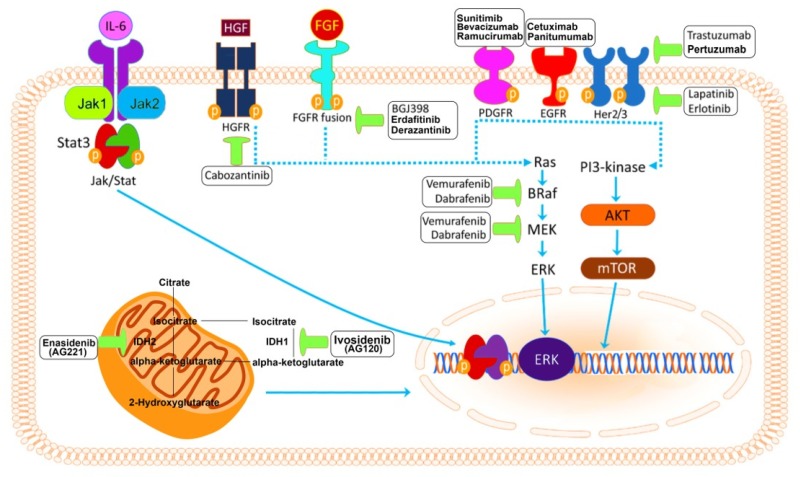
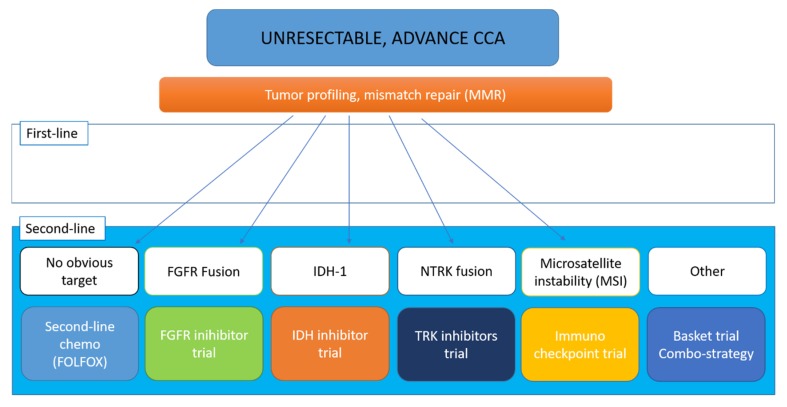
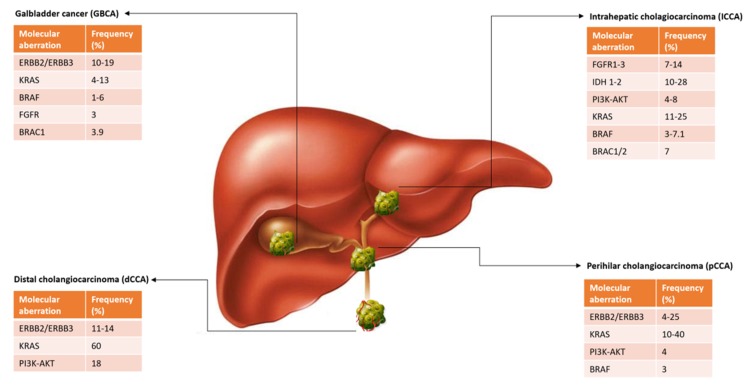
Cholangiocarcinoma (CCA) represents a disease entity that comprises a heterogeneous group of biliary malignant neoplasms, with variable clinical presentation and severity. It may be classified according to its anatomical location and distinguished in intrahepatic (iCCA), perihilar (pCCA), or distal (dCCA), each subtype implying distinct epidemiology, biology, prognosis, and strategy for clinical management. Its incidence has increased globally over the past few decades, and its mortality rate remains high due to both its biological aggressiveness and resistance to medical therapy. Surgery is the only potentially curative treatment and is the standard approach for resectable CCA; however, more than half of the patients have locally advanced or metastatic disease at presentation. For patients with unresectable CCA, the available systemic therapies are of limited effectiveness. However, the advances of the comprehension of the complex molecular landscape of CCA and its tumor microenvironment could provide new keys to better understand the pathogenesis, the mechanisms of resistance and ultimately to identify promising new therapeutic targets. Recently, clinical trials targeting isocitrate dehydrogenase (IDH)-1 mutations and fibroblast growth factor receptor (FGFR)-2 fusions, as well as immunotherapy showed promising results. All these new and emerging therapeutic options are herein discussed.
胆管癌(CCA)是一种异质性的胆道恶性肿瘤疾病实体,其临床表现和严重程度各不相同。它可以根据解剖位置进行分类,分为肝内(iCCA)、肝门周围(pCCA)或远端(dCCA),每种亚型都具有不同的流行病学、生物学、预后和临床管理策略。在过去几十年中,全球范围内胆管癌的发病率有所增加,但其死亡率仍然很高,这既是由于其生物学侵袭性,也是由于对药物治疗的耐药性。手术是唯一潜在的治愈性治疗方法,也是可切除 CCA 的标准治疗方法;然而,超过一半的患者在就诊时已经处于局部晚期或转移性疾病。对于不可切除的 CCA 患者,现有的全身治疗方法效果有限。然而,对 CCA 复杂分子谱及其肿瘤微环境的理解的进展,为更好地了解发病机制、耐药机制以及最终确定有前途的新治疗靶点提供了新的线索。最近,针对异柠檬酸脱氢酶(IDH)-1 突变和成纤维细胞生长因子受体(FGFR)-2 融合的临床试验以及免疫疗法显示出了有前景的结果。所有这些新出现的治疗选择都在此进行了讨论。