• 文献检索
  • 文档翻译
  • 深度研究
  • 学术资讯
  • Suppr Zotero 插件Zotero 插件
  • 邀请有礼
  • 套餐&价格
  • 历史记录
应用&插件
Suppr Zotero 插件Zotero 插件浏览器插件Mac 客户端Windows 客户端微信小程序
定价
高级版会员购买积分包购买API积分包
服务
文献检索文档翻译深度研究API 文档MCP 服务
关于我们
关于 Suppr公司介绍联系我们用户协议隐私条款
关注我们

Suppr 超能文献

核心技术专利:CN118964589B侵权必究
粤ICP备2023148730 号-1Suppr @ 2026

文献检索

告别复杂PubMed语法,用中文像聊天一样搜索,搜遍4000万医学文献。AI智能推荐,让科研检索更轻松。

立即免费搜索

文件翻译

保留排版,准确专业,支持PDF/Word/PPT等文件格式,支持 12+语言互译。

免费翻译文档

深度研究

AI帮你快速写综述,25分钟生成高质量综述,智能提取关键信息,辅助科研写作。

立即免费体验

SPOT-Disorder2:通过集成深度学习提高蛋白质固有无序预测。

SPOT-Disorder2: Improved Protein Intrinsic Disorder Prediction by Ensembled Deep Learning.

机构信息

Signal Processing Laboratory, Griffith University, Brisbane 4111, Australia.

School of Information and Communication Technology, Griffith University, Gold Coast 4222, Australia.

出版信息

Genomics Proteomics Bioinformatics. 2019 Dec;17(6):645-656. doi: 10.1016/j.gpb.2019.01.004. Epub 2020 Mar 13.

DOI:10.1016/j.gpb.2019.01.004
PMID:32173600
原文链接:https://pmc.ncbi.nlm.nih.gov/articles/PMC7212484/
Abstract

Intrinsically disordered or unstructured proteins (or regions in proteins) have been found to be important in a wide range of biological functions and implicated in many diseases. Due to the high cost and low efficiency of experimental determination of intrinsic disorder and the exponential increase of unannotated protein sequences, developing complementary computational prediction methods has been an active area of research for several decades. Here, we employed an ensemble of deep Squeeze-and-Excitation residual inception and long short-term memory (LSTM) networks for predicting protein intrinsic disorder with input from evolutionary information and predicted one-dimensional structural properties. The method, called SPOT-Disorder2, offers substantial and consistent improvement not only over our previous technique based on LSTM networks alone, but also over other state-of-the-art techniques in three independent tests with different ratios of disordered to ordered amino acid residues, and for sequences with either rich or limited evolutionary information. More importantly, semi-disordered regions predicted in SPOT-Disorder2 are more accurate in identifying molecular recognition features (MoRFs) than methods directly designed for MoRFs prediction. SPOT-Disorder2 is available as a web server and as a standalone program at https://sparks-lab.org/server/spot-disorder2/.

摘要

无规卷曲或无结构蛋白质(或蛋白质中的区域)已被发现对广泛的生物功能很重要,并与许多疾病有关。由于实验确定固有无序性的成本高、效率低,以及未注释的蛋白质序列呈指数级增长,因此开发互补的计算预测方法几十年来一直是一个活跃的研究领域。在这里,我们采用了深挤压-激发残差初始和长短期记忆 (LSTM) 网络的集合,根据进化信息和预测的一维结构特性来预测蛋白质的固有无序性。该方法称为 SPOT-Disorder2,不仅在三个独立测试中,与仅基于 LSTM 网络的我们之前的技术相比,而且与其他最先进的技术相比,均提供了实质性和一致性的改进,这些测试中无序残基与有序残基的比例不同,并且序列的进化信息丰富或有限。更重要的是,与专门用于 MoRF 预测的方法相比,SPOT-Disorder2 预测的半无序区域在识别分子识别特征 (MoRF) 方面更加准确。SPOT-Disorder2 可作为网络服务器使用,也可在 https://sparks-lab.org/server/spot-disorder2/ 上作为独立程序使用。
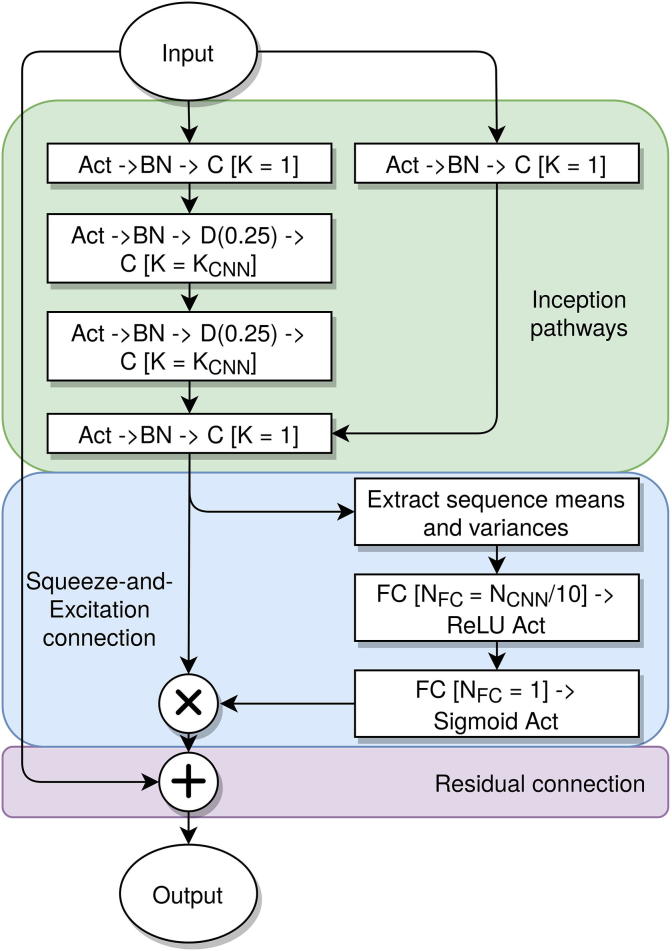
https://cdn.ncbi.nlm.nih.gov/pmc/blobs/10ac/7212484/03cd2d06fae7/gr5.jpg
https://cdn.ncbi.nlm.nih.gov/pmc/blobs/10ac/7212484/e4ee3511c42b/gr1.jpg
https://cdn.ncbi.nlm.nih.gov/pmc/blobs/10ac/7212484/cda5693880b7/gr2.jpg
https://cdn.ncbi.nlm.nih.gov/pmc/blobs/10ac/7212484/68808faa00e6/gr3.jpg
https://cdn.ncbi.nlm.nih.gov/pmc/blobs/10ac/7212484/f1e01cec8bc4/gr4.jpg
https://cdn.ncbi.nlm.nih.gov/pmc/blobs/10ac/7212484/03cd2d06fae7/gr5.jpg
https://cdn.ncbi.nlm.nih.gov/pmc/blobs/10ac/7212484/e4ee3511c42b/gr1.jpg
https://cdn.ncbi.nlm.nih.gov/pmc/blobs/10ac/7212484/cda5693880b7/gr2.jpg
https://cdn.ncbi.nlm.nih.gov/pmc/blobs/10ac/7212484/68808faa00e6/gr3.jpg
https://cdn.ncbi.nlm.nih.gov/pmc/blobs/10ac/7212484/f1e01cec8bc4/gr4.jpg
https://cdn.ncbi.nlm.nih.gov/pmc/blobs/10ac/7212484/03cd2d06fae7/gr5.jpg

相似文献

1
SPOT-Disorder2: Improved Protein Intrinsic Disorder Prediction by Ensembled Deep Learning.SPOT-Disorder2:通过集成深度学习提高蛋白质固有无序预测。
Genomics Proteomics Bioinformatics. 2019 Dec;17(6):645-656. doi: 10.1016/j.gpb.2019.01.004. Epub 2020 Mar 13.
2
Identifying molecular recognition features in intrinsically disordered regions of proteins by transfer learning.通过迁移学习识别蛋白质无规则卷曲区域的分子识别特征。
Bioinformatics. 2020 Feb 15;36(4):1107-1113. doi: 10.1093/bioinformatics/btz691.
3
Accurate Single-Sequence Prediction of Protein Intrinsic Disorder by an Ensemble of Deep Recurrent and Convolutional Architectures.基于深度递归和卷积架构集成的蛋白质固有无序性的精确单序列预测。
J Chem Inf Model. 2018 Nov 26;58(11):2369-2376. doi: 10.1021/acs.jcim.8b00636. Epub 2018 Nov 13.
4
Identifying short disorder-to-order binding regions in disordered proteins with a deep convolutional neural network method.使用深度卷积神经网络方法识别无序蛋白质中的短无序到有序结合区域。
J Bioinform Comput Biol. 2019 Feb;17(1):1950004. doi: 10.1142/S0219720019500045.
5
Improving protein disorder prediction by deep bidirectional long short-term memory recurrent neural networks.通过深度双向长短期记忆循环神经网络改进蛋白质无序预测。
Bioinformatics. 2017 Mar 1;33(5):685-692. doi: 10.1093/bioinformatics/btw678.
6
MoRFPred_en: Sequence-based prediction of MoRFs using an ensemble learning strategy.MoRFPred_en:使用集成学习策略基于序列预测莫尔费(MoRFs)。
J Bioinform Comput Biol. 2019 Dec;17(6):1940015. doi: 10.1142/S0219720019400158.
7
MoRFPred-plus: Computational Identification of MoRFs in Protein Sequences using Physicochemical Properties and HMM profiles.MoRFPred-plus:利用物理化学性质和隐马尔可夫模型轮廓对蛋白质序列中的分子识别特征进行计算识别
J Theor Biol. 2018 Jan 21;437:9-16. doi: 10.1016/j.jtbi.2017.10.015. Epub 2017 Oct 16.
8
MFSPSSMpred: identifying short disorder-to-order binding regions in disordered proteins based on contextual local evolutionary conservation.MFSPSSMpred:基于上下文局部进化保守性识别无序蛋白中的短无序到有序结合区域。
BMC Bioinformatics. 2013 Oct 4;14:300. doi: 10.1186/1471-2105-14-300.
9
MoRF_ESM: Prediction of MoRFs in disordered proteins based on a deep transformer protein language model.MoRF_ESM:基于深度变压器蛋白质语言模型预测无序蛋白质中的分子识别特征片段
J Bioinform Comput Biol. 2024 Apr;22(2):2450006. doi: 10.1142/S0219720024500069. Epub 2024 May 28.
10
OPAL: prediction of MoRF regions in intrinsically disordered protein sequences.OPAL:预测无序蛋白质序列中的 MoRF 区域。
Bioinformatics. 2018 Jun 1;34(11):1850-1858. doi: 10.1093/bioinformatics/bty032.

引用本文的文献

1
Polymerization and flanking domains of the bactofilin BacA collectively regulate stalk formation in Asticcacaulis biprosthecum.细菌肌动蛋白BacA的聚合作用和侧翼结构域共同调节双茎鞘氨醇单胞菌的柄形成。
PLoS Genet. 2025 Aug 13;21(8):e1011542. doi: 10.1371/journal.pgen.1011542. eCollection 2025 Aug.
2
LoRA-DR-suite: adapted embeddings predict intrinsic and soft disorder from protein sequences.LoRA-DR套件:适配嵌入从蛋白质序列预测内在和软性无序。
Bioinformatics. 2025 Jul 1;41(Supplement_1):i439-i448. doi: 10.1093/bioinformatics/btaf185.
3
FusionEncoder: identification of intrinsically disordered regions based on multi-feature fusion.

本文引用的文献

1
NetSurfP-2.0: Improved prediction of protein structural features by integrated deep learning.NetSurfP-2.0:通过集成深度学习改进蛋白质结构特征预测。
Proteins. 2019 Jun;87(6):520-527. doi: 10.1002/prot.25674. Epub 2019 Mar 9.
2
A comprehensive review and comparison of existing computational methods for intrinsically disordered protein and region prediction.全面综述和比较现有的用于预测无规则卷曲蛋白质和区域的计算方法。
Brief Bioinform. 2019 Jan 18;20(1):330-346. doi: 10.1093/bib/bbx126.
3
Improving prediction of protein secondary structure, backbone angles, solvent accessibility and contact numbers by using predicted contact maps and an ensemble of recurrent and residual convolutional neural networks.
融合编码器:基于多特征融合的内在无序区域识别
Bioinformatics. 2025 Jul 1;41(7). doi: 10.1093/bioinformatics/btaf362.
4
IDP-EDL: enhancing intrinsically disordered protein prediction by combining protein language model and ensemble deep learning.IDP-EDL:通过结合蛋白质语言模型和集成深度学习增强内在无序蛋白质预测
Brief Bioinform. 2025 Mar 4;26(2). doi: 10.1093/bib/bbaf182.
5
Advancements in one-dimensional protein structure prediction using machine learning and deep learning.利用机器学习和深度学习进行一维蛋白质结构预测的进展。
Comput Struct Biotechnol J. 2025 Apr 3;27:1416-1430. doi: 10.1016/j.csbj.2025.04.005. eCollection 2025.
6
PUNCH2: Explore the strategy for intrinsically disordered protein predictor.PUNCH2:探索内在无序蛋白质预测器的策略。
PLoS One. 2025 Mar 26;20(3):e0319208. doi: 10.1371/journal.pone.0319208. eCollection 2025.
7
Evaluation of predictions of disordered binding regions in the CAID2 experiment.CAID2实验中无序结合区域预测的评估。
Comput Struct Biotechnol J. 2024 Dec 17;27:78-88. doi: 10.1016/j.csbj.2024.12.009. eCollection 2025.
8
Functional specialization of the subdomains of a bactofilin driving stalk morphogenesis in .驱动……中茎形态发生的细菌肌动蛋白亚结构域的功能特化 。 (你提供的原文似乎不完整,结尾处“in”后面缺少具体内容)
bioRxiv. 2024 Dec 16:2024.12.16.628611. doi: 10.1101/2024.12.16.628611.
9
Protein-Sequence-Based Search of Nonreceptor ITAM-Like Regions to Identify Cytosolic Syk-Recruiting Proteins.基于蛋白质序列的非受体 ITAM 样区域搜索,以鉴定胞质 Syk 募集蛋白。
J Phys Chem B. 2024 Oct 10;128(40):9724-9733. doi: 10.1021/acs.jpcb.4c05185. Epub 2024 Sep 25.
10
Caspase-Based Fusion Protein Technology: Substrate Cleavability Described by Computational Modeling and Simulation.基于半胱天冬酶的融合蛋白技术:通过计算建模和模拟描述的底物可切割性。
J Chem Inf Model. 2024 Jul 22;64(14):5691-5700. doi: 10.1021/acs.jcim.4c00316. Epub 2024 Jul 1.
利用预测的接触图和递归与残差卷积神经网络的集合来改进蛋白质二级结构、主链角度、溶剂可及性和接触数的预测。
Bioinformatics. 2019 Jul 15;35(14):2403-2410. doi: 10.1093/bioinformatics/bty1006.
4
Accurate Single-Sequence Prediction of Protein Intrinsic Disorder by an Ensemble of Deep Recurrent and Convolutional Architectures.基于深度递归和卷积架构集成的蛋白质固有无序性的精确单序列预测。
J Chem Inf Model. 2018 Nov 26;58(11):2369-2376. doi: 10.1021/acs.jcim.8b00636. Epub 2018 Nov 13.
5
UniProt: a worldwide hub of protein knowledge.UniProt:蛋白质知识的全球枢纽。
Nucleic Acids Res. 2019 Jan 8;47(D1):D506-D515. doi: 10.1093/nar/gky1049.
6
Taxonomic Landscape of the Dark Proteomes: Whole-Proteome Scale Interplay Between Structural Darkness, Intrinsic Disorder, and Crystallization Propensity.暗蛋白质组的分类学景观:结构黑暗、内在无序和结晶倾向之间的全蛋白质组规模相互作用。
Proteomics. 2018 Nov;18(21-22):e1800243. doi: 10.1002/pmic.201800243. Epub 2018 Oct 8.
7
Detecting Proline and Non-Proline Cis Isomers in Protein Structures from Sequences Using Deep Residual Ensemble Learning.基于深度残差集成学习从序列中检测蛋白质结构中的脯氨酸和顺式异构体和非脯氨酸异构体。
J Chem Inf Model. 2018 Sep 24;58(9):2033-2042. doi: 10.1021/acs.jcim.8b00442. Epub 2018 Aug 29.
8
Functions of short lifetime biological structures at large: the case of intrinsically disordered proteins.大寿命短的生物结构的功能:以无序蛋白质为例。
Brief Funct Genomics. 2020 Jan 22;19(1):60-68. doi: 10.1093/bfgp/ely023.
9
Accurate prediction of protein contact maps by coupling residual two-dimensional bidirectional long short-term memory with convolutional neural networks.通过将残差二维双向长短期记忆与卷积神经网络相结合,准确预测蛋白质接触图。
Bioinformatics. 2018 Dec 1;34(23):4039-4045. doi: 10.1093/bioinformatics/bty481.
10
IUPred2A: context-dependent prediction of protein disorder as a function of redox state and protein binding.IUPred2A:氧化还原状态和蛋白质结合依赖性的蛋白质无序性预测的上下文相关分析。
Nucleic Acids Res. 2018 Jul 2;46(W1):W329-W337. doi: 10.1093/nar/gky384.