Department of Radiology, Beijing Haidian Section of Peking University Third Hospital (Beijing Haidian Hospital), Beijing, China.
Institute of Advanced Research, Infervision, Beijing, China.
Korean J Radiol. 2020 Apr;21(4):505-508. doi: 10.3348/kjr.2020.0146. Epub 2020 Mar 5.
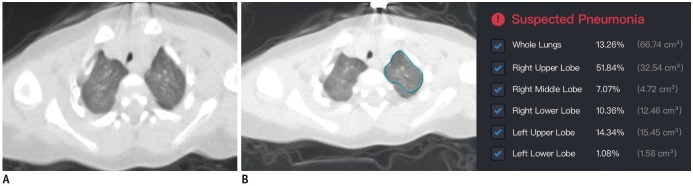
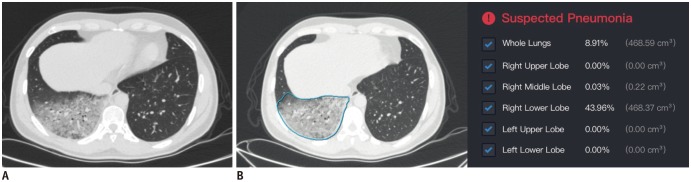
The epidemic of 2019 novel coronavirus, later named as severe acute respiratory syndrome coronavirus 2 (SARS-CoV-2), is still gradually spreading worldwide. The nucleic acid test or genetic sequencing serves as the gold standard method for confirmation of infection, yet several recent studies have reported false-negative results of real-time reverse-transcriptase polymerase chain reaction (rRT-PCR). Here, we report two representative false-negative cases and discuss the supplementary role of clinical data with rRT-PCR, including laboratory examination results and computed tomography features. Coinfection with SARS-COV-2 and other viruses has been discussed as well.
2019 年新型冠状病毒疫情(后被命名为严重急性呼吸综合征冠状病毒 2 型,SARS-CoV-2)仍在全球范围内逐步蔓延。核酸检测或基因测序是感染确认的金标准方法,但最近有几项研究报告了实时逆转录聚合酶链反应(rRT-PCR)的假阴性结果。在此,我们报告了两例有代表性的假阴性病例,并讨论了 rRT-PCR 与临床数据(包括实验室检查结果和计算机断层扫描特征)的补充作用。还讨论了 SARS-CoV-2 与其他病毒的合并感染。