Kukreja Promil, Lehtonen Eva, Pinto Martim C, Patel Harshadkumar A, McKissack Haley M, Shah Ashish
Anesthesiology, University of Alabama School of Medicine, Birmingham, USA.
Orthopaedics, University of Miami Miller School of Medicine, Miami, USA.
Cureus. 2018 Dec 4;10(12):e3678. doi: 10.7759/cureus.3678.
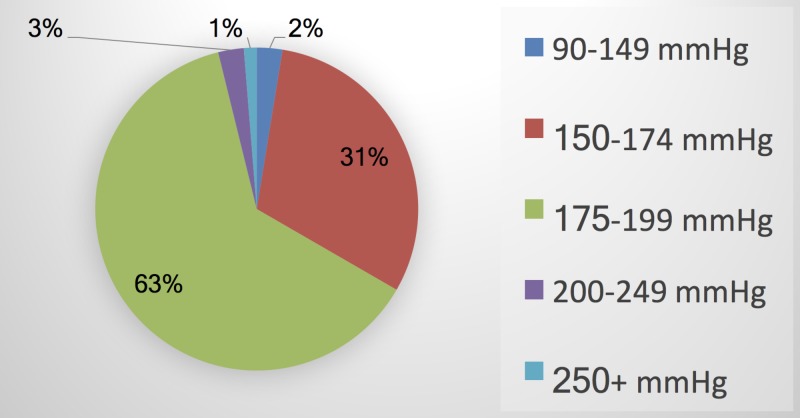
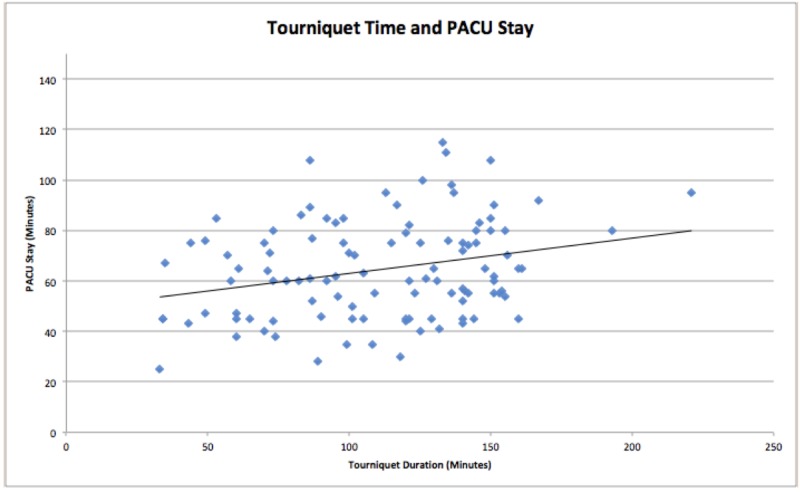
Background Tourniquets are commonly used to reduce bleeding intraoperatively during orthopedic surgery. There are variable guidelines for ideal tourniquet pressure and duration; the practice of fixed, high tourniquet pressures remains common. The purpose of this study was to assess the correlation between excessive tourniquet pressure and duration and the incidence of tourniquet pain in foot and ankle surgery patients. Methods A retrospective cohort study was conducted on 128 patients who underwent foot and ankle surgery with tourniquet use. Baseline systolic blood pressure (SBP), tourniquet pressure and duration, intraoperative opioid consumption, post-anesthesia care unit (PACU) pain scores, PACU opioid consumption, and PACU length of stay (LOS) were collected. Linear regression analysis was used to test for the statistical correlation between the tourniquet pressure and duration and postoperative pain scores, narcotic use, and PACU LOS. Results A tourniquet pressure of 280 mmHg was used in 90% of the cases (= 128). Only 2.5% of the patients had tourniquet pressures 100-150 mmHg above SBP. The mean tourniquet time was 107.5 minutes ± 39.8. Linear regression showed a significant positive correlation between tourniquet time and morphine equivalents used in the perioperative period (= 0.410; < 0.001) and the length of PACU stay (= 0.250; = 0.012). Conclusion Prolonged tourniquet times at high pressures, not based on limb occlusion pressure LOP, lead to increased pain and opioid use and prolonged PACU LOS. Basing tourniquet pressures on LOPs could likely improve the safety margin of the tourniquets; however, randomized clinical trials are needed.
止血带常用于骨科手术中减少术中出血。关于理想止血带压力和持续时间有不同的指南;固定的高止血带压力做法仍然很常见。本研究的目的是评估过高的止血带压力和持续时间与足踝手术患者止血带疼痛发生率之间的相关性。方法:对128例使用止血带进行足踝手术的患者进行回顾性队列研究。收集基线收缩压(SBP)、止血带压力和持续时间、术中阿片类药物消耗量、麻醉后护理单元(PACU)疼痛评分、PACU阿片类药物消耗量以及PACU住院时间(LOS)。采用线性回归分析来检验止血带压力和持续时间与术后疼痛评分、麻醉药物使用及PACU LOS之间的统计学相关性。结果:90%(n = 128)的病例使用了280 mmHg的止血带压力。只有2.5%的患者止血带压力比SBP高100 - 150 mmHg。平均止血带时间为107.5分钟±39.8。线性回归显示止血带时间与围手术期使用的吗啡当量之间存在显著正相关(r = 0.410;P < 0.001),与PACU住院时间也存在显著正相关(r = 0.250;P = 0.012)。结论:在不基于肢体阻断压力(LOP)的情况下,长时间高压力使用止血带会导致疼痛增加、阿片类药物使用增多以及PACU LOS延长。根据LOP来设定止血带压力可能会提高止血带的安全系数;然而,还需要进行随机临床试验。