Clinical Epidemiology and Biostatistics Department, Ministry of Education Key Laboratory of Child Development and Disorders, National Clinical Research Center for Child Health and Disorders, Key Laboratory of Pediatrics in Chongqing, Chongqing International Science and Technology Cooperation Center for Child Development and Disorders, Children's Hospital, Chongqing Medical University, 136 2nd Zhongshan Avenue, Yuzhong District, Chongqing, People's Republic of China.
Centers for Disease Control and Prevention of Jiulongpo District, Chongqing, People's Republic of China.
Int Health. 2020 May 1;12(3):203-212. doi: 10.1093/inthealth/ihaa002.
Hypertension is a leading cause of cardiovascular disease (CVD). The purpose of this study was to examine the effectiveness of community healthcare in controlling blood pressure (BP) and mitigating related risk factors after 5 y of follow-up.
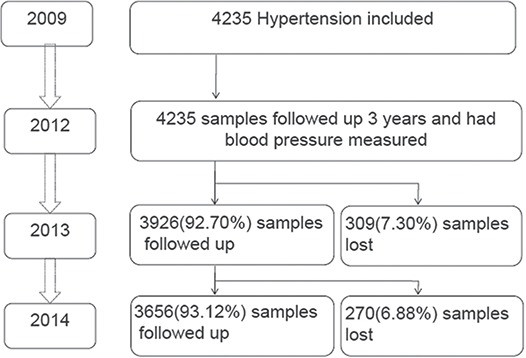
Hierarchical clustering sampling was employed to choose a representative sample of 10 rural and 10 urban community populations (N=4235). The 5y prospective cohort study was completed by the medical group in the community clinical centre.
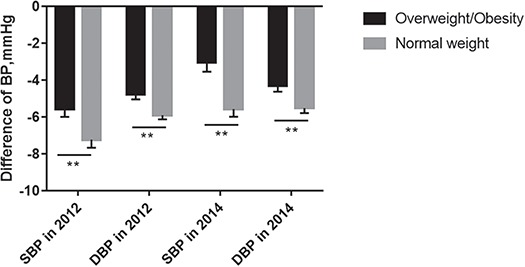
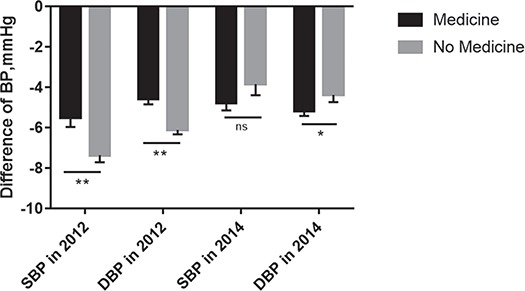
The study included 4235 patients, median age 69 y (range 61-76), with hypertension in 2009; 2533 (59.81%) were female. The rate of BP control increased from 28.33% in 2009 to 64.05% in 2014. The BP control rate was higher in patients with CVD and kidney disease and lower in those with obesity than in those without. Comparing 2009 and 2014 values, the intervention resulted in median systolic BP and diastolic BP reductions of 7.0 mmHg and 6.5 mmHg, respectively. Age, medication treatment, antihypertensive agents, BP at baseline and follow-up, complications of diabetes, CVD, obesity and kidney disease, the aspartate aminotransferase:aminotransferase ratio and smoking were identified as risk factors for BP control.
Community management of hypertension by general practitioners achieved significant BP control over 5 y of intervention.
高血压是心血管疾病(CVD)的主要病因。本研究旨在探讨社区医疗保健在 5 年随访后控制血压(BP)和减轻相关危险因素的效果。
采用层次聚类抽样选择了 10 个农村和 10 个城市社区人群(N=4235)的代表性样本。这项 5 年前瞻性队列研究由社区临床中心的医疗小组完成。
该研究纳入了 4235 例患者,中位年龄 69 岁(范围 61-76),2009 年患有高血压;2533 例(59.81%)为女性。BP 控制率从 2009 年的 28.33%上升至 2014 年的 64.05%。患有 CVD 和肾脏疾病的患者 BP 控制率较高,而肥胖患者的 BP 控制率较低。与 2009 年相比,2014 年的干预措施使收缩压和舒张压中位数分别降低了 7.0mmHg 和 6.5mmHg。年龄、药物治疗、降压药物、BP 基线和随访、糖尿病并发症、CVD、肥胖和肾脏疾病、天冬氨酸转氨酶:转氨酶比值和吸烟被确定为 BP 控制的危险因素。
全科医生对高血压的社区管理在 5 年的干预中实现了显著的 BP 控制。