Faculty of Pharmaceutical Sciences, Hokkaido University, Kita-12, Nishi-6, Kita-ku, Sapporo 060-0812, Japan.
Department of Biological Sciences, National University of Singapore, Singapore 117543, Singapore.
Toxins (Basel). 2020 Mar 12;12(3):175. doi: 10.3390/toxins12030175.
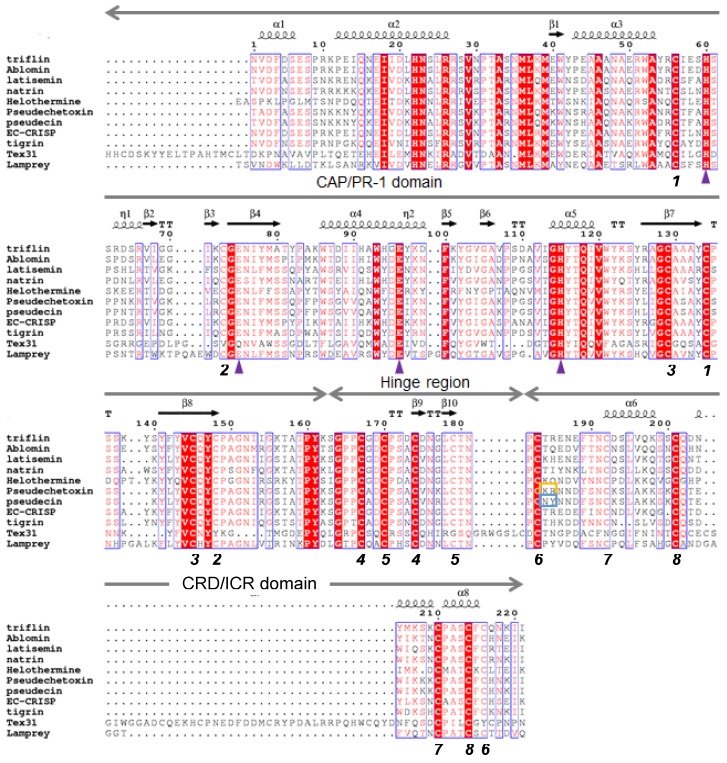
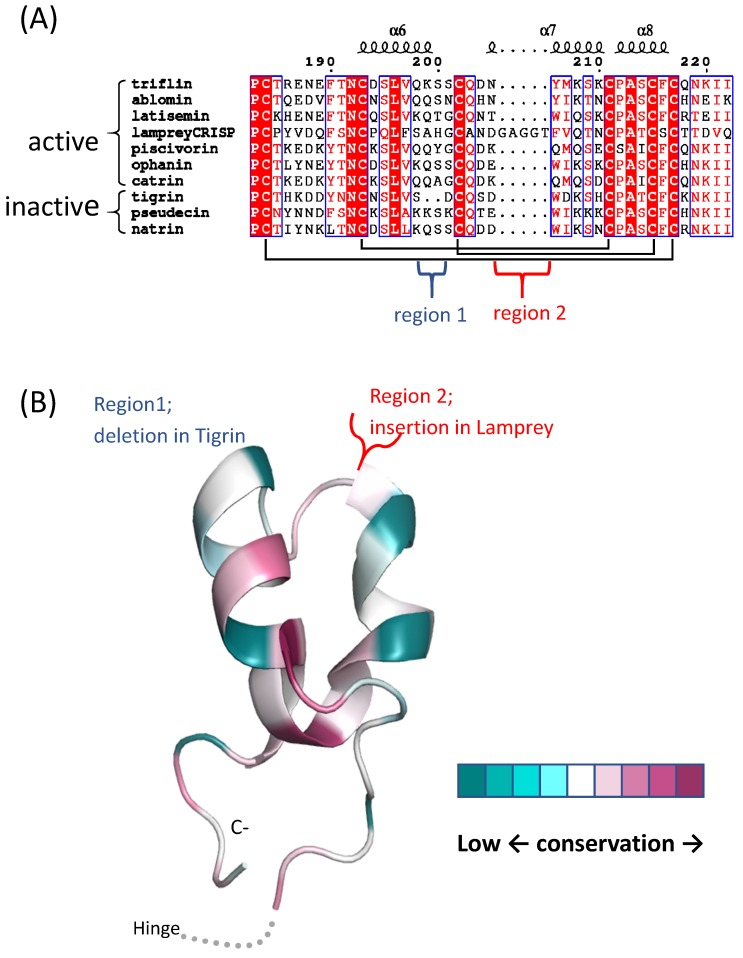
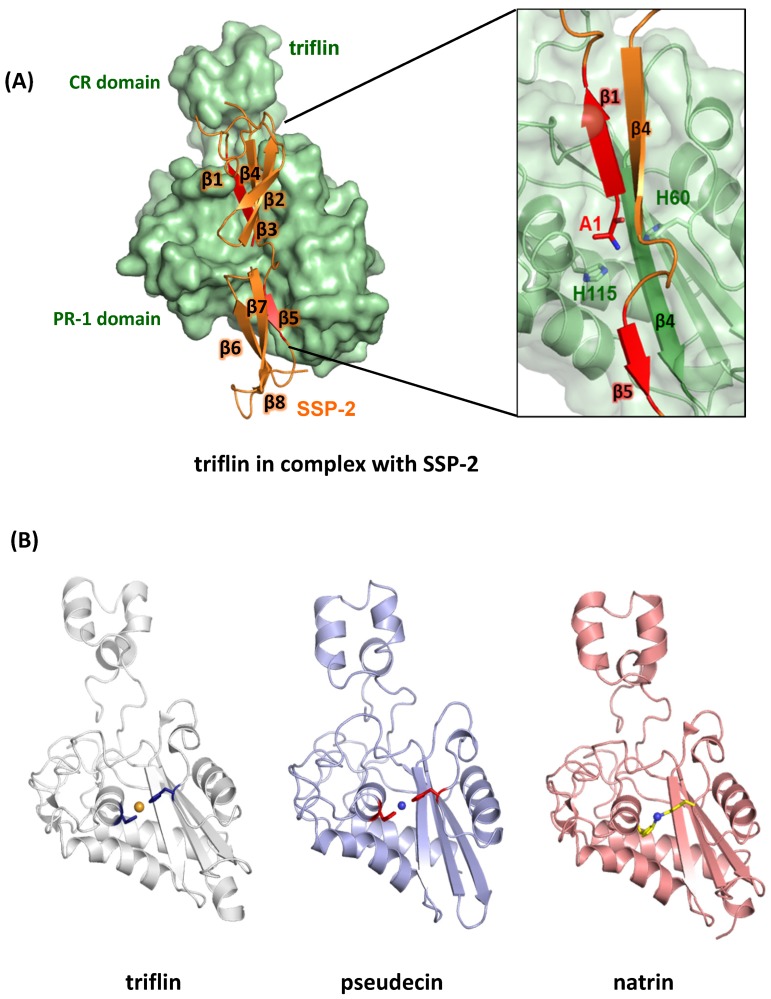
The CAP protein superfamily (Cysteine-rich secretory proteins (CRISPs), Antigen 5 (Ag5), and Pathogenesis-related 1 (PR-1) proteins) is widely distributed, but for toxinologists, snake venom CRISPs are the most familiar members. Although CRISPs are found in the majority of venoms, very few of these proteins have been functionally characterized, but those that have been exhibit diverse activities. Snake venom CRISPs (svCRISPs) inhibit ion channels and the growth of new blood vessels (angiogenesis). They also increase vascular permeability and promote inflammatory responses (leukocyte and neutrophil infiltration). Interestingly, CRISPs in lamprey buccal gland secretions also manifest some of these activities, suggesting an evolutionarily conserved function. As we strive to better understand the functions that CRISPs serve in venoms, it is worth considering the broad range of CRISP physiological activities throughout the animal kingdom. In this review, we summarize those activities, known crystal structures and sequence alignments, and we discuss predicted functional sites. CRISPs may not be lethal or major components of venoms, but given their almost ubiquitous occurrence in venoms and the accelerated evolution of svCRISP genes, these venom proteins are likely to have functions worth investigating.
CAP 蛋白超家族(富含半胱氨酸的分泌蛋白(CRISPs)、抗原 5(Ag5)和病程相关蛋白 1(PR-1)蛋白)广泛分布,但对于毒素学家来说,蛇毒 CRISPs 是最熟悉的成员。尽管 CRISPs 存在于大多数毒液中,但这些蛋白中只有极少数具有功能特征,但已被功能化的 CRISPs 表现出多种活性。蛇毒 CRISPs(svCRISPs)抑制离子通道和新血管的生长(血管生成)。它们还增加血管通透性并促进炎症反应(白细胞和中性粒细胞浸润)。有趣的是,七鳃鳗颊腺分泌物中的 CRISPs 也表现出其中一些活性,这表明其具有进化保守的功能。由于我们努力更好地了解 CRISPs 在毒液中所起的作用,值得考虑 CRISP 在整个动物王国中的广泛生理活性。在这篇综述中,我们总结了这些活性、已知的晶体结构和序列比对,并讨论了预测的功能位点。CRISPs 可能不是毒液中的致死成分或主要成分,但鉴于它们在毒液中几乎普遍存在,以及 svCRISP 基因的加速进化,这些毒液蛋白很可能具有值得研究的功能。