Department of Biomedical Sciences, College of Life Sciences, Ritsumeikan University, Kusatsu 525-8577, Japan.
Ritsumeikan Global Innovation Research Institute, Ritsumeikan University, Kusatsu 525-8577, Japan.
Int J Mol Sci. 2020 Mar 12;21(6):1937. doi: 10.3390/ijms21061937.
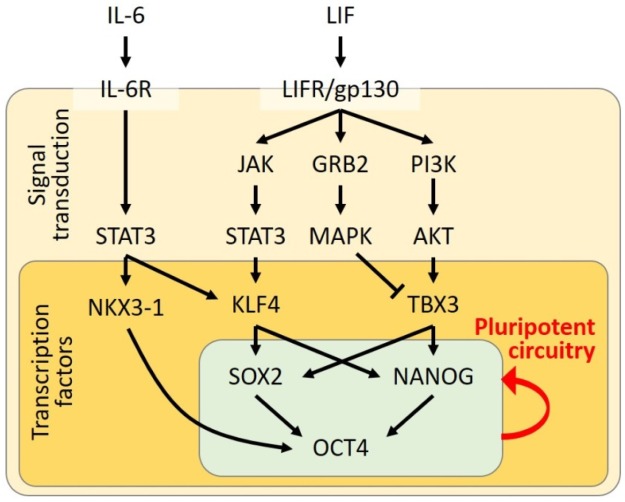
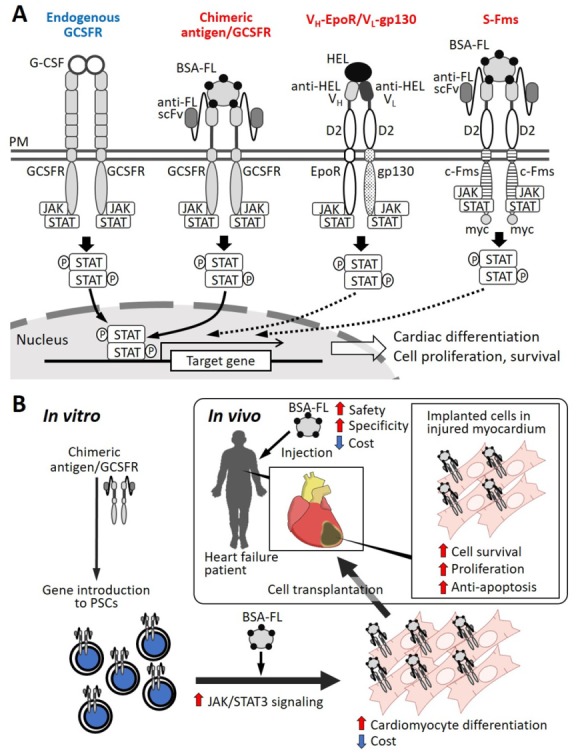
Heart disease is the most common cause of death in developed countries, but the medical treatments for heart failure remain limited. In this context, the development of cardiac regeneration therapy for severe heart failure is important. Owing to their unique characteristics, including multiple differentiation and infinitive self-renewal, pluripotent stem cells can be considered as a novel source for regenerative medicine. Janus kinase/signal transducer and activator of transcription 3 (JAK/STAT3) signaling plays critical roles in the induction, maintenance, and differentiation of pluripotent stem cells. In the heart, JAK/STAT3 signaling has diverse cellular functions, including myocardial differentiation, cell cycle re-entry of matured myocyte after injury, and anti-apoptosis in pathological conditions. Therefore, regulating STAT3 activity has great potential as a strategy of cardiac regeneration therapy. In this review, we summarize the current understanding of STAT3, focusing on stem cell biology and pathophysiology, as they contribute to cardiac regeneration therapy. We also introduce a recently reported therapeutic strategy for myocardial regeneration that uses engineered artificial receptors that trigger endogenous STAT3 signal activation.
心脏病是发达国家最常见的死亡原因,但心力衰竭的治疗方法仍然有限。在这种情况下,严重心力衰竭的心脏再生治疗的发展很重要。由于多能干细胞具有独特的特性,包括多能性和无限自我更新能力,因此可以被视为再生医学的一种新来源。Janus 激酶/信号转导子和转录激活子 3(JAK/STAT3)信号在多能干细胞的诱导、维持和分化中发挥着关键作用。在心脏中,JAK/STAT3 信号具有多种细胞功能,包括心肌分化、损伤后成熟心肌细胞的细胞周期再进入和病理条件下的抗细胞凋亡。因此,调节 STAT3 活性作为心脏再生治疗的策略具有很大的潜力。在这篇综述中,我们总结了 STAT3 的现有认识,重点介绍了干细胞生物学和病理生理学,因为它们有助于心脏再生治疗。我们还介绍了一种最近报道的心肌再生治疗策略,该策略使用工程化的人工受体来触发内源性 STAT3 信号激活。