Department of Pediatrics, University of Colorado Anschutz Medical Campus, Aurora, CO, USA.
Department of Oncology, St. Jude Children's Research Hospital, Memphis, TN, USA.
J Neurooncol. 2020 May;147(3):531-545. doi: 10.1007/s11060-020-03457-0. Epub 2020 Mar 16.
MYC-driven medulloblastomas are highly aggressive childhood tumors with dismal outcomes and a lack of new treatment paradigms. We identified that targeting replication stress through WEE1 inhibition to suppress the S-phase replication checkpoint, combined with the attenuation of nucleotide synthesis with gemcitabine, is an effective strategy to induce apoptosis in MYC-driven medulloblastoma that could be rapidly translated into early phase clinical trials in children. Attenuation of replication stress is a key component of MYC-driven oncogenesis. Previous studies revealed a vulnerability in MYC medulloblastoma through WEE1 inhibition. Here, we focused on elucidating combinations of agents to synergize with WEE1 inhibition and drive replication stress toward cell death.
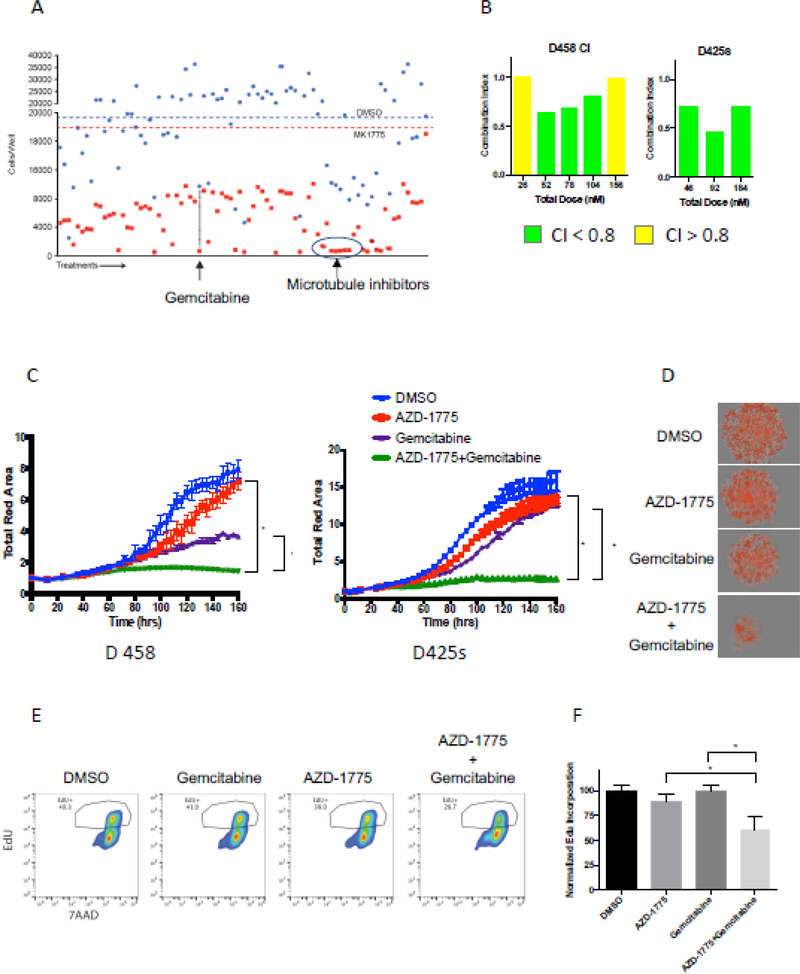
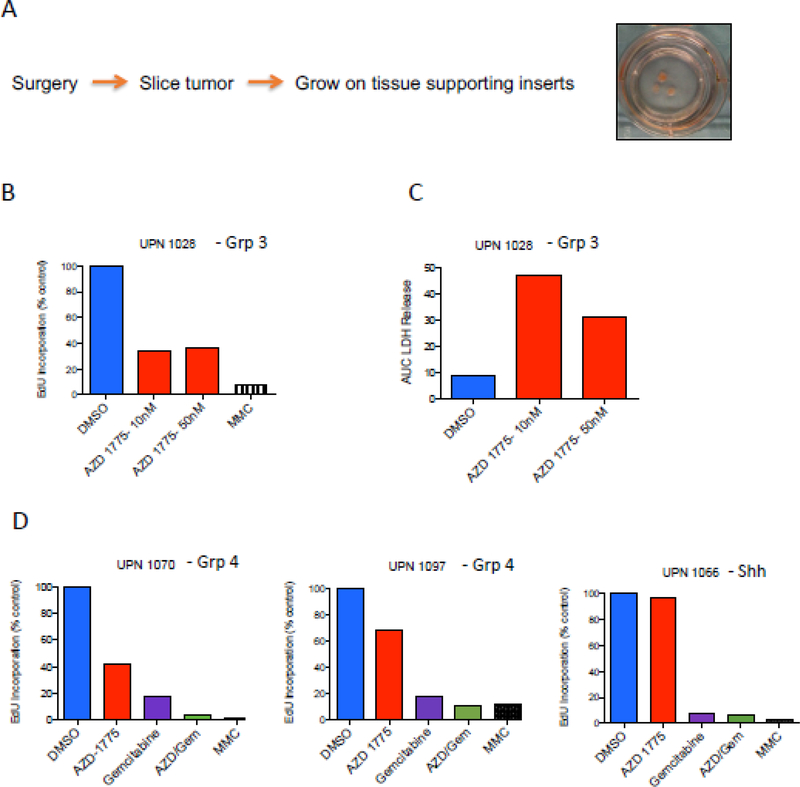
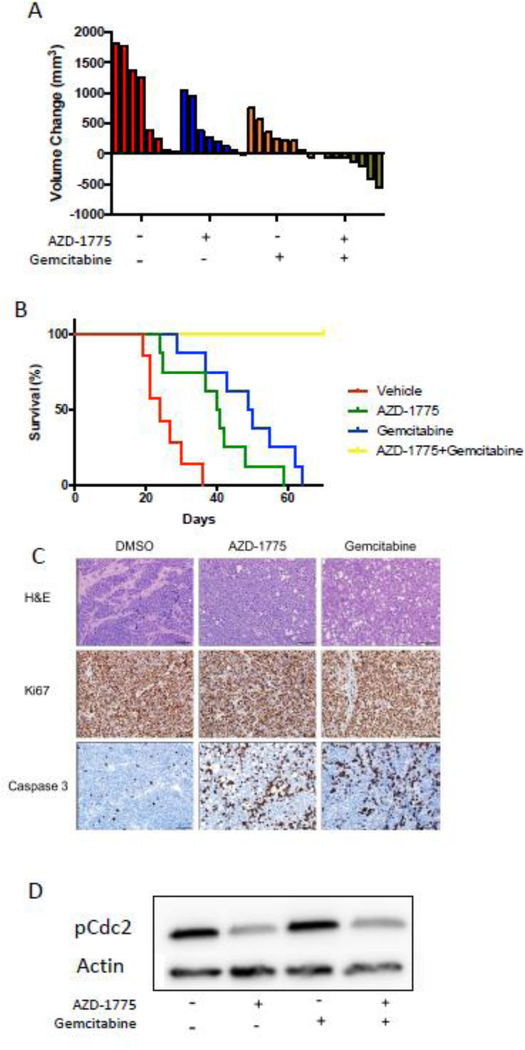
We first analyzed WEE1 expression in patient tissues by immunohistochemistry. Next, we used high-throughput drug screens to identify agents that would synergize with WEE1 inhibition. Synergy was confirmed by in vitro live cell imaging, ex vivo slice culture models, and in vivo studies using orthotopic and flank xenograft models.
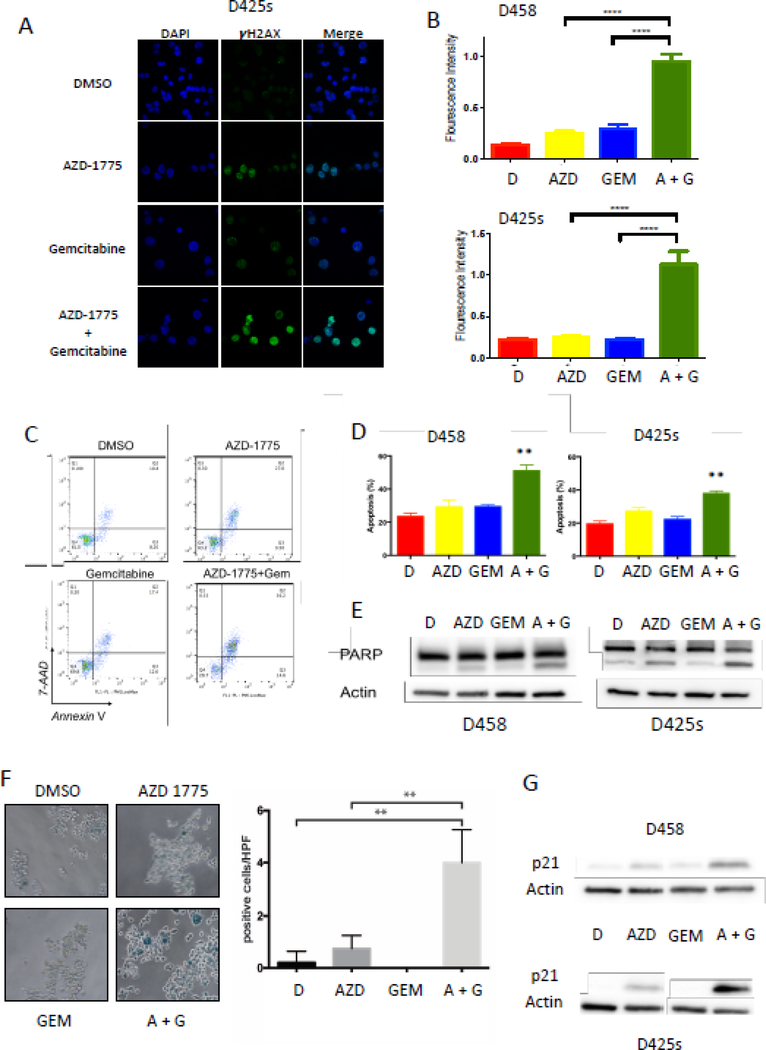
WEE1 expression was significantly higher in Group 3 and 4 medulloblastoma patients. The WEE1 inhibitor AZD1775 synergized with inhibitors of nucleotide synthesis, including gemcitabine. AZD1775 with gemcitabine suppressed proliferation and induced apoptosis. Ex vivo modeling demonstrated efficacy in Group 3 medulloblastoma patients, and in vivo modeling confirmed that combining AZD1775 and gemcitabine effectively suppressed tumor growth.
Our results identified a potent new synergistic treatment combination for MYC-driven medulloblastoma that warrants exploration in early phase clinical trials.
MYC 驱动的髓母细胞瘤是一种具有侵袭性的儿童肿瘤,预后较差,缺乏新的治疗模式。我们发现,通过 WEE1 抑制靶向复制应激,抑制 S 期复制检查点,同时结合吉西他滨抑制核苷酸合成,是一种有效诱导 MYC 驱动的髓母细胞瘤凋亡的策略,可迅速转化为儿童早期临床试验。减轻复制应激是 MYC 驱动的肿瘤发生的关键组成部分。先前的研究通过 WEE1 抑制揭示了 MYC 髓母细胞瘤的脆弱性。在这里,我们专注于阐明与 WEE1 抑制协同作用并将复制应激推向细胞死亡的联合用药方案。
我们首先通过免疫组织化学分析患者组织中的 WEE1 表达。接下来,我们使用高通量药物筛选来识别与 WEE1 抑制协同作用的药物。通过体外活细胞成像、离体切片培养模型以及使用原位和侧位异种移植模型的体内研究来确认协同作用。
WEE1 表达在 3 型和 4 型髓母细胞瘤患者中显著升高。WEE1 抑制剂 AZD1775 与核苷酸合成抑制剂(包括吉西他滨)协同作用。AZD1775 联合吉西他滨抑制增殖并诱导细胞凋亡。离体建模显示对 3 型髓母细胞瘤患者有效,体内建模证实联合使用 AZD1775 和吉西他滨可有效抑制肿瘤生长。
我们的结果确定了一种针对 MYC 驱动的髓母细胞瘤的有效新协同治疗组合,值得在早期临床试验中进行探索。