Department of Microbiology and Immunology, University of Miami Miller School of Medicine, Miami, FL, United States.
Front Immunol. 2020 Feb 27;11:328. doi: 10.3389/fimmu.2020.00328. eCollection 2020.
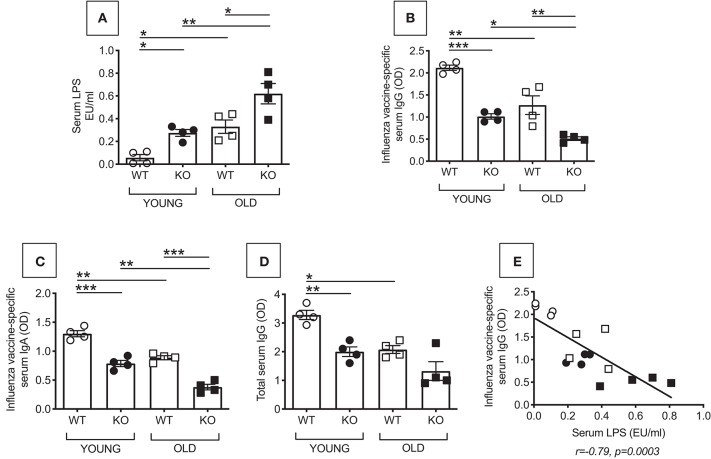
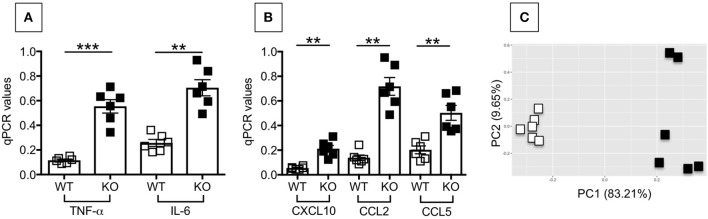
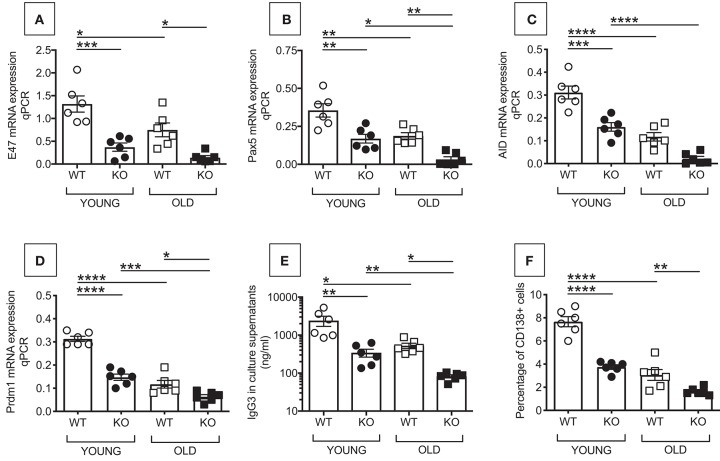
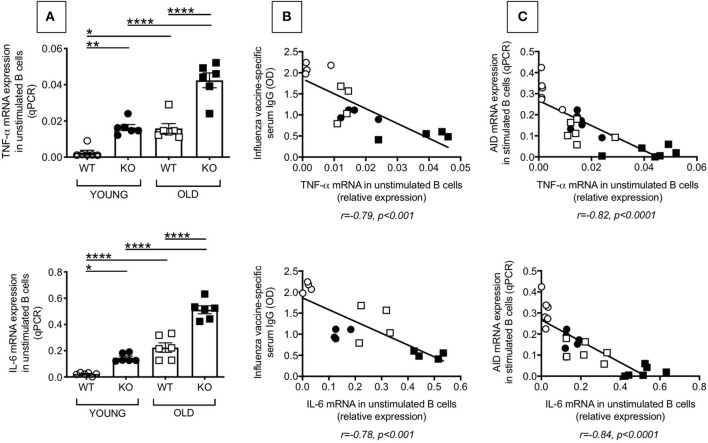
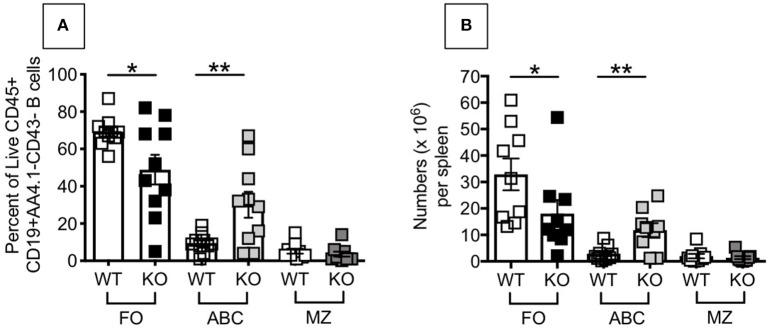
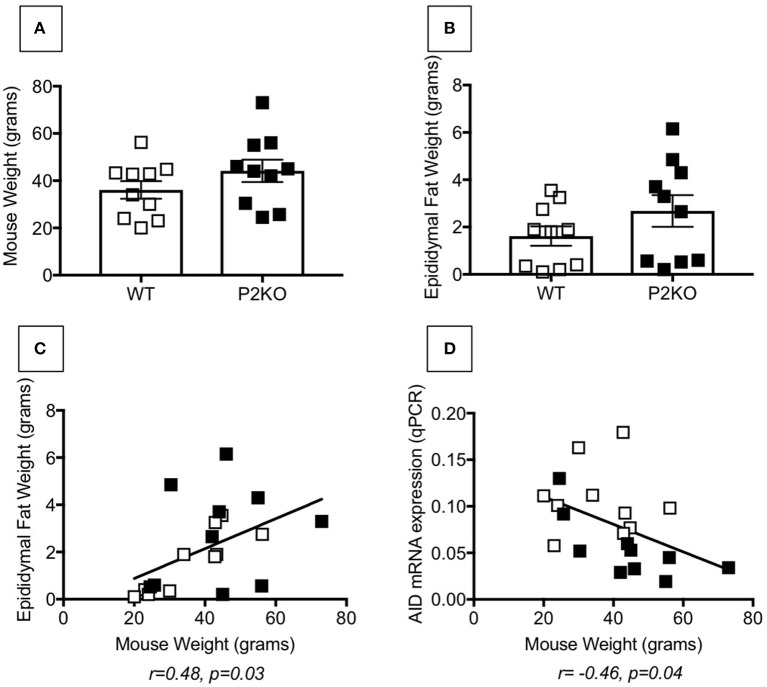
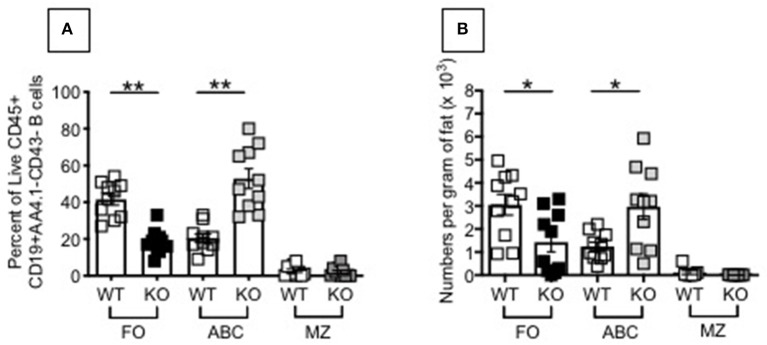
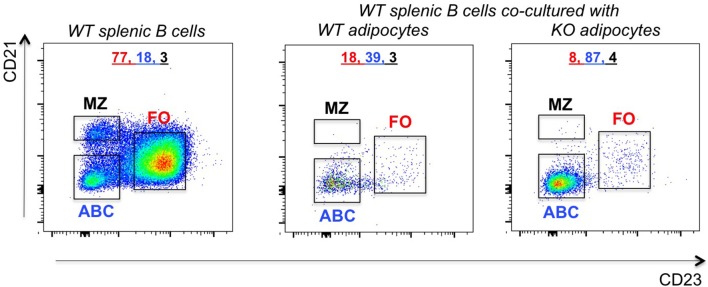
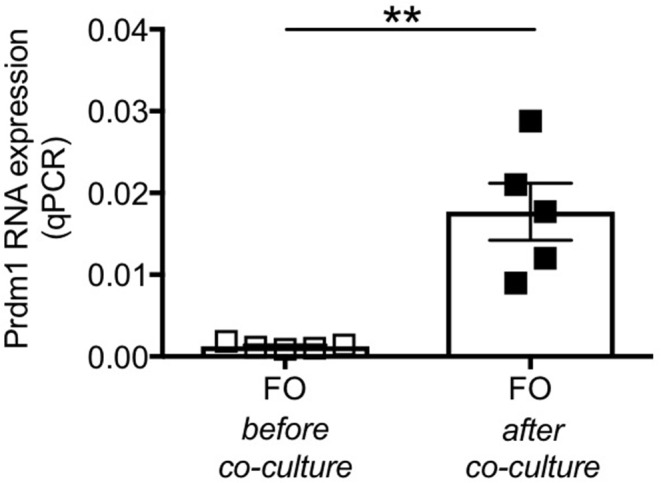
Perforin-2 (P2) is a pore-forming protein with cytotoxic activity against intracellular bacterial pathogens. P2 knockout (P2KO) mice are unable to control infections and die from normally non-lethal bacterial infections. Here we show that P2KO mice as compared to WT mice show significantly higher levels of systemic inflammation, measured by inflammatory markers in serum, due to continuous microbial translocation from the gut which cannot be controlled as these mice lack P2. Systemic inflammation in young and old P2KO mice induces intrinsic B cell inflammation. Systemic and B cell intrinsic inflammation are negatively associated with and antibody responses. Chronic inflammation leads to class switch recombination defects, which are at least in part responsible for the reduced and antibody responses in young and old P2KO vs. WT mice. These defects include the reduced expression of activation-induced cytidine deaminase (AID), the enzyme for class switch recombination, somatic hypermutation and IgG production and of its transcriptional activators E47 and Pax5. Of note, the response of young P2KO mice is not different from the one observed in old WT mice, suggesting that the chronic inflammatory status of mice lacking P2 may accelerate, or be equivalent, to that seen in old mice. The inflammatory status of the splenic B cells is associated with increased frequencies and numbers of the pro-inflammatory B cell subset called Age-associated B Cells (ABCs) in the spleen and the visceral adipose tissue (VAT) of P2KO old mice. We show that B cells differentiate into ABCs in the VAT following interaction with the adipocytes and their products, and this occurs more in the VAT of P2KO mice as compared to WT controls. This is to our knowledge the first study on B cell function and antibody responses in mice lacking P2.
穿孔素 2(P2)是一种具有细胞毒性作用的成孔蛋白,可针对细胞内细菌病原体。P2 敲除(P2KO)小鼠无法控制感染,并且死于通常非致命的细菌感染。在这里,我们发现与 WT 小鼠相比,P2KO 小鼠由于从肠道不断发生微生物易位而导致全身性炎症水平显著升高,这是由于这些小鼠缺乏 P2 而无法控制,血清中的炎症标志物可测量到。年轻和老年 P2KO 小鼠的全身性炎症会引起内在 B 细胞炎症。全身性和 B 细胞内在炎症与 和 抗体反应呈负相关。慢性炎症导致类别转换重组缺陷,这至少部分是导致年轻和老年 P2KO 与 WT 小鼠相比 抗体和 抗体反应降低的原因。这些缺陷包括激活诱导胞苷脱氨酶(AID)的表达减少,该酶是类别转换重组的酶,体细胞高频突变和 IgG 产生及其转录激活因子 E47 和 Pax5。值得注意的是,年轻 P2KO 小鼠的反应与观察到的老年 WT 小鼠的反应没有不同,这表明缺乏 P2 的小鼠的慢性炎症状态可能加速或与老年小鼠所见的相当。缺乏 P2 的老年小鼠的脾脏 B 细胞的炎症状态与脾脏和内脏脂肪组织(VAT)中促炎 B 细胞亚群称为年龄相关 B 细胞(ABC)的频率和数量增加有关。我们表明,B 细胞在与脂肪细胞及其产物相互作用后在 VAT 中分化为 ABC,并且与 WT 对照相比,P2KO 小鼠的 VAT 中发生的更多。这是我们所知的关于缺乏 P2 的小鼠的 B 细胞功能和抗体反应的第一项研究。