Aoyama Shinya, Shibata Shigenobu
Graduate School of Biomedical Science, Nagasaki University, Nagasaki, Japan.
Graduate School of Advanced Science and Engineering, Waseda University, Tokyo, Japan.
Front Nutr. 2020 Feb 28;7:18. doi: 10.3389/fnut.2020.00018. eCollection 2020.
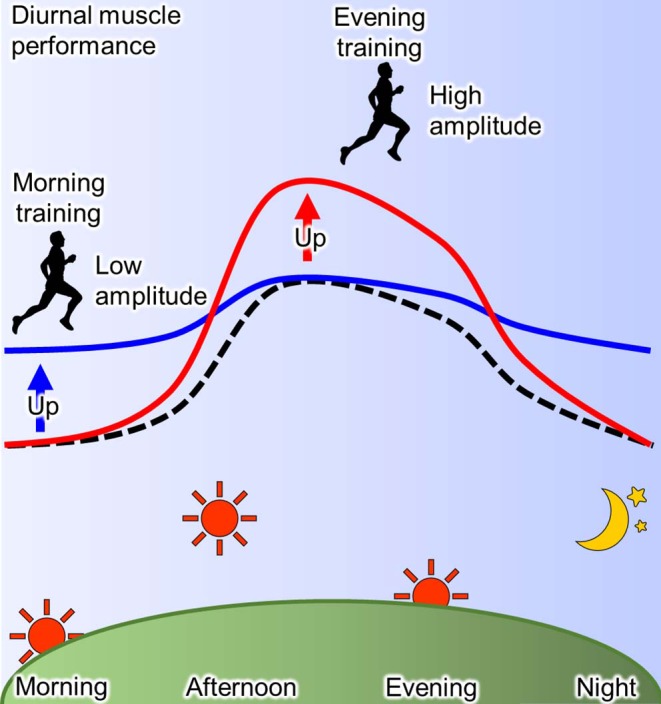
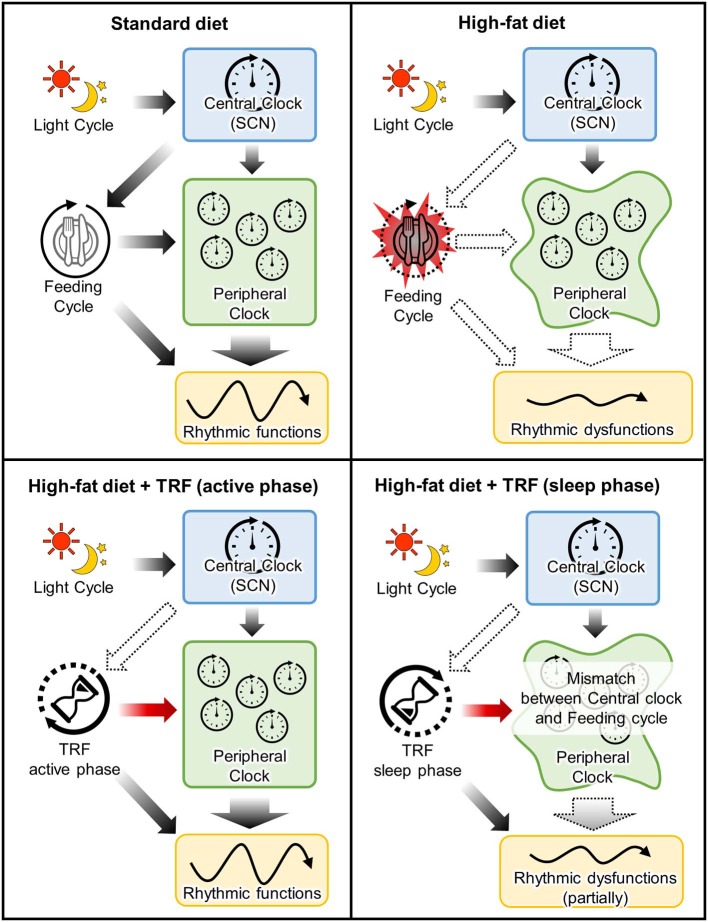
The mammalian circadian clock drives the temporal coordination in cellular homeostasis and it leads the day-night fluctuation of physiological functions, such as sleep/wake cycle, hormonal secretion, and body temperature. The mammalian circadian clock system in the body is classified hierarchically into two classes, the central clock in the suprachiasmatic nucleus (SCN) of the hypothalamus and the peripheral clocks in peripheral tissues such as the intestine and liver, as well as other brain areas outside the SCN. The circadian rhythm of various tissue-specific functions is mainly controlled by each peripheral clock and partially by the central clock as well. The digestive, absorptive, and metabolic capacities of nutrients also show the day-night variations in several peripheral tissues such as small intestine and liver. It is therefore indicated that the bioavailability or metabolic capacity of nutrients depends on the time of day. In fact, the postprandial response of blood triacylglycerol to a specific diet and glucose tolerance exhibit clear time-of-day effects. Meal frequency and distribution within a day are highly related to metabolic functions, and optimal time-restricted feeding has the potential to prevent several metabolic dysfunctions. In this review, we summarize the time-of-day-dependent postprandial response of macronutrients to each meal and the involvement of circadian clock system in the time-of-day effect. Furthermore, the chronic beneficial and adverse effects of meal time and eating pattern on metabolism and its related diseases are discussed. Finally, we discuss the timing-dependent effects of exercise on the day-night variation of exercise performance and therapeutic potential of time-controlled-exercise for promoting general health.
哺乳动物的生物钟驱动细胞内稳态的时间协调,并主导生理功能的昼夜波动,如睡眠/清醒周期、激素分泌和体温。体内的哺乳动物生物钟系统可分为两类,下丘脑视交叉上核(SCN)中的中央生物钟以及外周组织(如肠道和肝脏)和SCN以外的其他脑区中的外周生物钟。各种组织特异性功能的昼夜节律主要由每个外周生物钟控制,也部分受中央生物钟控制。小肠和肝脏等几种外周组织中营养物质的消化、吸收和代谢能力也呈现昼夜变化。因此表明营养物质的生物利用度或代谢能力取决于一天中的时间。事实上,餐后血液甘油三酯对特定饮食的反应以及葡萄糖耐量表现出明显的昼夜效应。一天中的进餐频率和分布与代谢功能高度相关,最佳的限时进食有可能预防几种代谢功能障碍。在这篇综述中,我们总结了常量营养素对每餐的昼夜依赖性餐后反应以及生物钟系统在昼夜效应中的作用。此外,还讨论了进餐时间和饮食模式对代谢及其相关疾病的长期有益和不利影响。最后,我们讨论了运动时间对运动表现昼夜变化的影响以及限时运动对促进整体健康的治疗潜力。