Hu Yinan, Yu Jun, Wang Qi, Zhang Lei, Chen Xueying, Cao Yong, Zhao Jianping, Xu Yongjian, Jiang Dingsheng, Wang Yi, Xiong Weining
Department of Respiratory and Critical Care Medicine, Key Laboratory of Pulmonary Diseases of Health Ministry, Key Site of National Clinical Research Center for Respiratory Disease, Wuhan Clinical Medical Research Center for Chronic Airway Diseases, Tongji Hospital, Tongji Medical College, Huazhong University of Science and Technology, 1095 Jiefang Avenue, Wuhan 430030, China.
Department of Thoracic Surgery, Tongji Hospital, Tongji Medical College, Huazhong University of Science and Technology, 1095 Jiefang Avenue, Wuhan 430030, China.
Mol Ther Oncolytics. 2020 Feb 8;16:272-288. doi: 10.1016/j.omto.2020.01.010. eCollection 2020 Mar 27.
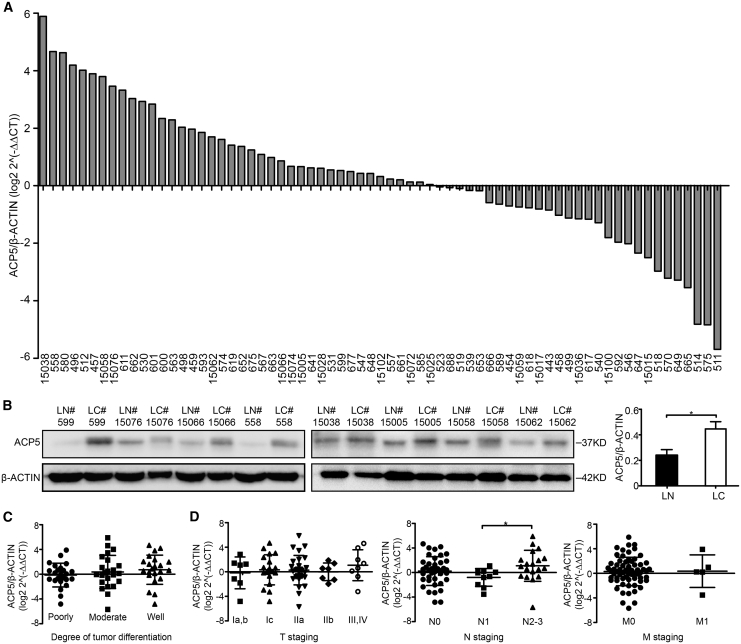
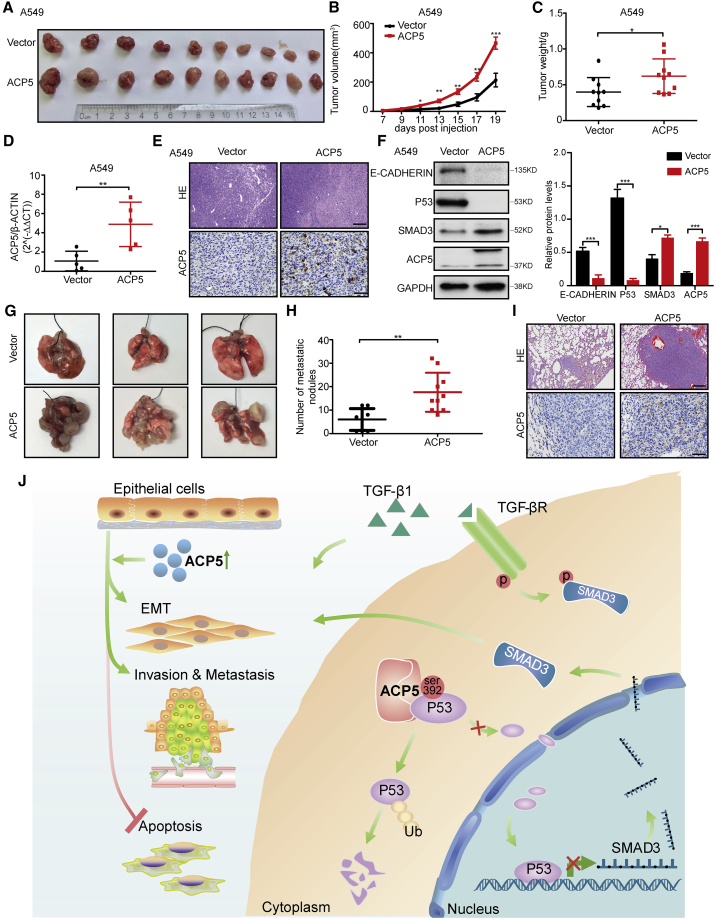
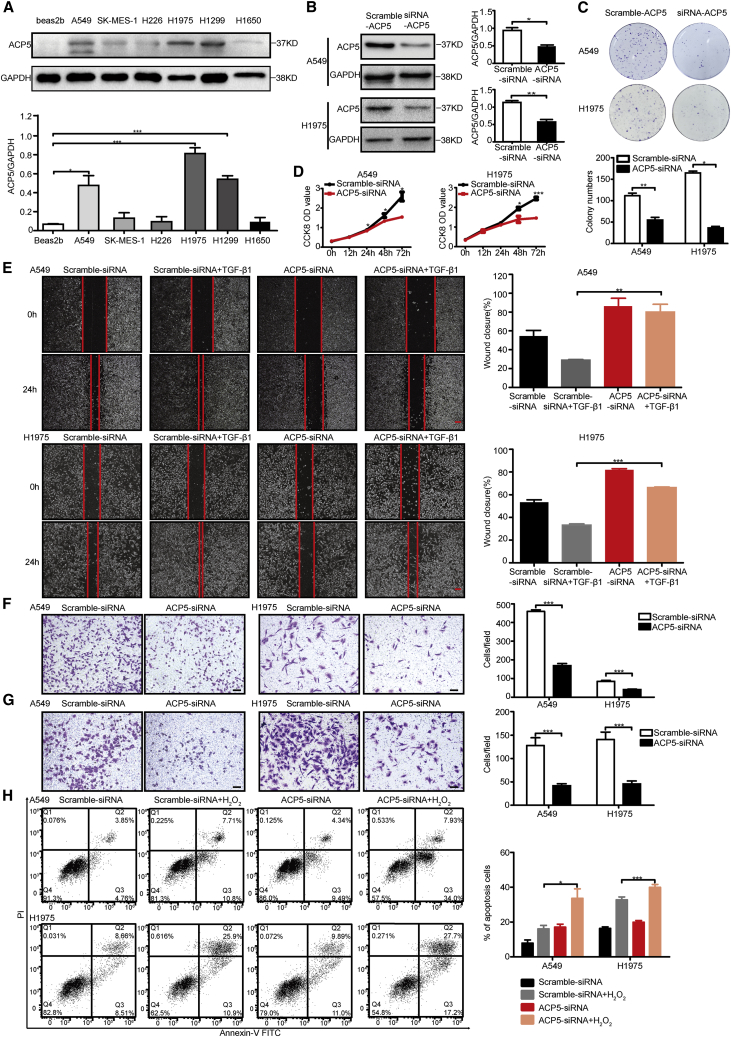
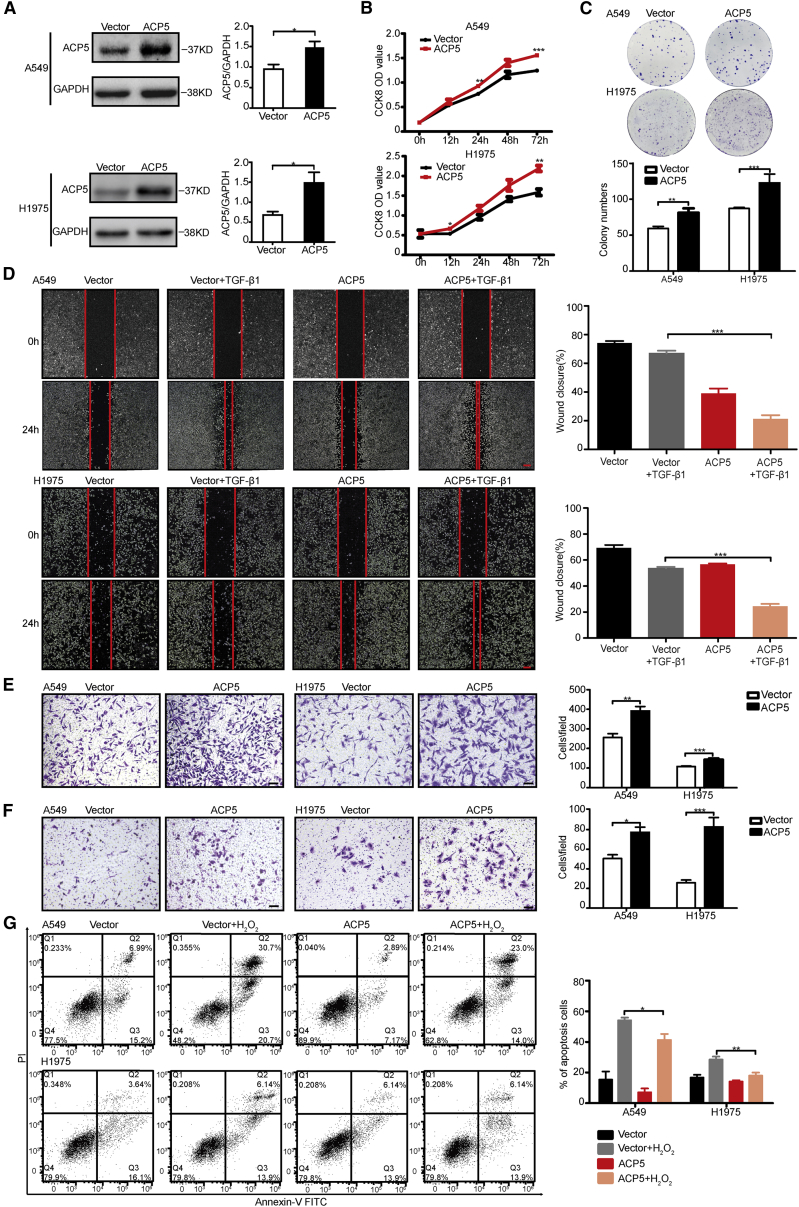
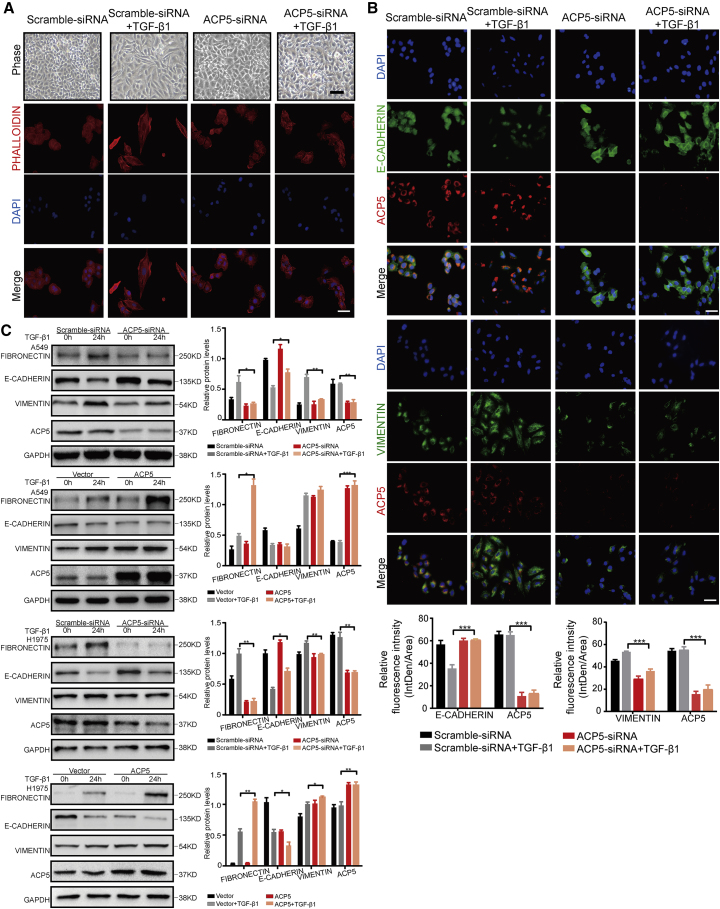
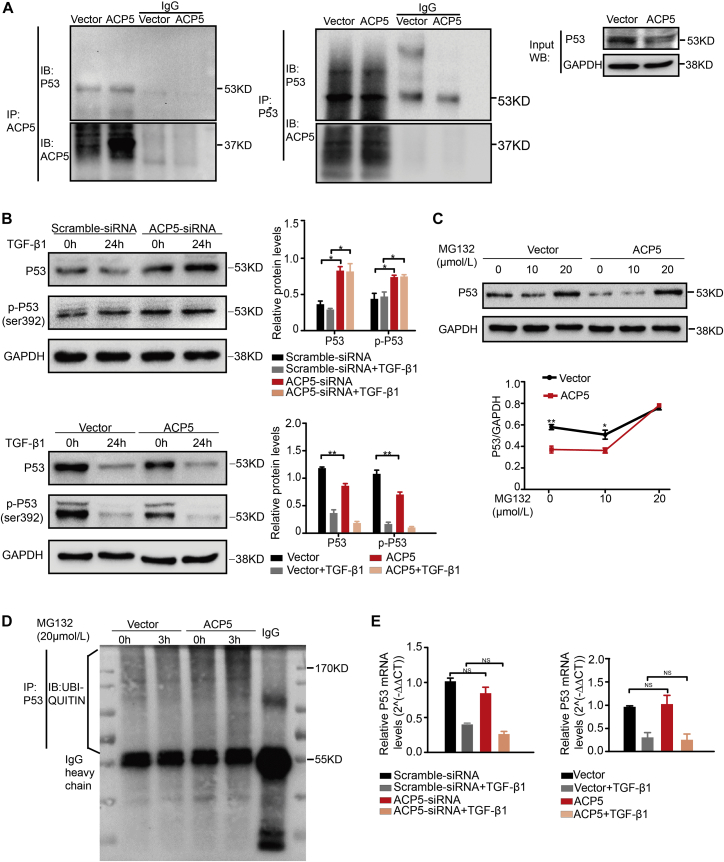
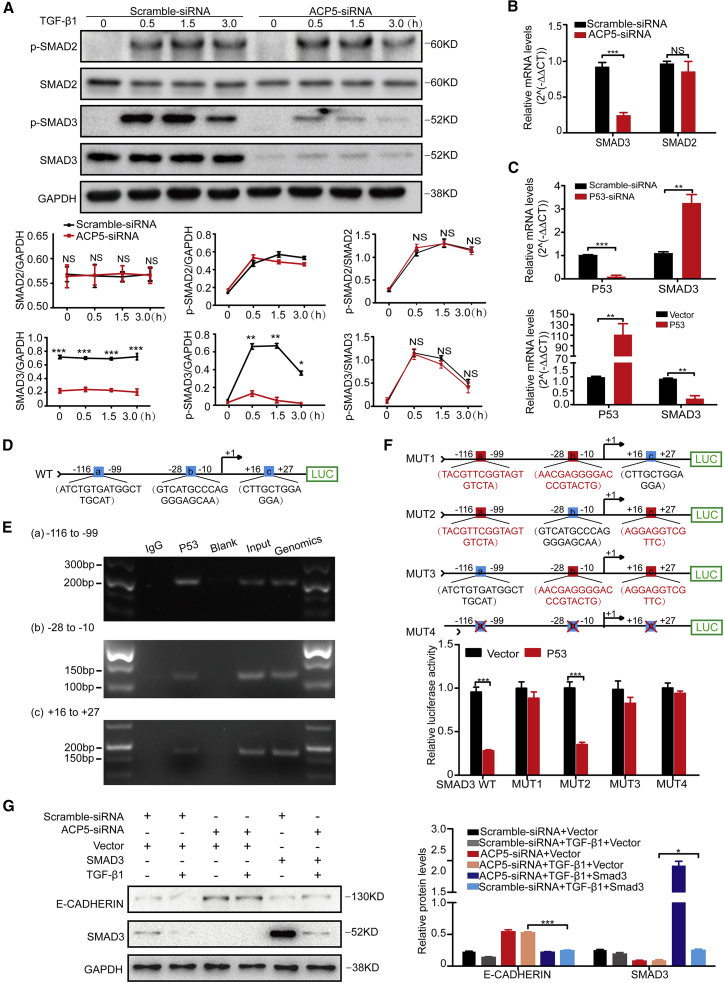
Tartrate-resistant acid phosphatase 5 (TRAP/ACP5) has been shown to involve the development and prognosis of multiple tumors in previous studies; however, the mechanism in lung cancer is still unclear, and thus this study investigated the role of ACP5 in the progression of lung adenocarcinoma. After a series of and experiments, we observed that ACP5 expression was increased in lung adenocarcinomas (40/69, 57.97%); importantly, an increased ACP5 level was associated with patient age (p = 0.044) and lymph node metastasis (p = 0.0385). ACP5 overexpression significantly enhanced A549 and NCI-H1975 cell proliferation, migration, invasion, and epithelial-mesenchymal transition (EMT) and reduced cell apoptosis. Knocking down the expression of ACP5 could rescue the above cell phenotypes. Furthermore, enhancing ACP5 expression promoted lung adenocarcinoma cell hyperplasia and intrapulmonary metastasis in a mouse model. Additionally, mechanistic studies revealed that ACP5 might regulate p53 phosphorylation at Ser392, thereby enhancing the ubiquitination of p53, which then underwent degradation. Reducing the levels of p53 intensified the transcription of , which promotes EMT in lung adenocarcinoma cells. In summary, the present study provides a theoretical basis and important scientific evidence on the key role of ACP5 in lung adenocarcinoma progression by inducing EMT via the regulation of p53/SMAD3 signaling.
抗酒石酸酸性磷酸酶5(TRAP/ACP5)在先前的研究中已被证明与多种肿瘤的发生发展及预后相关;然而,其在肺癌中的作用机制仍不清楚,因此本研究探讨了ACP5在肺腺癌进展中的作用。经过一系列实验,我们观察到肺腺癌中ACP5表达增加(40/69,57.97%);重要的是,ACP5水平升高与患者年龄(p = 0.044)和淋巴结转移(p = 0.0385)相关。ACP5过表达显著增强了A549和NCI-H1975细胞的增殖、迁移、侵袭及上皮-间质转化(EMT),并减少了细胞凋亡。敲低ACP5的表达可挽救上述细胞表型。此外,在小鼠模型中增强ACP5表达可促进肺腺癌细胞增生和肺内转移。另外,机制研究表明,ACP5可能调节p53在Ser392位点的磷酸化,从而增强p53的泛素化,进而导致其降解。降低p53水平会增强促进肺腺癌细胞EMT的基因转录。总之,本研究通过调节p53/SMAD3信号通路诱导EMT,为ACP5在肺腺癌进展中的关键作用提供了理论依据和重要科学证据。