Andreani Giacomo, Carrà Giovanna, Lingua Marcello Francesco, Maffeo Beatrice, Brancaccio Mara, Taulli Riccardo, Morotti Alessandro
Department of Clinical and Biological Sciences, University of Torino, 10043 Orbassano, Italy.
Department of Oncology, University of Torino, 10043 Orbassano, Italy.
Cancers (Basel). 2020 Mar 9;12(3):629. doi: 10.3390/cancers12030629.
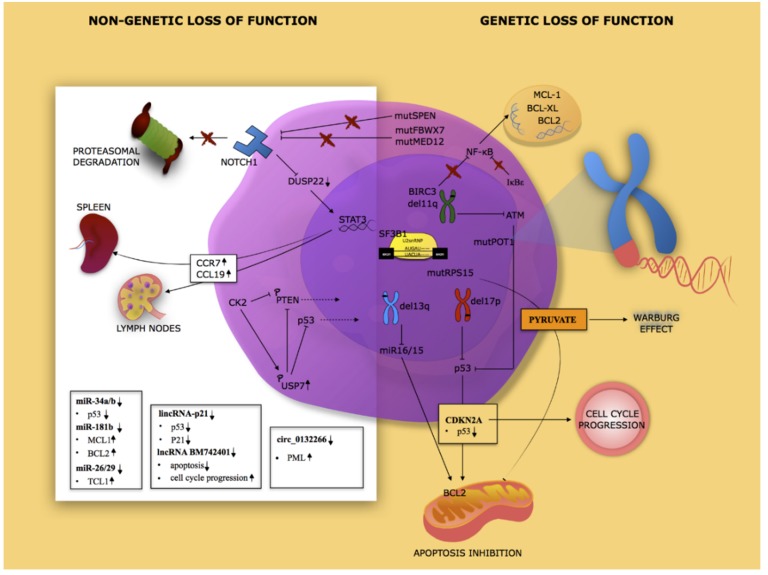
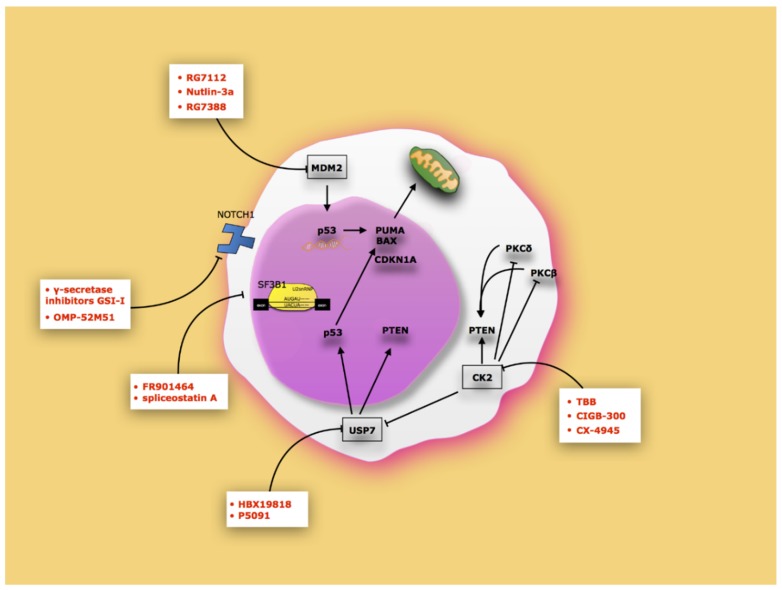
Tumor suppressors play an important role in cancer pathogenesis and in the modulation of resistance to treatments. Loss of function of the proteins encoded by tumor suppressors, through genomic inactivation of the gene, disable all the controls that balance growth, survival, and apoptosis, promoting cancer transformation. Parallel to genetic impairments, tumor suppressor products may also be functionally inactivated in the absence of mutations/deletions upon post-transcriptional and post-translational modifications. Because restoring tumor suppressor functions remains the most effective and selective approach to induce apoptosis in cancer, the dissection of mechanisms of tumor suppressor inactivation is advisable in order to further augment targeted strategies. This review will summarize the role of tumor suppressors in chronic lymphocytic leukemia and attempt to describe how tumor suppressors can represent new hopes in our arsenal against chronic lymphocytic leukemia (CLL).
肿瘤抑制因子在癌症发病机制以及治疗抗性调节中发挥着重要作用。肿瘤抑制因子所编码的蛋白质功能丧失,通过基因的基因组失活,会使所有平衡生长、存活和凋亡的调控机制失效,从而促进癌症转化。与基因损伤并行的是,在不存在转录后和翻译后修饰导致的突变/缺失情况下,肿瘤抑制因子产物也可能在功能上失活。由于恢复肿瘤抑制因子功能仍然是诱导癌细胞凋亡最有效且具选择性的方法,剖析肿瘤抑制因子失活机制对于进一步加强靶向策略是可取的。本综述将总结肿瘤抑制因子在慢性淋巴细胞白血病中的作用,并试图描述肿瘤抑制因子如何成为我们对抗慢性淋巴细胞白血病(CLL)武器库中的新希望。