Shaurova Tatiana, Dy Grace K, Battaglia Sebastiano, Hutson Alan, Zhang Letian, Zhang Yunkai, Lovly Christine M, Seshadri Mukund, Goodrich David W, Johnson Candace S, Hershberger Pamela A
Department of Pharmacology and Therapeutics, Roswell Park Comprehensive Cancer Center, Buffalo, NY 14263, USA.
Department of Medicine, Roswell Park Comprehensive Cancer Center, Buffalo, NY 14263, USA.
Cancers (Basel). 2020 Mar 13;12(3):675. doi: 10.3390/cancers12030675.
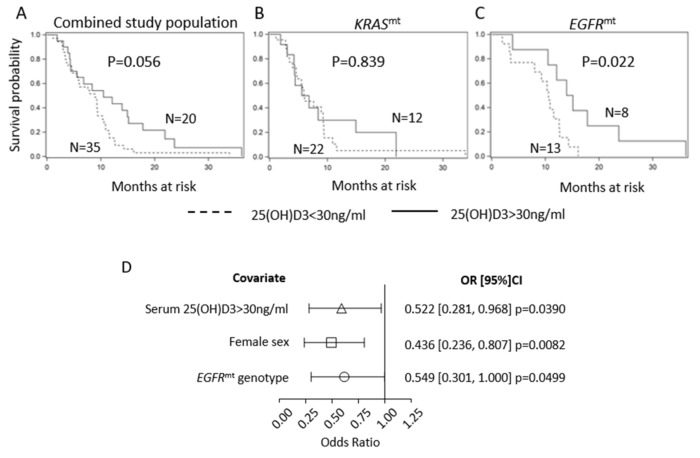
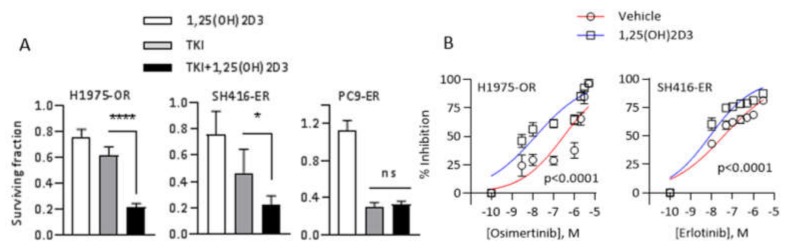
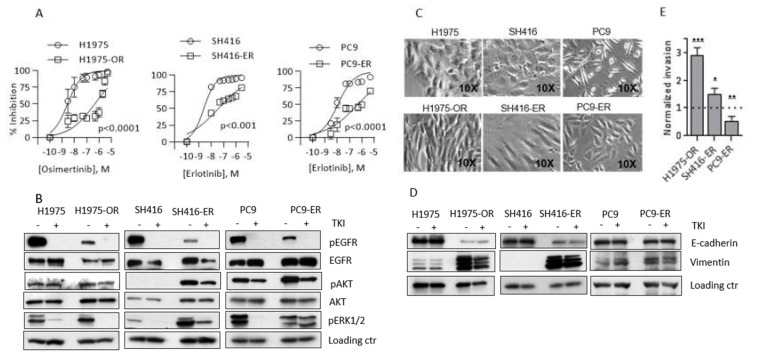
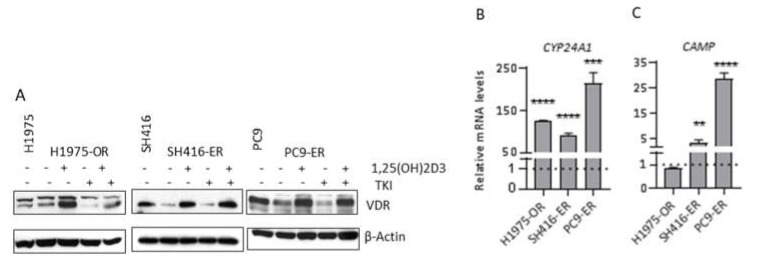
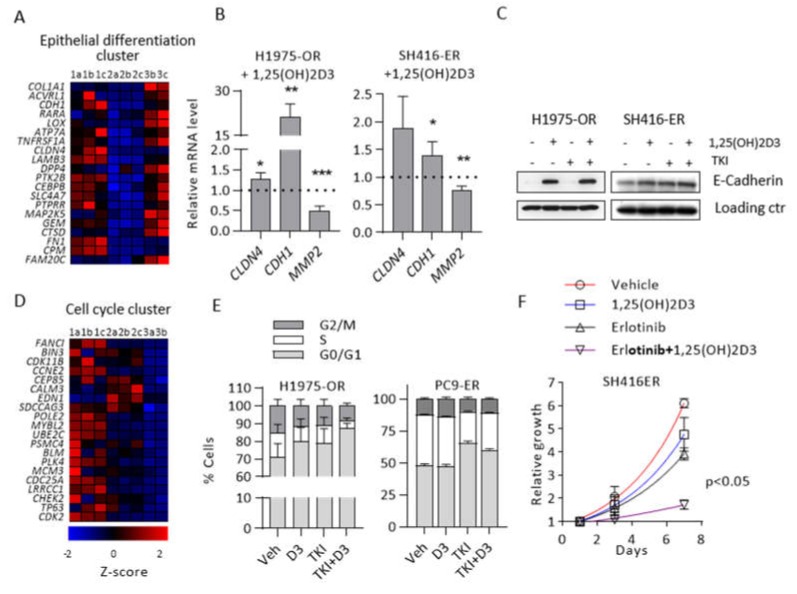
EGFR tyrosine kinase inhibitors (EGFR TKIs) are the standard of care treatment for patients with -mutant lung adenocarcinoma (LUAD). Although initially effective, EGFR TKIs are not curative. Disease inevitably relapses due to acquired drug resistance. We hypothesized that vitamin D metabolites could be used with EGFR TKIs to prevent therapeutic failure. To test this idea, we investigated the link between serum 25-hydroxyvitamin D3 (25(OH)D3) and progression-free survival (PFS) in patients with -mutant LUAD that received EGFR TKIs (erlotinib n = 20 and afatinib n = 1). Patients who were 25(OH)D3-sufficient experienced significantly longer benefit from EGFR TKI therapy (mean 14.5 months) than those with 25(OH)D3 insufficiency (mean 10.6 months, = 0.026). In contrast, 25(OH)D3 had no prognostic value in patients with -mutant LUAD that received cytotoxic chemotherapy. To gain mechanistic insights, we tested 1,25-dihydroxyvitamin D3 (1,25(OH)2D3) activity in vitro. 1,25(OH)2D3 promoted epithelial differentiation and restored EGFR TKI sensitivity in models of EGFR TKI resistance that were associated with epithelial-mesenchymal transition (EMT). 1,25(OH)2D3 was ineffective in a non-EMT model of resistance. We conclude that vitamin D sufficiency portends increased PFS among -mutant LUAD patients that receive EGFR TKIs, and that vitamin D signaling maintains drug efficacy in this specific patient subset by opposing EMT.
表皮生长因子受体酪氨酸激酶抑制剂(EGFR TKIs)是治疗表皮生长因子受体(EGFR)基因突变的肺腺癌(LUAD)患者的标准护理疗法。尽管EGFR TKIs最初有效,但并非治愈性疗法。由于获得性耐药,疾病不可避免地会复发。我们推测维生素D代谢物可与EGFR TKIs联合使用以防止治疗失败。为验证这一想法,我们研究了接受EGFR TKIs(厄洛替尼n = 20,阿法替尼n = 1)治疗的EGFR基因突变的LUAD患者血清25-羟基维生素D3(25(OH)D3)与无进展生存期(PFS)之间的联系。25(OH)D3水平充足的患者从EGFR TKI治疗中获益的时间(平均14.5个月)显著长于25(OH)D3水平不足的患者(平均10.6个月,P = 0.026)。相比之下,25(OH)D3在接受细胞毒性化疗的EGFR基因突变的LUAD患者中无预后价值。为深入了解其机制,我们在体外测试了1,25-二羟基维生素D3(1,25(OH)2D3)的活性。在与上皮-间质转化(EMT)相关的EGFR TKI耐药模型中,1,25(OH)2D3促进上皮分化并恢复EGFR TKI敏感性。在非EMT耐药模型中,其无效。我们得出结论,维生素D充足预示着接受EGFR TKIs治疗的EGFR基因突变的LUAD患者的PFS增加,并且维生素D信号通过对抗EMT维持该特定患者亚组的药物疗效。