Children's Hospital of Richmond, Virginia Commonwealth University, Richmond, VA 23219, USA.
Cancer Prevention and Control Program, Massey Cancer Center, Virginia Commonwealth University, Richmond, VA 23219, USA.
Int J Environ Res Public Health. 2020 Mar 15;17(6):1905. doi: 10.3390/ijerph17061905.
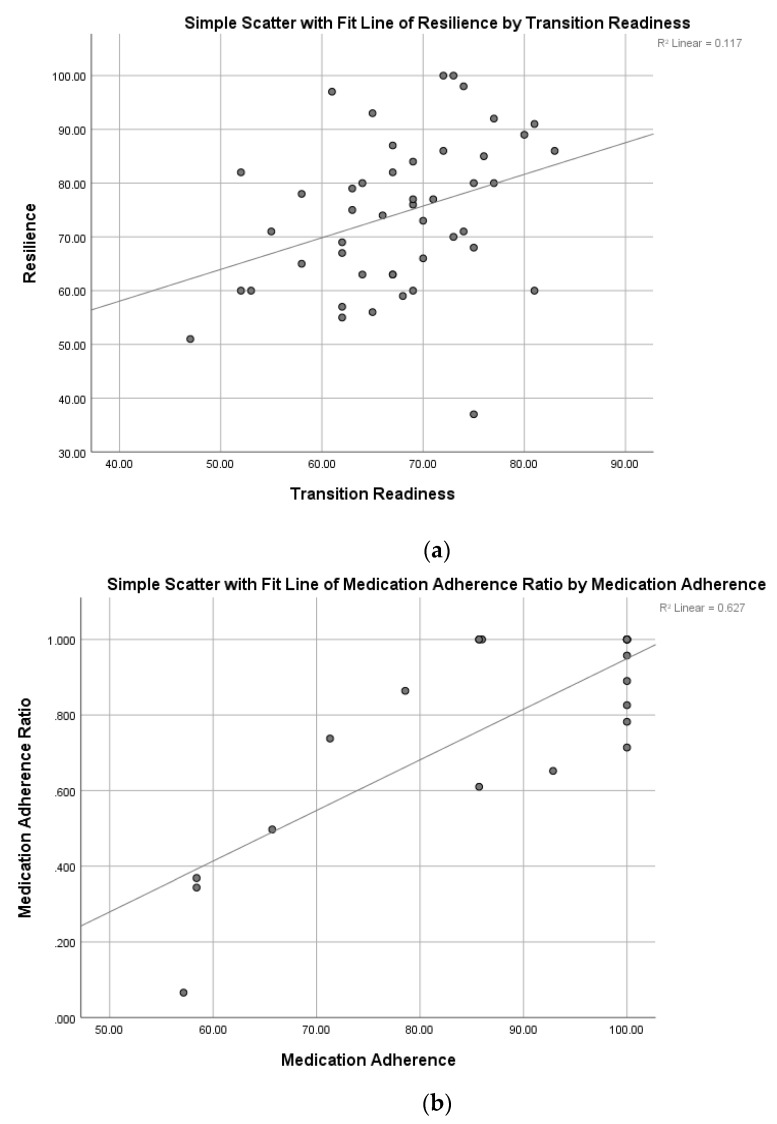
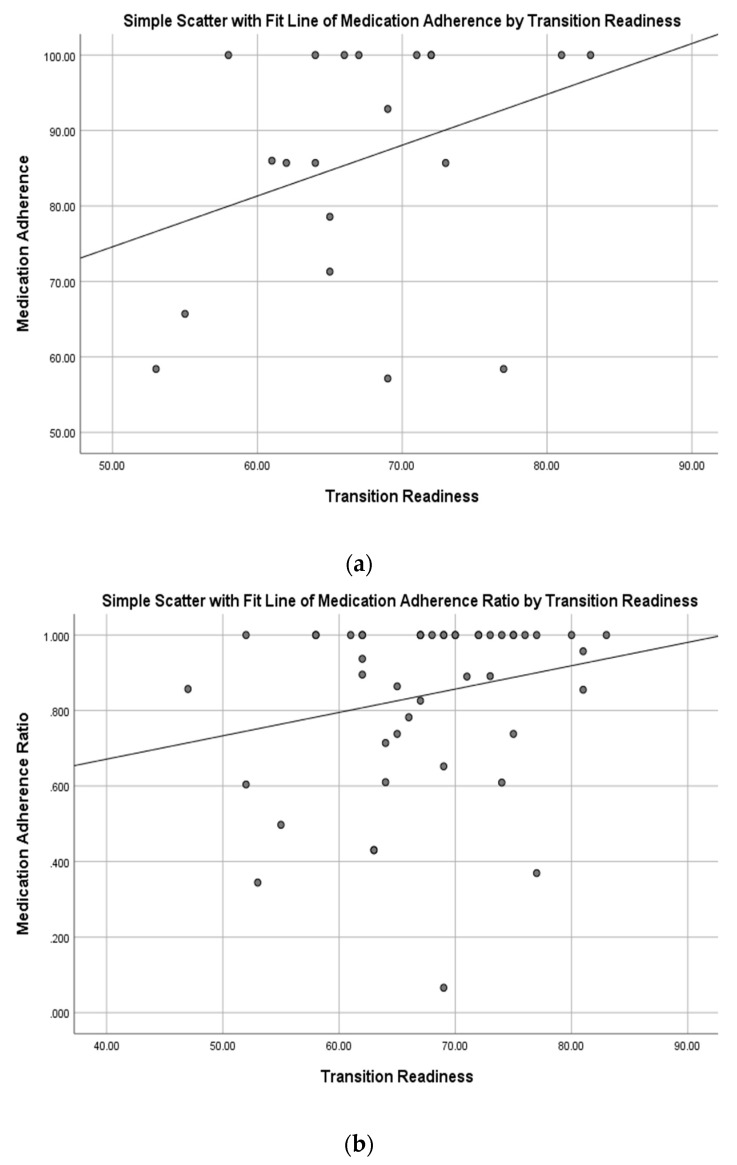
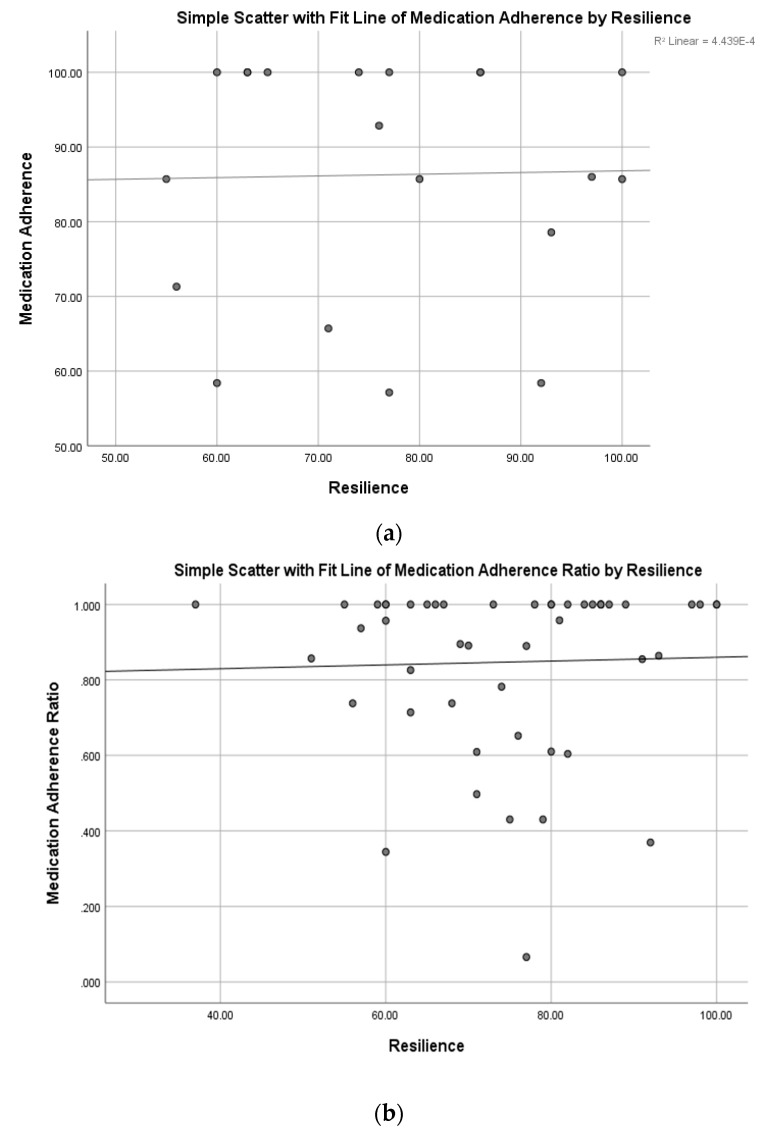
The present study assessed the relationship between resilience, adherence, and transition readiness in adolescents/young adults with chronic illness. Participants included 50 patients (Mean age, = 17.3 ± 2.1 years) diagnosed with an oncology disorder ( = 7; 12.1%), hematology disorder ( = 5; 8.6%), nephrology disorder ( = 31; 53.4%), or rheumatology disorder ( 7; 12.1%). Patients were administered questionnaires assessing resilience (Conner-Davidson Resilience Scale 25-item questionnaire, CD-RISC-25), transition readiness (Self-Management and Transition to Adulthood with Rx=Treatment, STARx), and self-reported medication adherence (Medication Adherence Module, MAM). Medical chart reviews were conducted to determine objective medication adherence rates based on pharmacy refill history (medication adherence ratios). A multivariate correlation analysis was used to examine the relationship between resilience, transition readiness, and adherence. There was a moderate relationship ( = 0.34, 0.05) between resilience ( = 74.67 ± 13.95) and transition readiness ( = 67.55 ± 8.20), such that more resilient patients reported increased readiness to transition to adult care. There also was a strong relationship ( = 0.80, 0.01) between self-reported medication adherence ( = 86.27% ± 15.98) and pharmacy refill history (Mean Medication Adherence Ratio, = 0.75 ± 0.27), which indicated that self-reported adherence was consistent with prescription refill history across pediatric illness cohorts. Our findings underscore the importance of assessing resilience, transition readiness, and adherence years before transitioning pediatric patients to adult providers to ensure an easier transition to adult care.
本研究评估了青少年/年轻慢性病患者的韧性、依从性和过渡准备之间的关系。参与者包括 50 名患者(平均年龄, = 17.3 ± 2.1 岁),他们被诊断患有肿瘤疾病( = 7;12.1%)、血液疾病( = 5;8.6%)、肾脏疾病( = 31;53.4%)或风湿性疾病( 7;12.1%)。患者接受了评估韧性(康纳-戴维森韧性量表 25 项问卷,CD-RISC-25)、过渡准备(自我管理和成年过渡期治疗,STARx)和自我报告的药物依从性(药物依从性模块,MAM)的问卷。进行了病历审查,以根据药房 refill 历史(药物依从性比率)确定客观的药物依从性率。使用多元相关分析来检查韧性、过渡准备和依从性之间的关系。韧性( = 74.67 ± 13.95)和过渡准备( = 67.55 ± 8.20)之间存在中度关系( = 0.34, 0.05),即更有韧性的患者报告说过渡到成人护理的准备程度更高。自我报告的药物依从性( = 86.27% ± 15.98)和药房 refill 历史(平均药物依从性比率, = 0.75 ± 0.27)之间也存在很强的关系( = 0.80, 0.01),这表明自我报告的依从性与儿科疾病队列中的处方 refill 历史一致。我们的研究结果强调了在将儿科患者过渡到成人提供者之前数年评估韧性、过渡准备和依从性的重要性,以确保更容易过渡到成人护理。