Department of Gynecology and Obstetrics, Tongji Medical College, Tongji Hospital, Huazhong University of Science and Technology, Wuhan, China.
Department of Gynecology and Obstetrics, The Central Hospital of Wuhan, Wuhan, China.
Front Immunol. 2020 Feb 28;11:89. doi: 10.3389/fimmu.2020.00089. eCollection 2020.
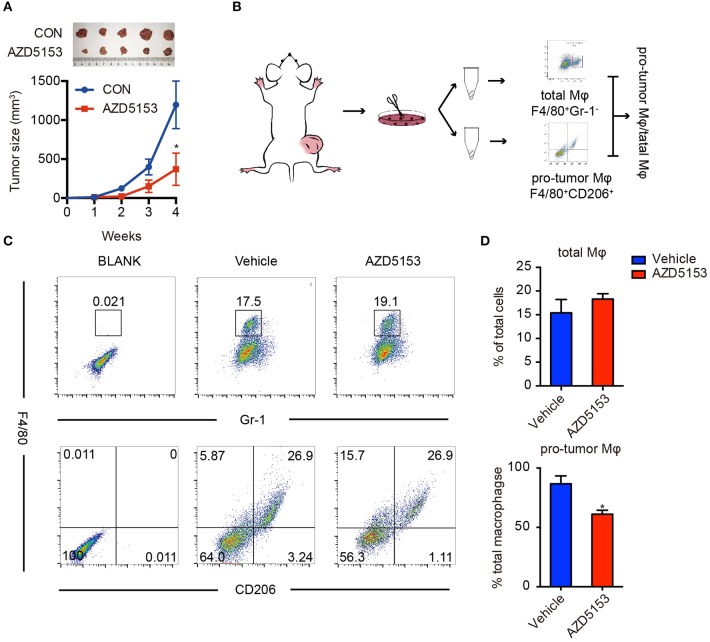
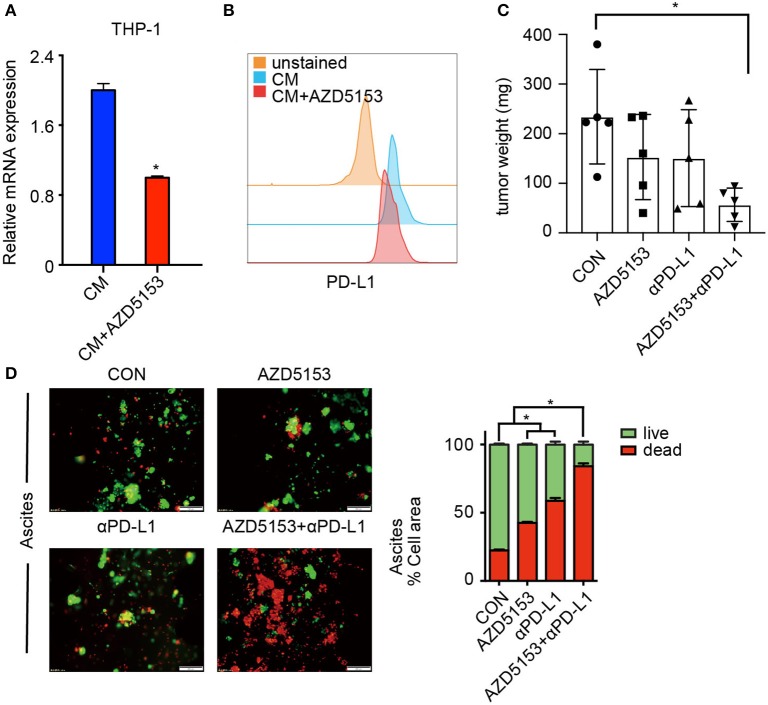
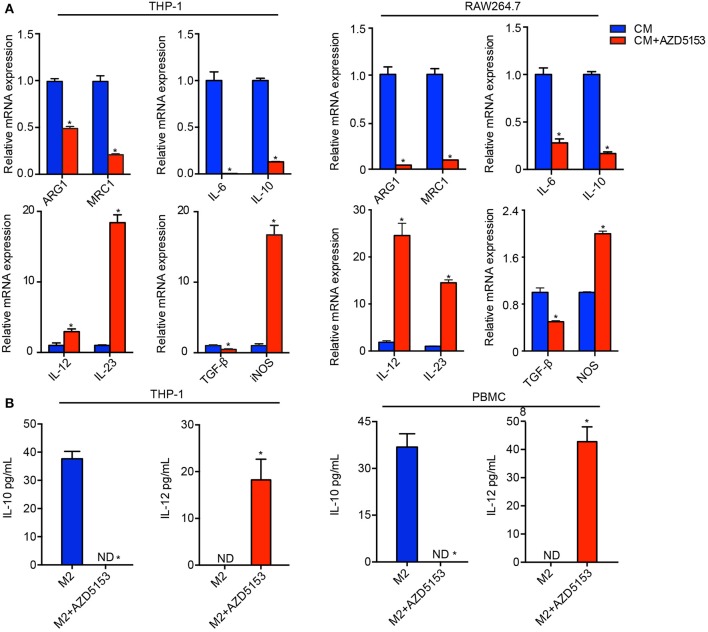
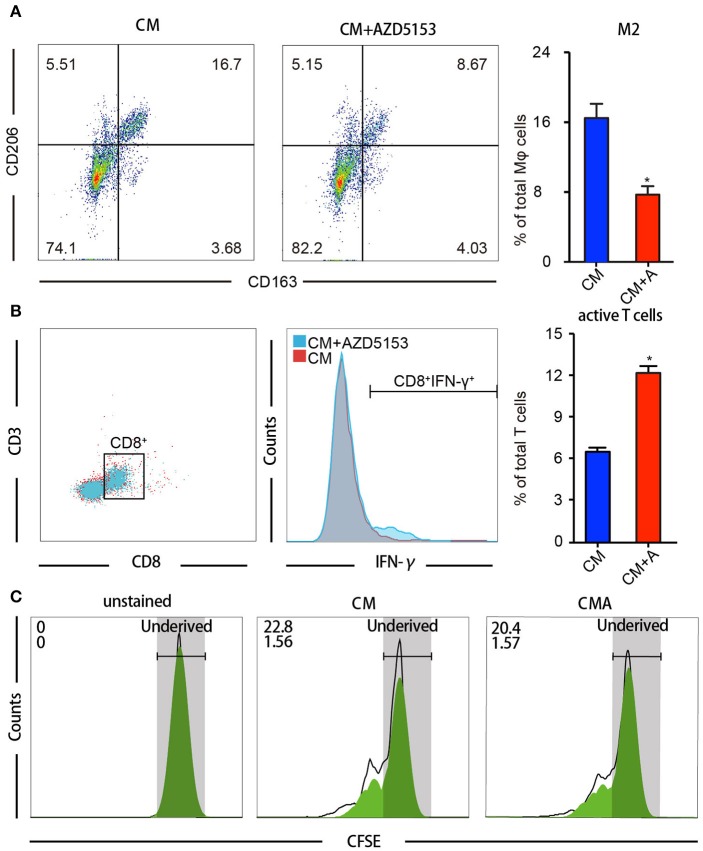
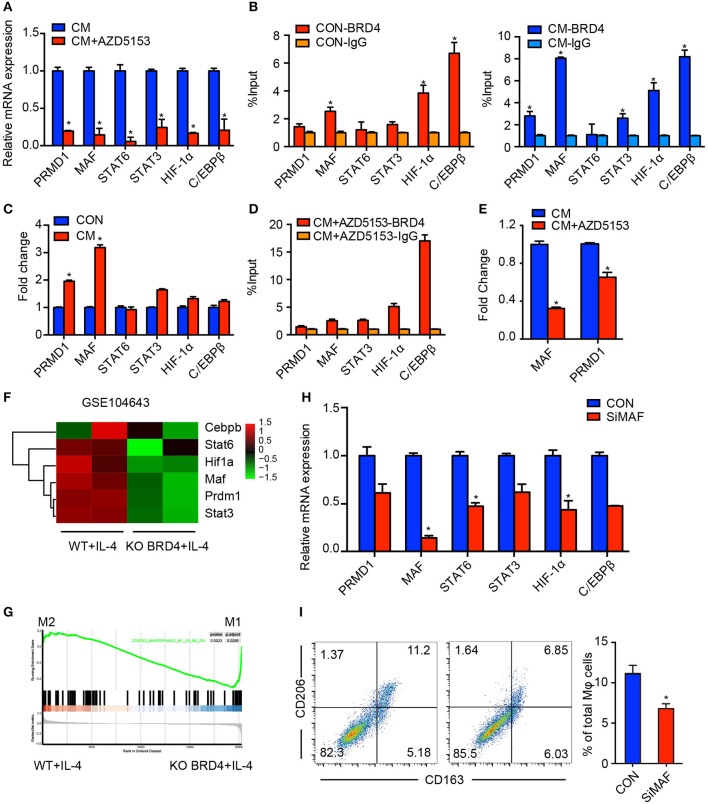
High-grade serous ovarian cancer (HGSOC), with its high recurrence rates, urges for reasonable therapeutic strategies that can prolong overall survival. A tumor microenvironment (TME) discloses prognostic and prospective information on cancer, such as the expression level of PD-1 or PD-L1. However, in HGSOC, the impact of the therapies aiming at these targets remains unsatisfying. Tumor-associated macrophages (TAMs) in HGSOC make up a large part of the TMEs and transform between diverse phenotypes under different treatments. AZD5153 inhibiting BRD4, as a potential therapeutic strategy for HGSOC, was demonstrated to confer controversial plasticity on TAMs, which shows the need to uncover its impact on TAMs in HGSOC. Therefore, we established models for TAMs and TAMs co-culturing with T lymphocytes . Via RT-PCR and flow cytometry, we find that AZD5153 resets TAMs from M2-type macrophages to M1-like macrophages, consequently promoting pro-inflammatory cytokine secretion and thus activating CD8 cytotoxic T lymphocytes (CTLs) . This modification occurs on MAF transcripts in TAMs and modified by BRD4, which is the target of AZD5153. Importantly, the 3-D microfluid model demonstrates that AZD5153 sensitizes ovarian cancer to anti-PD-L1 therapy. Our results clarify that besides eliminating tumor cells directly, AZD5153 works as a regulator of the TAM phenotype, providing a novel strategy combining AZD5153 and PD-1/PD-L1 antibody that could benefit HGSOC patients.
高级别浆液性卵巢癌(HGSOC)具有较高的复发率,因此需要合理的治疗策略来延长总生存期。肿瘤微环境(TME)提供了与癌症相关的预后和预测信息,例如 PD-1 或 PD-L1 的表达水平。然而,在 HGSOC 中,针对这些靶点的治疗方法的效果仍不尽如人意。HGSOC 中的肿瘤相关巨噬细胞(TAMs)构成了 TME 的很大一部分,并在不同的治疗下转化为不同的表型。AZD5153 抑制 BRD4 是一种治疗 HGSOC 的潜在策略,它被证明赋予了 TAMs 有争议的可塑性,这表明需要揭示其对 HGSOC 中 TAMs 的影响。因此,我们建立了 TAMs 模型和 TAMs 与 T 淋巴细胞共培养模型。通过 RT-PCR 和流式细胞术,我们发现 AZD5153 将 TAMs 从 M2 型巨噬细胞重置为 M1 样巨噬细胞,从而促进促炎细胞因子的分泌,从而激活 CD8 细胞毒性 T 淋巴细胞(CTLs)。这种变化发生在 TAMs 中的 MAF 转录本上,并被 BRD4 修饰,BRD4 是 AZD5153 的靶点。重要的是,3D 微流控模型表明 AZD5153 使卵巢癌细胞对抗 PD-L1 治疗敏感。我们的结果表明,除了直接消除肿瘤细胞外,AZD5153 还可以作为 TAM 表型的调节剂,为结合 AZD5153 和 PD-1/PD-L1 抗体的新策略提供了可能使 HGSOC 患者受益的依据。