Chen Ming-Hong, Fu Qiong-Mei
Department of Geriatric Medicine, Xiangya Hospital, Central South University, Changsha 410008, China.
Health Management Center, Xiangya Hospital, Central South University, Changsha 410008, China.
Cardiol Res Pract. 2020 Feb 27;2020:4028635. doi: 10.1155/2020/4028635. eCollection 2020.
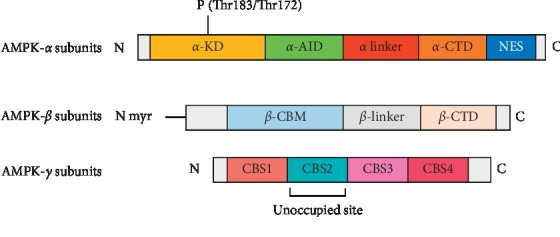
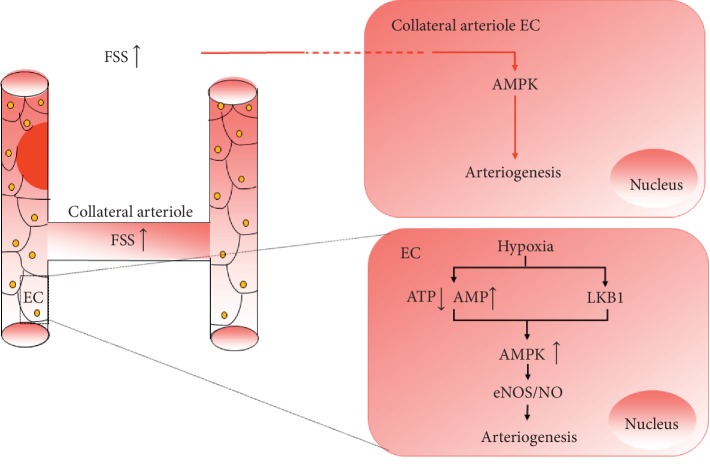
Coronary heart disease (CHD) is the most common and serious illness in the world and has been researched for many years. However, there are still no real effective ways to prevent and save patients with this disease. When patients present with myocardial infarction, the most important step is to recover ischemic prefusion, which usually is accomplished by coronary artery bypass surgery, coronary artery intervention (PCI), or coronary artery bypass grafting (CABG). These are invasive procedures, and patients with extensive lesions cannot tolerate surgery. It is, therefore, extremely urgent to search for a noninvasive way to save ischemic myocardium. After suffering from ischemia, cardiac or skeletal muscle can partly recover blood flow through angiogenesis (de novo capillary) induced by hypoxia, arteriogenesis, or collateral growth (opening and remodeling of arterioles) triggered by dramatical increase of fluid shear stress (FSS). Evidence has shown that both of them are regulated by various crossed pathways, such as hypoxia-related pathways, cellular metabolism remodeling, inflammatory cells invasion and infiltration, or hemodynamical changes within the vascular wall, but still they do not find effective target for regulating revascularization at present. 5'-Adenosine monophosphate-activated protein kinase (AMPK), as a kinase, is not only an energy modulator but also a sensor of cellular oxygen-reduction substances, and many researches have suggested that AMPK plays an essential role in revascularization but the mechanism is not completely understood. Usually, AMPK can be activated by ADP or AMP, upstream kinases or other cytokines, and pharmacological agents, and then it phosphorylates key molecules that are involved in energy metabolism, autophagy, anti-inflammation, oxidative stress, and aging process to keep cellular homeostasis and finally keeps cell normal activity and function. This review makes a summary on the subunits, activation and downstream targets of AMPK, the mechanism of revascularization, the effects of AMPK in endothelial cells, angiogenesis, and arteriogenesis along with some prospects.
冠心病(CHD)是世界上最常见且最严重的疾病,多年来一直受到研究。然而,目前仍没有真正有效的方法来预防和救治这种疾病的患者。当患者出现心肌梗死时,最重要的步骤是恢复缺血灌注,这通常通过冠状动脉搭桥手术、冠状动脉介入治疗(PCI)或冠状动脉旁路移植术(CABG)来完成。这些都是侵入性手术,病变广泛的患者无法耐受手术。因此,寻找一种无创方法来挽救缺血心肌迫在眉睫。心肌或骨骼肌缺血后,可通过缺氧诱导的血管生成(新生毛细血管)、动脉生成或由流体剪切应力(FSS)急剧增加引发的侧支生长(小动脉开放和重塑)部分恢复血流。有证据表明,两者均受多种交叉途径调节,如缺氧相关途径、细胞代谢重塑、炎症细胞侵袭和浸润或血管壁内的血流动力学变化,但目前仍未找到调节血管再生的有效靶点。5'-单磷酸腺苷激活蛋白激酶(AMPK)作为一种激酶,不仅是能量调节剂,也是细胞氧还原物质的传感器,许多研究表明AMPK在血管再生中起重要作用,但其机制尚未完全明确。通常,AMPK可被ADP或AMP、上游激酶或其他细胞因子以及药物激活,然后磷酸化参与能量代谢、自噬、抗炎、氧化应激和衰老过程的关键分子,以维持细胞内稳态,最终保持细胞的正常活性和功能。本文综述了AMPK的亚基、激活及下游靶点、血管再生机制、AMPK在内皮细胞、血管生成和动脉生成中的作用,并进行了一些展望。