Laboratoire Physico Chimie Curie, Institut Curie, CNRS UMR168, PSL Research University, Paris, France.
Sorbonne Université, Paris, France.
Channels (Austin). 2020 Dec;14(1):101-109. doi: 10.1080/19336950.2020.1740506.
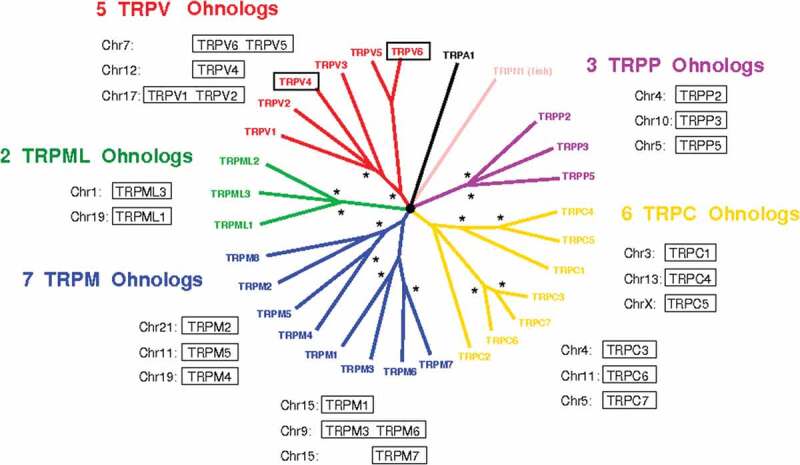
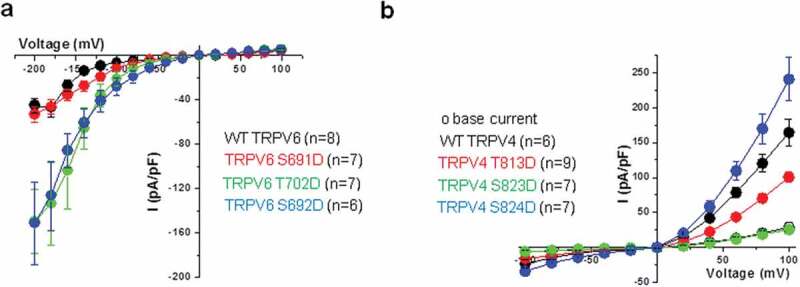
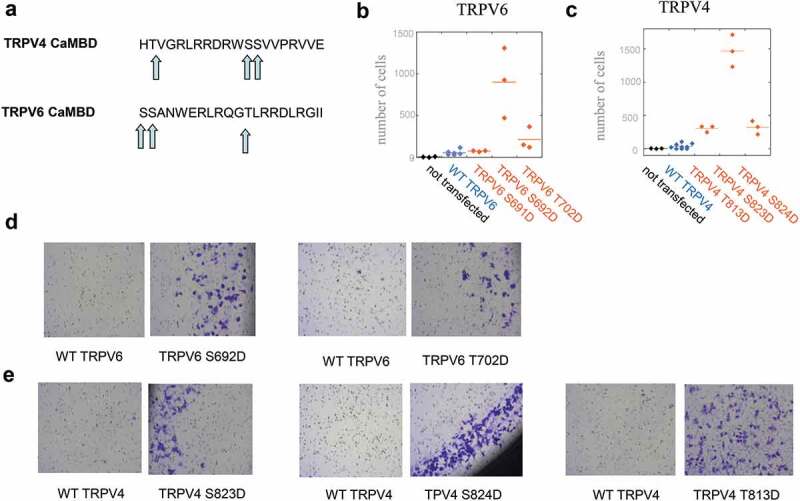
Transient receptor potential (TRP) channels form a family of polymodal cation channels gated by thermal, mechanical, or chemical stimuli, with many of them involved in the control of proliferation, apoptosis, or cell cycle. From an evolutionary point of view, TRP family is characterized by high conservation of duplicated genes originating from whole-genome duplication at the onset of vertebrates. The conservation of such "ohnolog" genes is theoretically linked to an increased probability of generating phenotypes deleterious for the organism upon gene mutation. We aimed to test experimentally the hypothesis that TRP mutations, in particular gain-of-function, could be involved in the generation of deleterious phenotypes involved in cancer, such as gain of invasiveness. Indeed, a number of TRP channels have been linked to cancer progression, and exhibit changes in expression levels in various types of cancers. However, TRP mutations in cancer have been poorly documented. We focused on 2 TRPV family members, TRPV4 and TRPV6, and studied the effect of putative gain-of-function mutations on invasiveness properties. TRPV channels have a C-terminal calmodulin-binding domain (CaMBD) that has important functions for regulating protein function, through different mechanisms depending on the channel (channel inactivation/potentiation, cytoskeleton regulation). We studied the effect of mutations mimicking constitutive phosphorylation in TRPV4 and TRPV6 CaMBDs: TRPV4 S823D, S824D and T813D, TRPV6 S691D, S692D and T702. We found that most of these mutants induced a strong gain of invasiveness of colon adenocarcinoma SW480 cells, both for TRPV4 and TRPV6. While increased invasion with TRPV6 S692D and T702D mutants was correlated to increased mutant channel activity, it was not the case for TRPV4 mutants, suggesting different mechanisms with the same global effect of gain in deleterious phenotype. This highlights the potential importance to search for TRP mutations involved in cancer.
瞬时受体电位 (TRP) 通道是一类多模态阳离子通道,由热、机械或化学刺激门控,其中许多通道参与增殖、凋亡或细胞周期的控制。从进化的角度来看,TRP 家族的特征是,脊椎动物起源的全基因组复制产生的重复基因具有高度保守性。这种“同源”基因的保守性理论上与基因突变产生对生物体有害的表型的可能性增加有关。我们旨在通过实验测试假设,即 TRP 突变,特别是获得性功能,可能与癌症中涉及侵袭性的有害表型的产生有关,例如获得侵袭性。事实上,许多 TRP 通道与癌症进展有关,并在各种类型的癌症中表现出表达水平的变化。然而,癌症中的 TRP 突变记录很少。我们专注于 TRPV 家族的 2 个成员 TRPV4 和 TRPV6,并研究了假定获得性功能突变对侵袭性特性的影响。TRPV 通道具有 C 末端钙调蛋白结合域 (CaMBD),该域通过不同的机制对蛋白质功能具有重要的调节作用,具体取决于通道 (通道失活/增强、细胞骨架调节)。我们研究了模拟 TRPV4 和 TRPV6 CaMBD 中组成性磷酸化的突变的影响:TRPV4 S823D、S824D 和 T813D,TRPV6 S691D、S692D 和 T702D。我们发现,这些突变体中的大多数诱导结肠腺癌 SW480 细胞的侵袭性显著增强,对于 TRPV4 和 TRPV6 都是如此。虽然 TRPV6 S692D 和 T702D 突变体的侵袭性增加与突变通道活性增加相关,但 TRPV4 突变体并非如此,这表明存在不同的机制,但具有相同的有害表型增益的总体效应。这突显了寻找参与癌症的 TRP 突变的潜在重要性。