Department of Obstetrics and Gynecology, ShengJing Hospital of China Medical University, Shenyang, Liaoning 110004, P.R. China.
Oncol Rep. 2020 Jun;43(6):1755-1770. doi: 10.3892/or.2020.7548. Epub 2020 Mar 17.
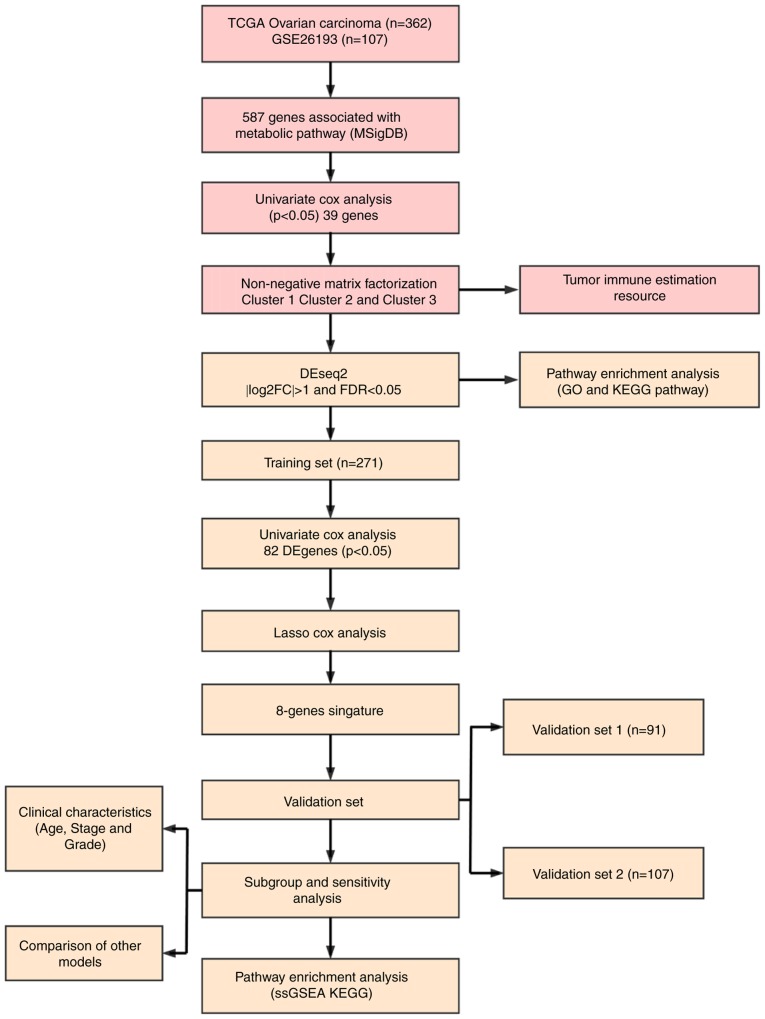
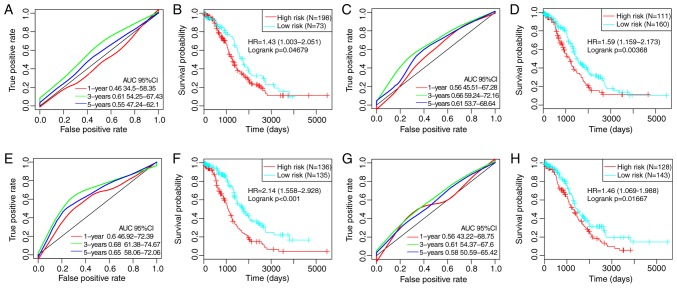
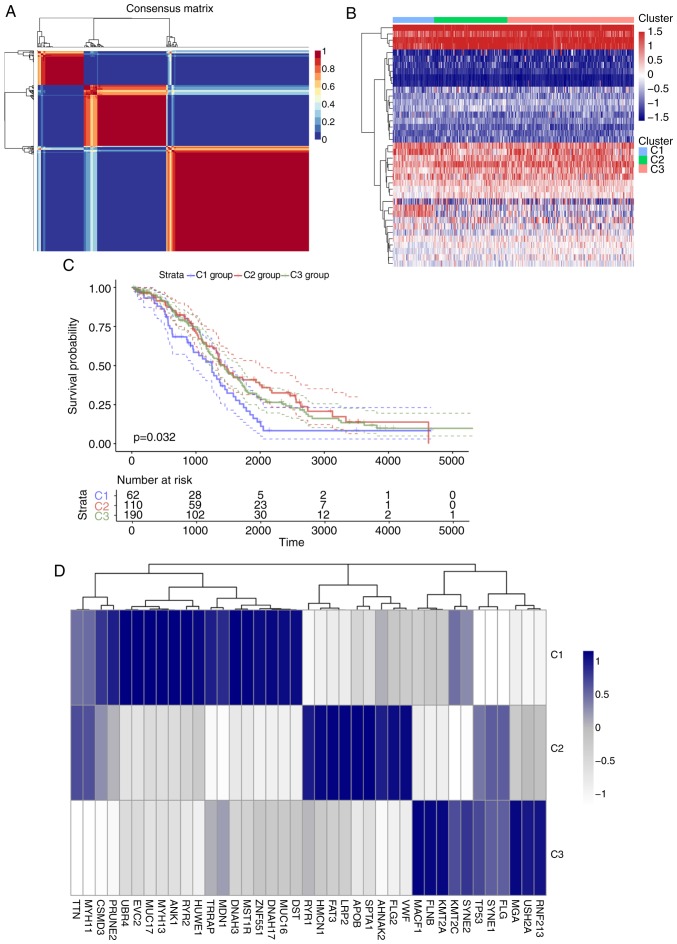
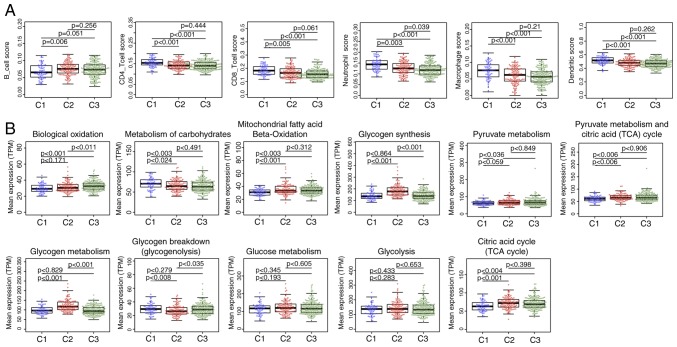
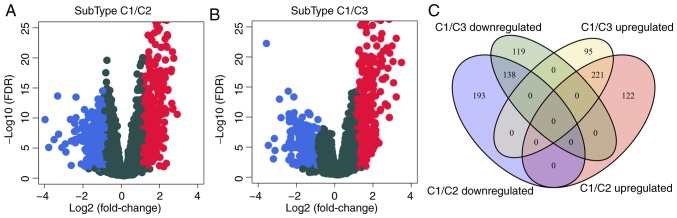
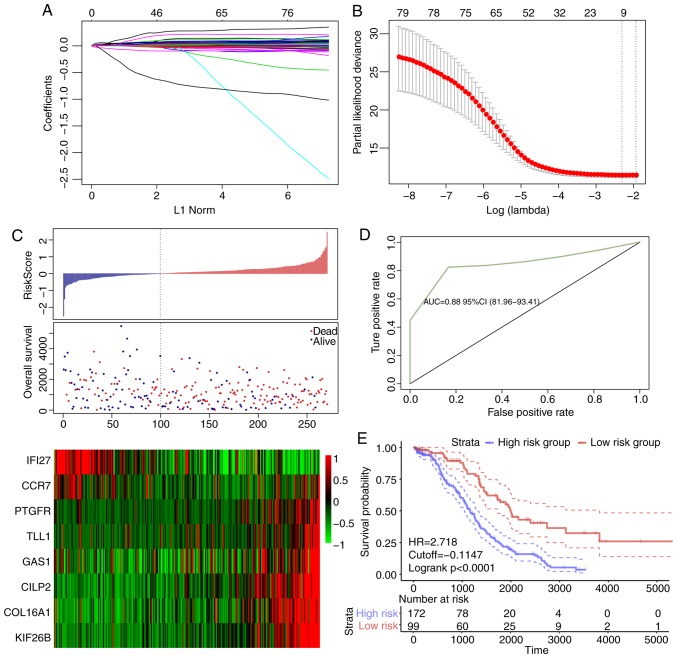
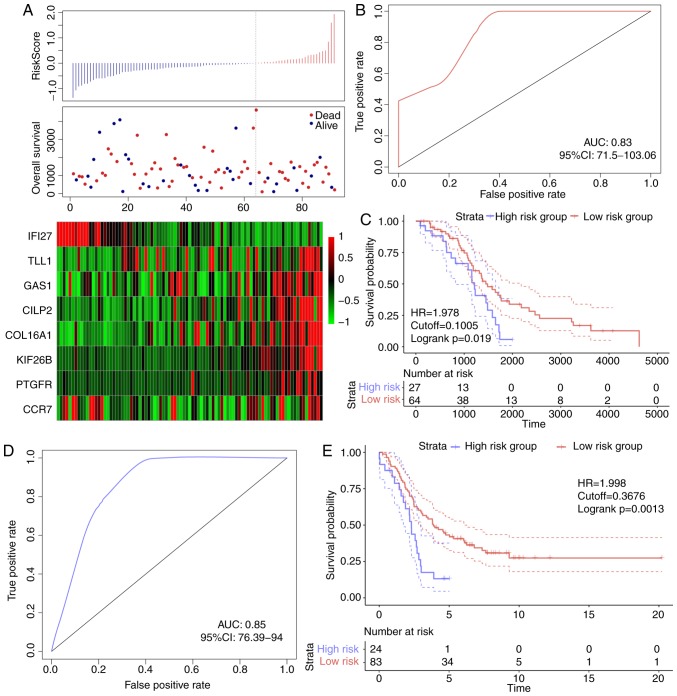
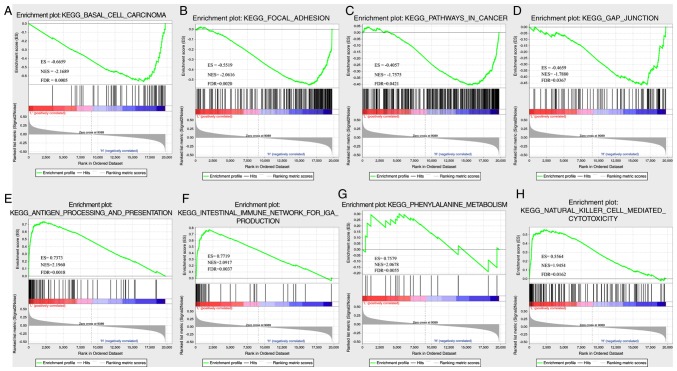
Changes in energy metabolism may be potential biomarkers and therapeutic targets for cancer as they frequently occur within cancer cells. However, basic cancer research has failed to reach a consistent conclusion on the function(s) of mitochondria in energy metabolism. The significance of energy metabolism in the prognosis of ovarian cancer remains unclear; thus, there remains an urgent need to systematically analyze the characteristics and clinical value of energy metabolism in ovarian cancer. Based on gene expression patterns, the present study aimed to analyze energy metabolism‑associated characteristics to evaluate the prognosis of patients with ovarian cancer. A total of 39 energy metabolism‑related genes significantly associated with prognosis were obtained, and three molecular subtypes were identified by nonnegative matrix factorization clustering, among which the C1 subtype was associated with poor clinical outcomes of ovarian cancer. The immune response was enhanced in the tumor microenvironment. A total of 888 differentially expressed genes were identified in C1 compared with the other subtypes, and the results of the pathway enrichment analysis demonstrated that they were enriched in the 'PI3K‑Akt signaling pathway', 'cAMP signaling pathway', 'ECM‑receptor interaction' and other pathways associated with the development and progression of tumors. Finally, eight characteristic genes (tolloid‑like 1 gene, type XVI collagen, prostaglandin F2α, cartilage intermediate layer protein 2, kinesin family member 26b, interferon inducible protein 27, growth arrest‑specific gene 1 and chemokine receptor 7) were obtained through LASSO feature selection; and a number of them have been demonstrated to be associated with ovarian cancer progression. In addition, Cox regression analysis was performed to establish an 8‑gene signature, which was determined to be an independent prognostic factor for patients with ovarian cancer and could stratify sample risk in the training, test and external validation datasets (P<0.01; AUC >0.8). Gene Set Enrichment Analysis results revealed that the 8‑gene signature was involved in important biological processes and pathways of ovarian cancer. In conclusion, the present study established an 8‑gene signature associated with metabolic genes, which may provide new insights into the effects of energy metabolism on ovarian cancer. The 8‑gene signature may serve as an independent prognostic factor for ovarian cancer patients.
能量代谢的变化可能是癌症的潜在生物标志物和治疗靶点,因为它们经常发生在癌细胞中。然而,基础癌症研究未能就线粒体在能量代谢中的功能达成一致结论。能量代谢对卵巢癌预后的意义仍不清楚;因此,迫切需要系统分析卵巢癌中能量代谢的特征和临床价值。本研究基于基因表达模式,旨在分析与能量代谢相关的特征,以评估卵巢癌患者的预后。共获得 39 个与预后显著相关的能量代谢相关基因,并通过非负矩阵分解聚类鉴定出三个分子亚型,其中 C1 亚型与卵巢癌的不良临床结局相关。肿瘤微环境中的免疫反应增强。C1 与其他亚型相比,共鉴定出 888 个差异表达基因,通路富集分析结果表明,它们富集于“PI3K-Akt 信号通路”、“cAMP 信号通路”、“ECM-受体相互作用”等与肿瘤发生发展相关的通路。最后,通过 LASSO 特征选择得到 8 个特征基因(tolloid-like 1 基因、十六型胶原、前列腺素 F2α、软骨中间层蛋白 2、驱动蛋白家族成员 26b、干扰素诱导蛋白 27、生长停滞特异性基因 1 和趋化因子受体 7),其中一些已被证明与卵巢癌的进展有关。此外,通过 Cox 回归分析建立了一个 8 基因标志物,该标志物被确定为卵巢癌患者的独立预后因素,并可在训练、测试和外部验证数据集中对样本风险进行分层(P<0.01;AUC>0.8)。基因集富集分析结果表明,该 8 基因标志物与卵巢癌的重要生物学过程和通路有关。总之,本研究建立了一个与代谢基因相关的 8 基因标志物,这可能为能量代谢对卵巢癌的影响提供新的见解。该 8 基因标志物可作为卵巢癌患者的独立预后因素。