Department of Forestry, Biodiversity and Tourism, School of Forestry, Environmental and Geographical Sciences, Makerere University, Kampala, Uganda.
Natural History Museum, University of Oslo, Blindern, Oslo, Norway.
PLoS One. 2020 Mar 18;15(3):e0228979. doi: 10.1371/journal.pone.0228979. eCollection 2020.
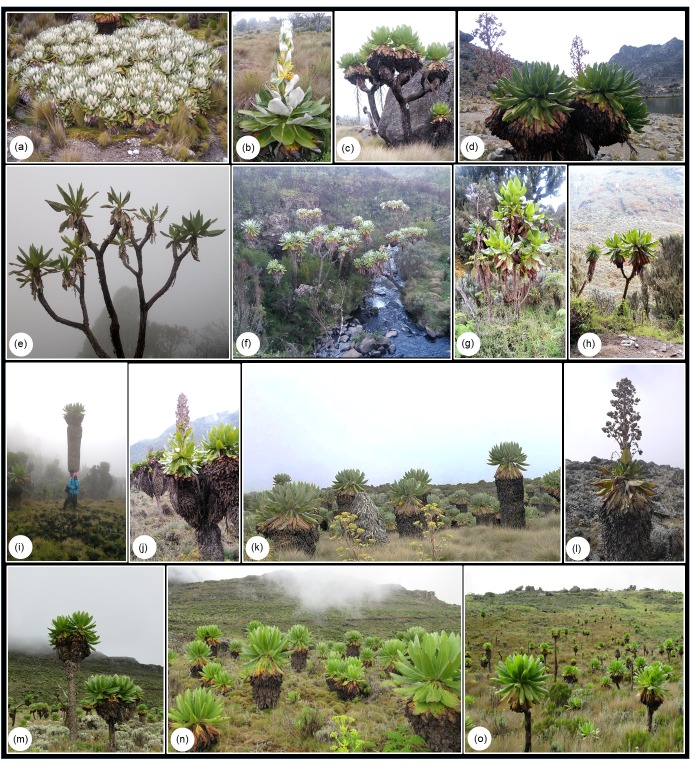
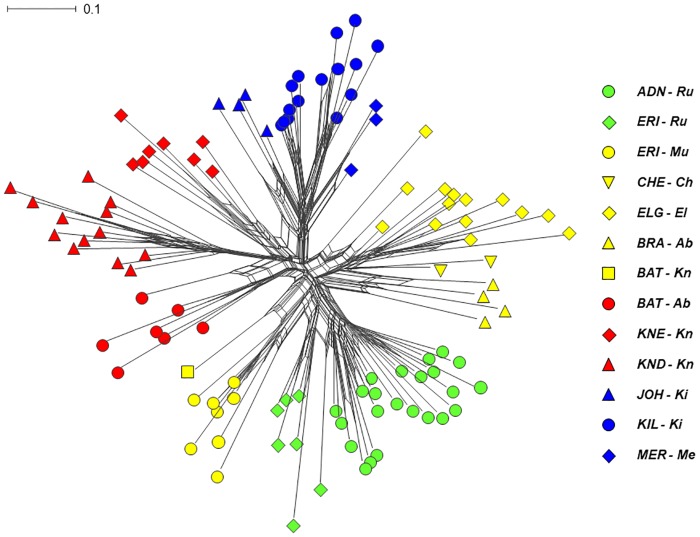
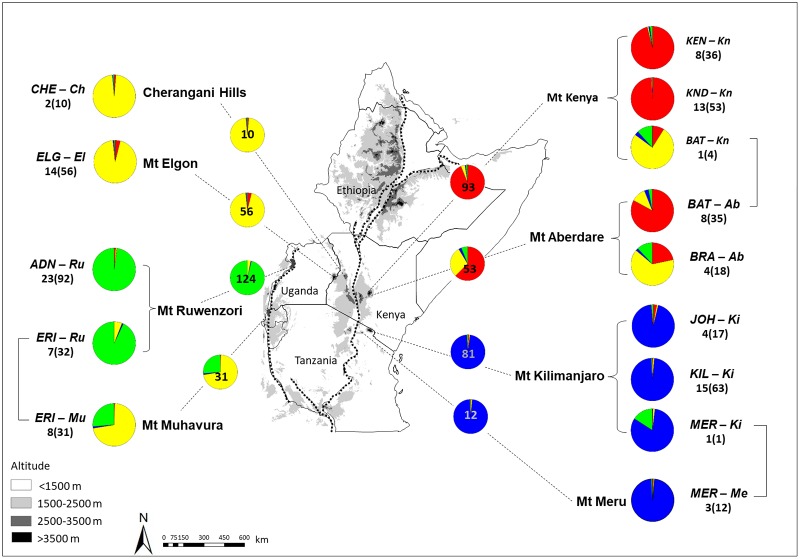
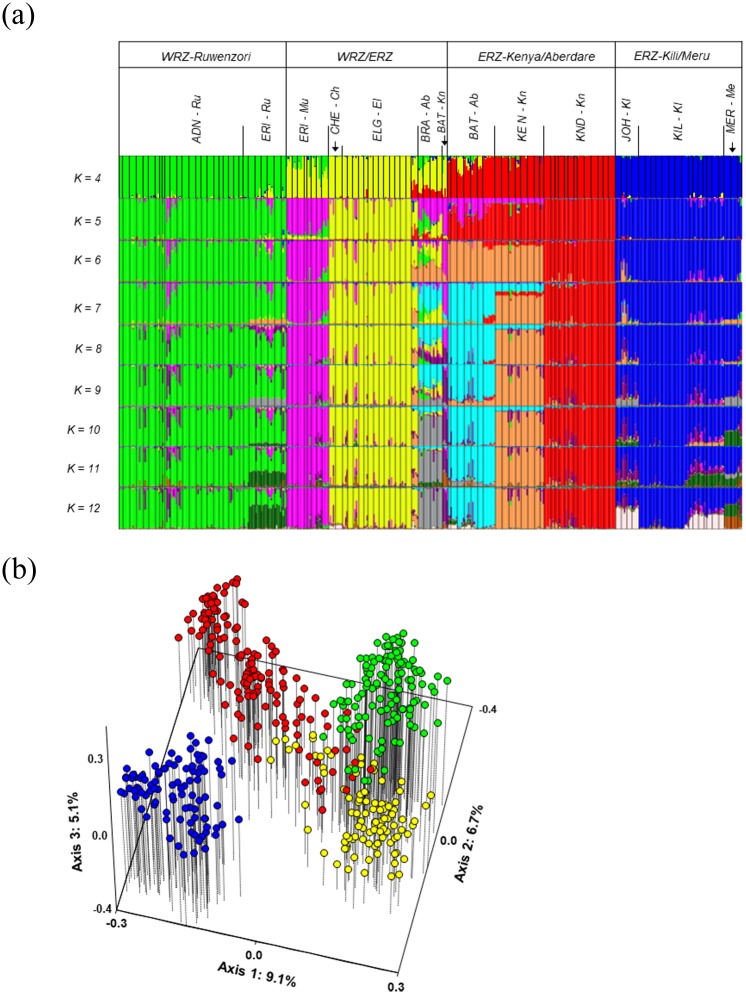
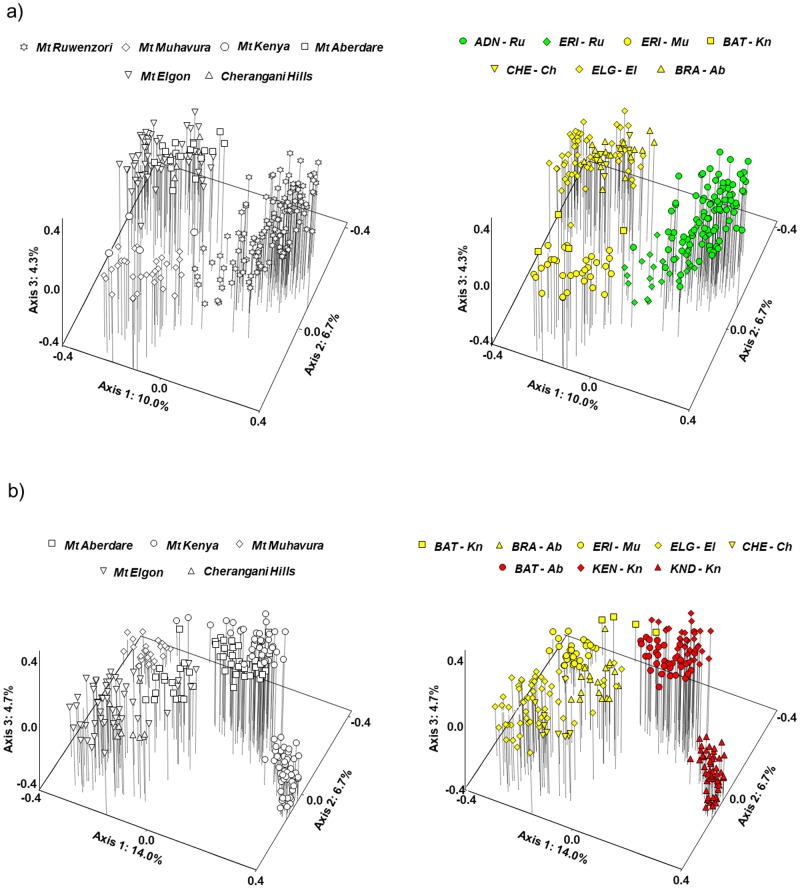
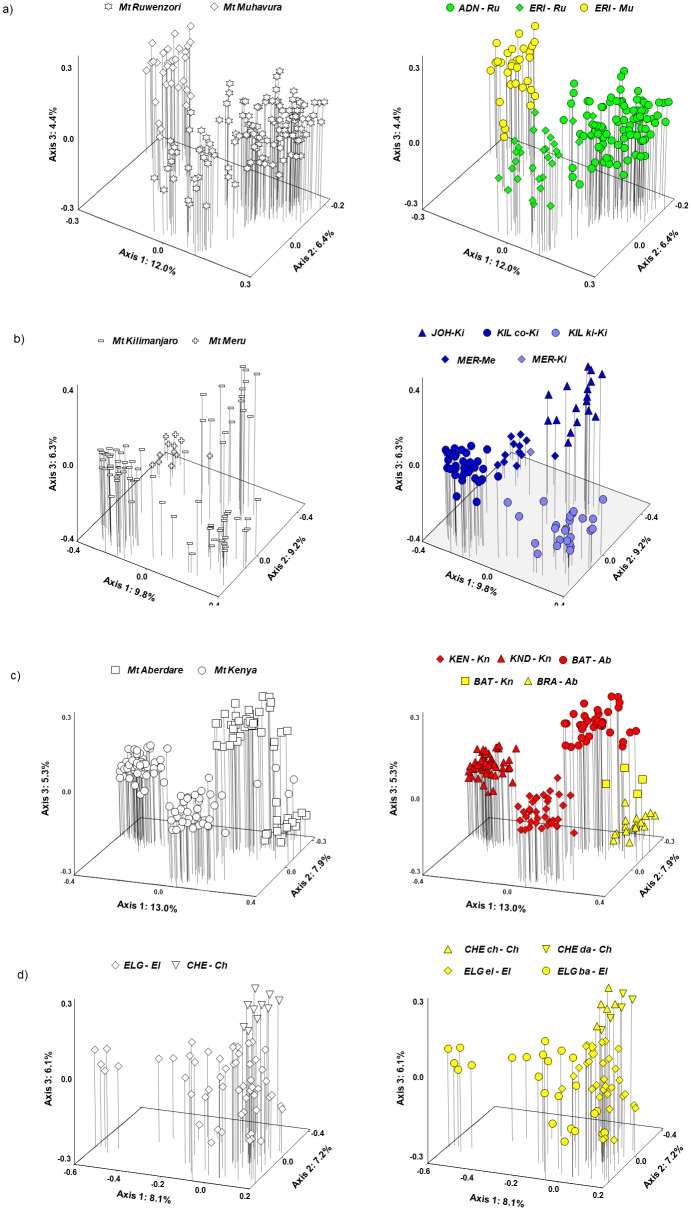
Distantly related lineages of the enigmatic giant rosette plants of tropical alpine environments provide classical examples of convergent adaptation. For the giant senecios (Dendrosenecio), the endemic landmarks of the East African sky islands, it has also been suggested that parallel adaptation has been important for within-lineage differentiation. To test this hypothesis and to address potential gene flow and hybridization among the isolated sky islands, we organized field expeditions to all major mountains. We sampled all currently accepted species and all but one subspecies and genotyped 460 plants representing 109 populations. We tested whether genetic structuring corresponds to geography, as predicted by a parallel adaptation hypothesis, or to altitudinal belt and habitat rather than mountains, as predicted by a hypothesis of a single origin of adaptations. Bayesian and Neighbor-Net analyses showed that the main genetic structure is shallow and largely corresponds to geography, supporting a hypothesis of recent, rapid radiation via parallel altitude/habitat adaptation on different mountains. We also found evidence for intermountain admixture, suggesting several long-distance dispersals by wind across vast areas of unsuitable habitat. The combination of parallel adaptation, secondary contact, and hybridization may explain the complex patterns of morphological variation and the contradicting taxonomic treatments of these rare enigmatic giants, supporting the use of wide taxonomic concepts. Notably, the within-population genetic diversity was very low and calls for increased conservation efforts.
神秘的热带高山环境中的巨型玫瑰状植物的远缘谱系为趋同适应提供了经典范例。对于巨型千里光属植物(Dendrosenecio),这是东非天空岛屿的特有地标,也有人认为,种内分化的平行适应也很重要。为了验证这一假设,并解决孤立的天空岛屿之间潜在的基因流和杂交问题,我们组织了对所有主要山脉的实地考察。我们对所有目前被接受的物种和除一个亚种以外的所有物种进行了采样,并对代表 109 个种群的 460 株植物进行了基因型分析。我们检验了遗传结构是否与地理分布相对应,这是平行适应假说所预测的,还是与海拔带和生境相对应,而不是与山脉相对应,这是适应单一起源假说所预测的。贝叶斯和邻接网络分析表明,主要的遗传结构是浅层的,并且在很大程度上与地理分布相对应,支持了一个假说,即通过在不同山脉上进行平行的海拔/生境适应,最近发生了快速辐射。我们还发现了山脉间混合的证据,表明有几次通过风进行的长距离扩散,跨越了大片不适宜的栖息地。平行适应、二次接触和杂交的结合可能解释了这些罕见的神秘巨树形态变异的复杂模式,以及相互矛盾的分类处理,支持了广泛分类概念的使用。值得注意的是,种群内的遗传多样性非常低,呼吁加强保护工作。