From the, Department of Clinical Neurosciences, School of Clinical Medicine, University of Cambridge, Cambridge, UK.
Medical Research Council Mitochondrial Biology Unit, School of Clinical Medicine, University of Cambridge, Cambridge, UK.
J Intern Med. 2020 Jun;287(6):634-644. doi: 10.1111/joim.13047. Epub 2020 Mar 18.
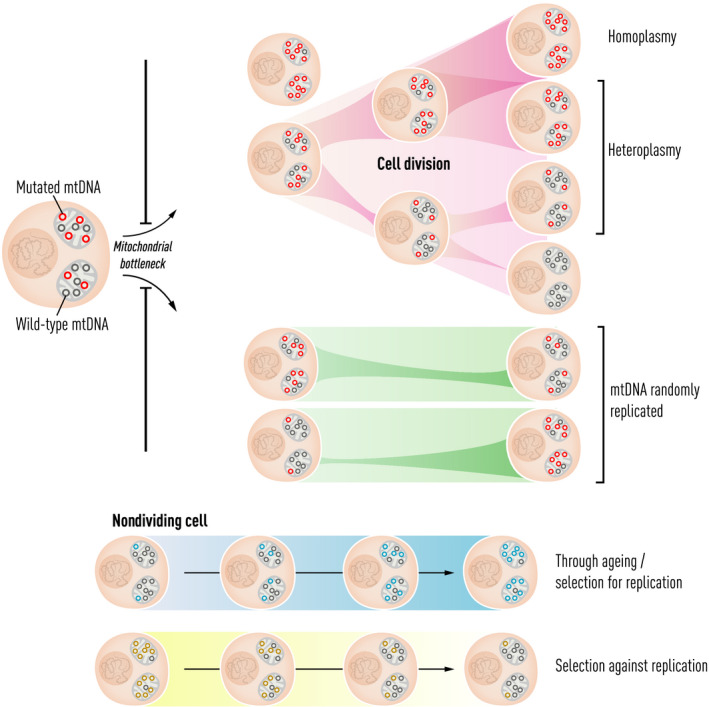
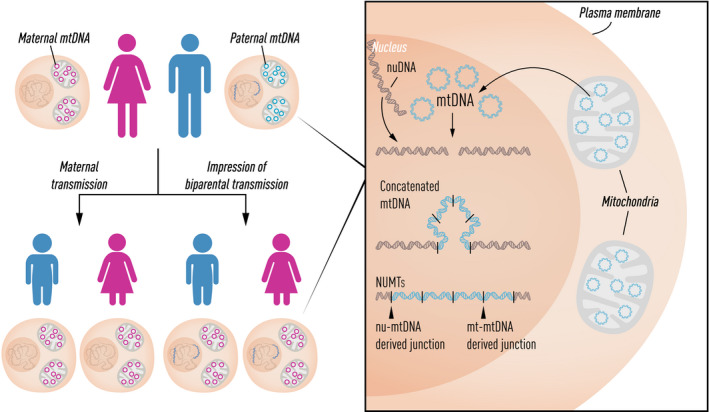
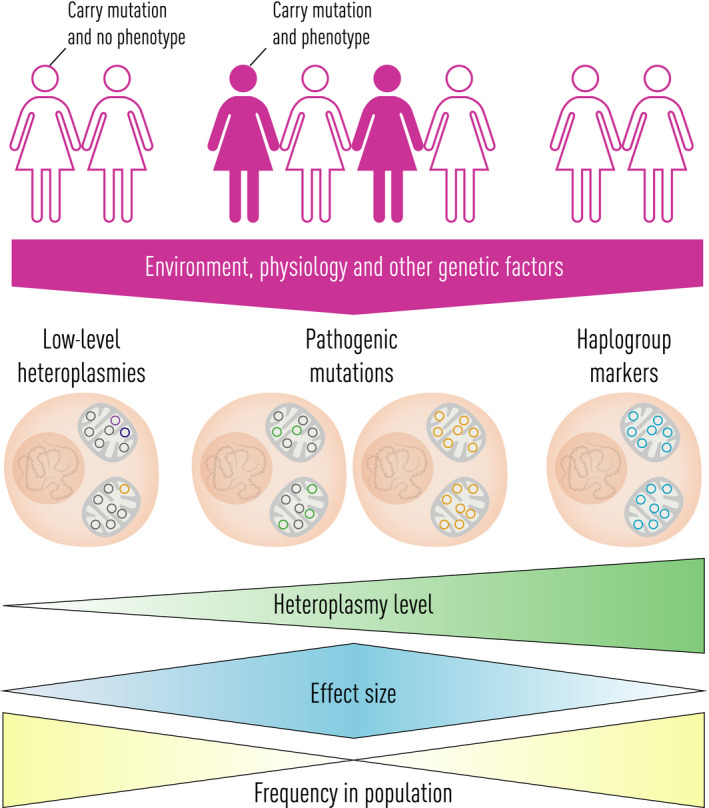
The first draft human mitochondrial DNA (mtDNA) sequence was published in 1981, paving the way for two decades of discovery linking mtDNA variation with human disease. Severe pathogenic mutations cause sporadic and inherited rare disorders that often involve the nervous system. However, some mutations cause mild organ-specific phenotypes that have a reduced clinical penetrance, and polymorphic variation of mtDNA is associated with an altered risk of developing several late-onset common human diseases including Parkinson's disease. mtDNA mutations also accumulate during human life and are enriched in affected organs in a number of age-related diseases. Thus, mtDNA contributes to a wide range of human pathologies. For many decades, it has generally been accepted that mtDNA is inherited exclusively down the maternal line in humans. Although recent evidence has challenged this dogma, whole-genome sequencing has identified nuclear-encoded mitochondrial sequences (NUMTs) that can give the false impression of paternally inherited mtDNA. This provides a more likely explanation for recent reports of 'bi-parental inheritance', where the paternal alleles are actually transmitted through the nuclear genome. The presence of both mutated and wild-type variant alleles within the same individual (heteroplasmy) and rapid shifts in allele frequency can lead to offspring with variable severity of disease. In addition, there is emerging evidence that selection can act for and against specific mtDNA variants within the developing germ line, and possibly within developing tissues. Thus, understanding how mtDNA is inherited has far-reaching implications across medicine. There is emerging evidence that this highly dynamic system is amenable to therapeutic manipulation, raising the possibility that we can harness new understanding to prevent and treat rare and common human diseases where mtDNA mutations play a key role.
1981 年首次公布了人类线粒体 DNA(mtDNA)的原始序列,为随后二十年的发现铺平了道路,这些发现将 mtDNA 变异与人类疾病联系起来。严重的致病性突变导致罕见的散发性和遗传性疾病,这些疾病通常涉及神经系统。然而,一些突变导致轻微的器官特异性表型,其临床外显率降低,mtDNA 的多态性变化与几种迟发性常见人类疾病(包括帕金森病)的发病风险增加有关。mtDNA 突变也会在人类生命过程中积累,并在许多与年龄相关的疾病中在受影响的器官中富集。因此,mtDNA 导致了广泛的人类病理学。几十年来,人们普遍认为 mtDNA 在人类中仅通过母系遗传。尽管最近的证据对这一教条提出了挑战,但全基因组测序已经鉴定出核编码的线粒体序列(NUMTs),这些序列可能会给人留下父系遗传 mtDNA 的错觉。这为最近关于“双亲遗传”的报告提供了一个更合理的解释,其中父系等位基因实际上是通过核基因组传递的。同一个体中存在突变型和野生型变异等位基因(异质性)以及等位基因频率的快速变化可能导致疾病严重程度不同的后代。此外,有新的证据表明,选择可以作用于和反对发育中的生殖系内的特定 mtDNA 变体,并且可能在发育中的组织内作用。因此,了解 mtDNA 的遗传方式对医学具有深远的影响。越来越多的证据表明,这个高度动态的系统可以进行治疗性操作,这增加了我们可以利用新的认识来预防和治疗罕见和常见的人类疾病的可能性,在这些疾病中,mtDNA 突变起着关键作用。