Karwowska Małgorzata, Kononiuk Anna
Department of Meat Technology and Food Quality, University of Life Sciences in Lublin, ul. Skromna 8, 20-704 Lublin, Poland.
Antioxidants (Basel). 2020 Mar 16;9(3):241. doi: 10.3390/antiox9030241.
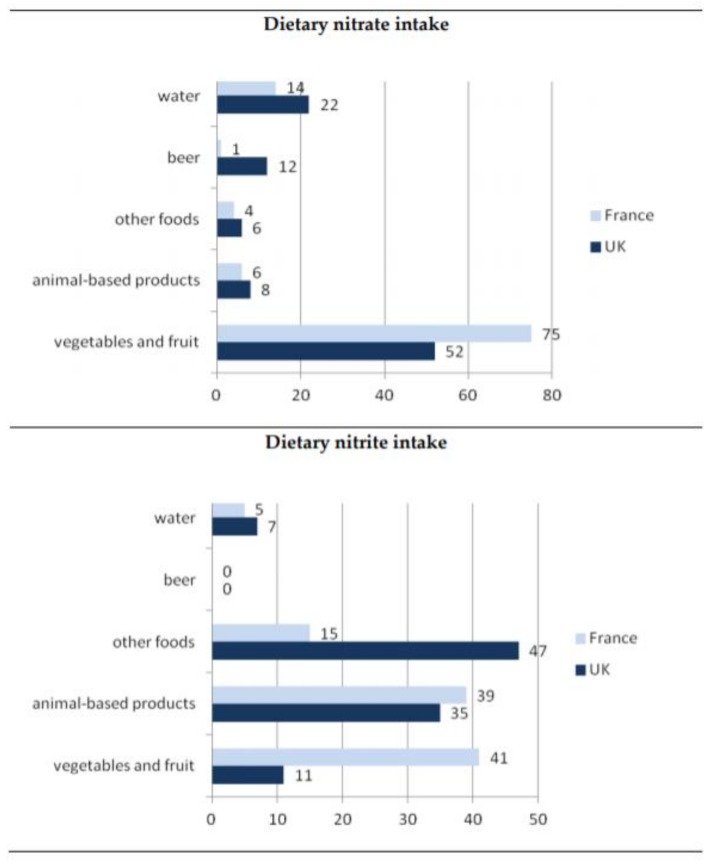
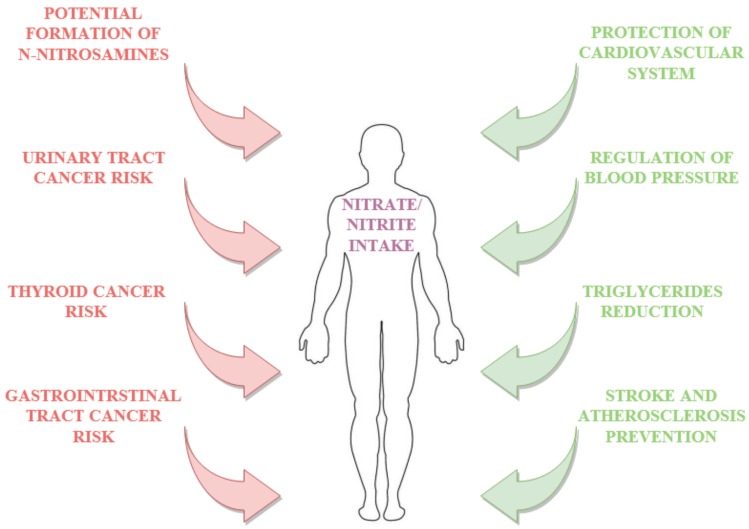
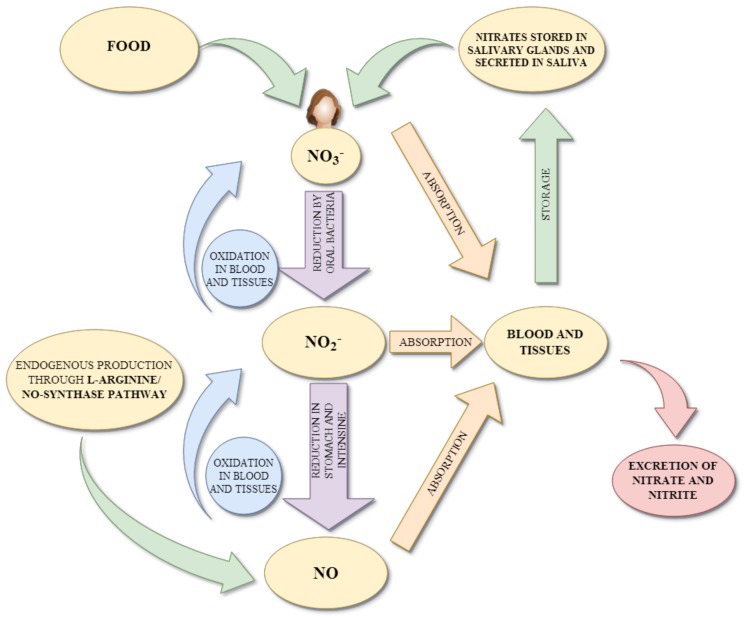
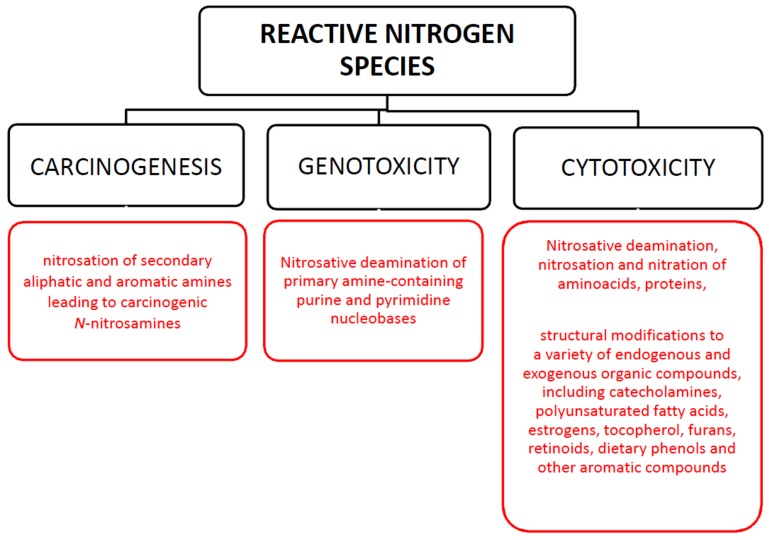
In the context of impact on human health, nitrite/nitrate and related nitrogen species such as nitric oxide (NO) are a matter of increasing scientific controversy. An increase in the content of reactive nitrogen species may result in nitrosative stress-a deleterious process, which can be an important mediator of damage to cell structures, including lipids, membranes, proteins and DNA. Nitrates and nitrites are widespread in the environment and occur naturally in foods of plant origin as a part of the nitrogen cycle. Additionally, these compounds are used as additives to improve food quality and protect against microbial contamination and chemical changes. Some vegetables such as raw spinach, beets, celery and lettuce are considered to contain high concentrations of nitrates. Due to the high consumption of vegetables, they have been identified as the primary source of nitrates in the human diet. Processed meats are another source of nitrites in our diet because the meat industry uses nitrates/nitrites as additives in the meat curing process. Although the vast majority of consumed nitrates and nitrites come from natural vegetables and fruits rather than food additives, there is currently a great deal of consumer pressure for the production of meat products free of or with reduced quantities of these compounds. This is because, for years, the cancer risks of nitrates/nitrites have been considered, since they potentially convert into the nitrosamines that have carcinogenic effects. This has resulted in the development and rapid expansion of meat products processed with plant-derived nitrates as nitrite alternatives in meat products. On the other hand, recently, these two ions have been discussed as essential nutrients which allow nitric oxide production and thus help cardiovascular health. Thus, this manuscript reviews the main sources of dietary exposure to nitrates and nitrites, metabolism of nitrites/nitrates, and health concerns related to dietary nitrites/nitrates, with particular emphasis on the effect on nitrosative stress, the role of nitrites/nitrates in meat products and alternatives to these additives used in meat products.
在对人类健康的影响方面,亚硝酸盐/硝酸盐以及相关的含氮物质如一氧化氮(NO)引发了越来越多的科学争议。活性氮物质含量的增加可能导致亚硝化应激——这是一个有害过程,它可能是损害细胞结构(包括脂质、膜、蛋白质和DNA)的重要介质。硝酸盐和亚硝酸盐在环境中广泛存在,作为氮循环的一部分天然存在于植物性食物中。此外,这些化合物被用作添加剂以改善食品质量并防止微生物污染和化学变化。一些蔬菜如生菠菜、甜菜、芹菜和生菜被认为含有高浓度的硝酸盐。由于蔬菜的高消费量,它们已被确定为人类饮食中硝酸盐的主要来源。加工肉类是我们饮食中亚硝酸盐的另一个来源,因为肉类行业在肉类腌制过程中使用硝酸盐/亚硝酸盐作为添加剂。尽管绝大多数摄入的硝酸盐和亚硝酸盐来自天然蔬菜和水果而非食品添加剂,但目前消费者对生产不含或减少这些化合物的肉类产品有很大压力。这是因为多年来,硝酸盐/亚硝酸盐的致癌风险一直受到关注,因为它们可能转化为具有致癌作用的亚硝胺。这导致了以植物源性硝酸盐作为肉类产品中亚硝酸盐替代品加工的肉类产品的开发和迅速扩张。另一方面,最近,这两种离子被讨论为必需营养素,它们能产生一氧化氮,从而有助于心血管健康。因此,本文综述了饮食中硝酸盐和亚硝酸盐的主要暴露来源、亚硝酸盐/硝酸盐的代谢以及与饮食中亚硝酸盐/硝酸盐相关的健康问题,特别强调了对亚硝化应激的影响、亚硝酸盐/硝酸盐在肉类产品中的作用以及肉类产品中使用的这些添加剂的替代品。