Giannotti Chiara, Massobrio Andrea, Cannata Daniela, Nencioni Alessio, Monacelli Fiammetta, Aprile Alessandra, Soriero Domenico, Scabini Stefano, Pertile Davide
Geriatrics Clinic, Department of Internal Medicine and Medical Specialties (DIMI), University of Genoa, 16132, Genoa, Italy.
Oncological Surgery, San Martino Hospital, Polyclinic and Institute for Research and Care, Genoa, Italy.
BMC Surg. 2020 Mar 18;20(1):52. doi: 10.1186/s12893-020-00708-9.
As surgery remains the cornerstone of colorectal cancer (CRC) treatment, the number of older patients presented for colorectal resection is rapidly increasing. Nevertheless, the choice to operate an oldest-old patient still remain challenging and requires a careful assessment of risk to benefit ratio in order to guarantee appropriate surgical strategies and perioperative management.
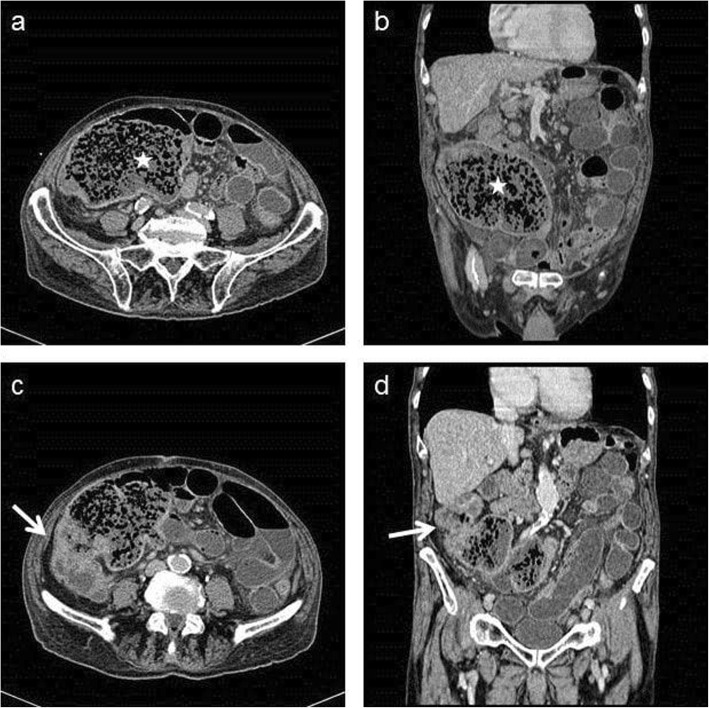
A centenarian patient, acutely admitted to the emergency department, was diagnosed with an ileus caused by stenosing ascending colon cancer with abnormal distension of the right colon at high risk of perforation. Facing with this complex clinical scenario, a lateral decompressive cecostomy as alternative surgical procedure, was performed in local anesthesia in order to avoid the stressful event of an emergency surgery. Thereafter, the patient was admitted to the surgical ward and followed by a geriatrician who performed a comprehensive geriatric assessment (CGA) and daily clinical evaluations. This integrated plan of care was mainly focused on rehabilitation, nutritional interventions and therapeutic reconciliation, maximizing patient's clinical conditions and performance status. Then, the second surgical step, the radical colon surgery with curative intent and bowel continuity reestablishment was performed, demonstrating to be feasible and safety also in a very advanced age patient in term of prolonged survival and preservation of an adequate quality of life.
This is the first case-report that illustrates a successful two step surgery for CRC in a centenarian patient thanks to a multidisciplinary based approach, overwhelming the mere concept of chronological age.
由于手术仍然是结直肠癌(CRC)治疗的基石,接受结直肠切除术的老年患者数量正在迅速增加。然而,为高龄患者实施手术的选择仍然具有挑战性,需要仔细评估风险效益比,以确保采取适当的手术策略和围手术期管理。
一名百岁老人急症入院,被诊断为因升结肠癌狭窄导致的肠梗阻,右结肠异常扩张,有穿孔高风险。面对这种复杂的临床情况,为避免急诊手术的应激事件,在局部麻醉下进行了侧方减压性盲肠造口术作为替代手术。此后,患者被收入外科病房,由一名老年病医生进行全面的老年综合评估(CGA)和每日临床评估。这种综合护理计划主要侧重于康复、营养干预和治疗协调,最大限度地改善患者的临床状况和功能状态。然后,进行了第二步手术,即具有治愈意图的根治性结肠手术并重建肠道连续性,结果表明,对于一名高龄患者而言,从延长生存期和维持适当生活质量的角度来看,该手术也是可行且安全的。
这是首例病例报告,展示了通过多学科方法成功为一名百岁老人患者实施的两步式CRC手术,突破了单纯按年龄顺序的观念。