Department of Internal Medicine, Yale School of Medicine, New Haven, CT 06520.
Department of Gastroenterology and Hepatology, National Center for Global Health and Medicine, 1628655 Tokyo, Japan.
Proc Natl Acad Sci U S A. 2020 Apr 7;117(14):8166-8176. doi: 10.1073/pnas.1921694117. Epub 2020 Mar 18.
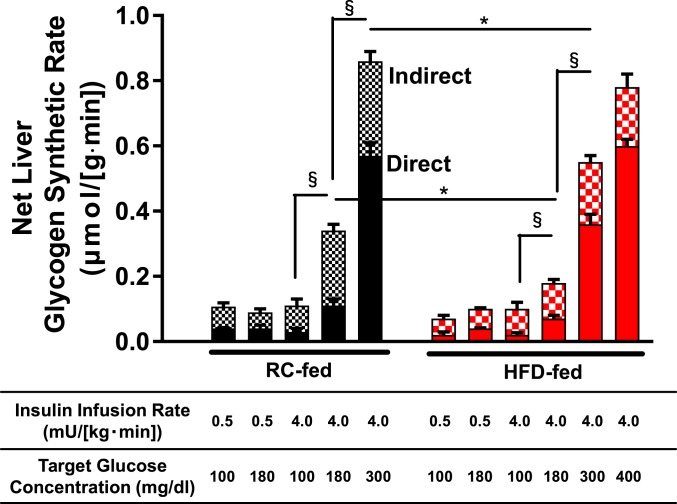
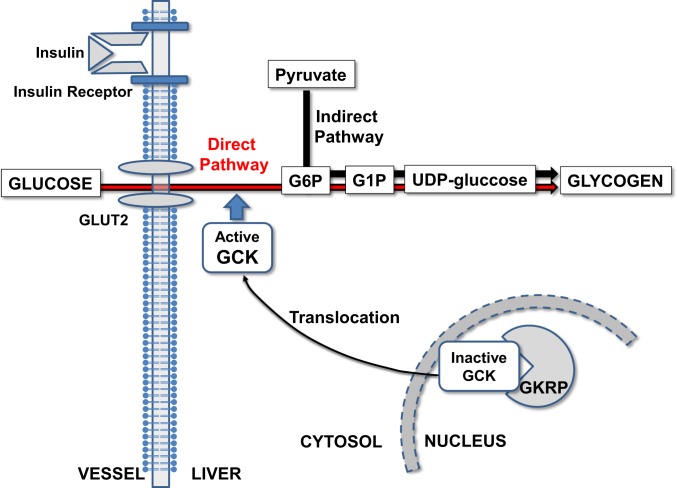
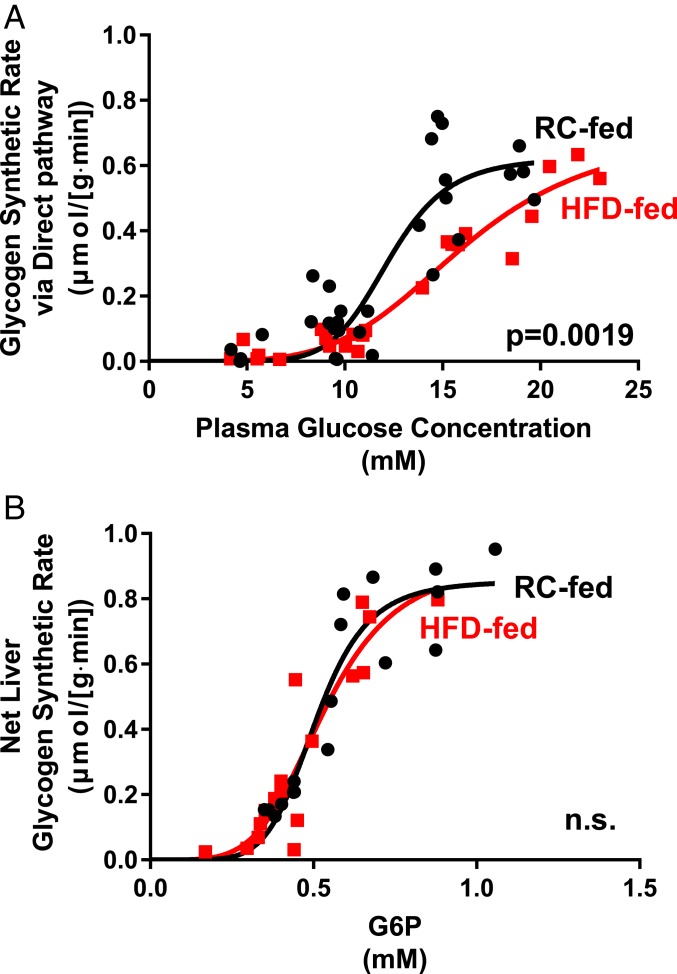
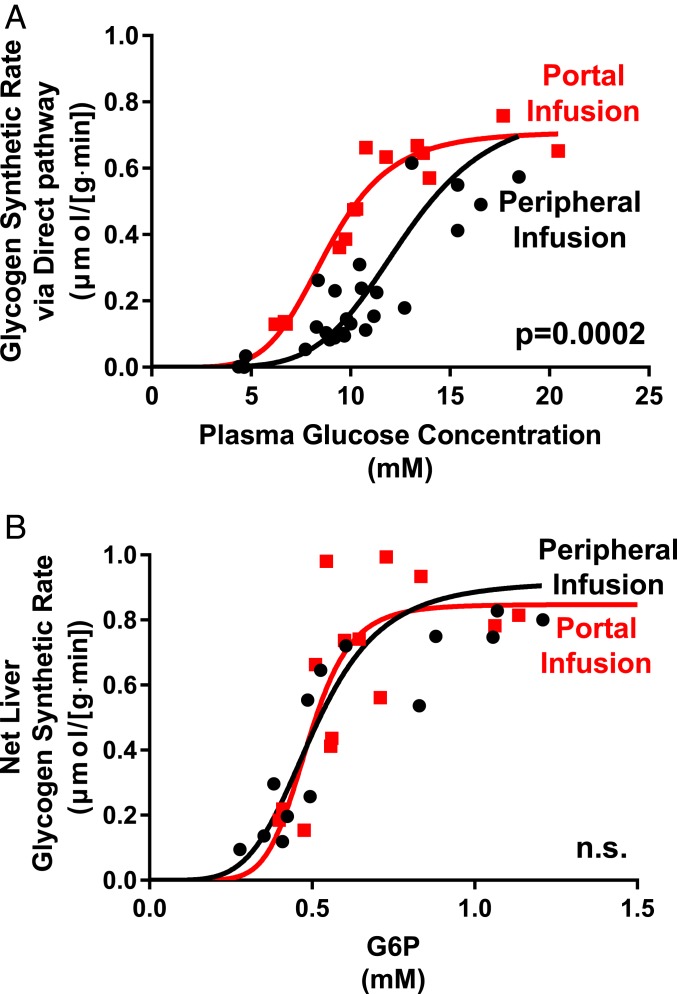
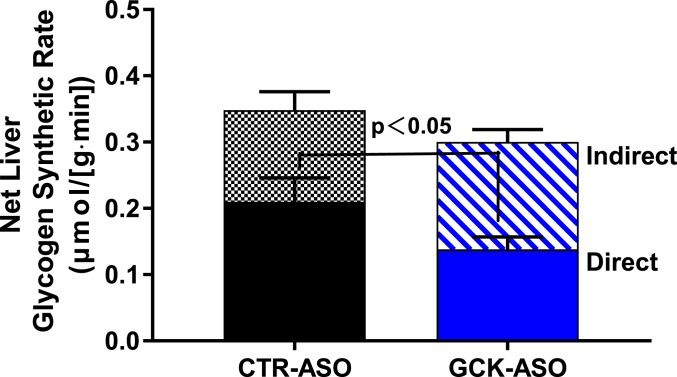
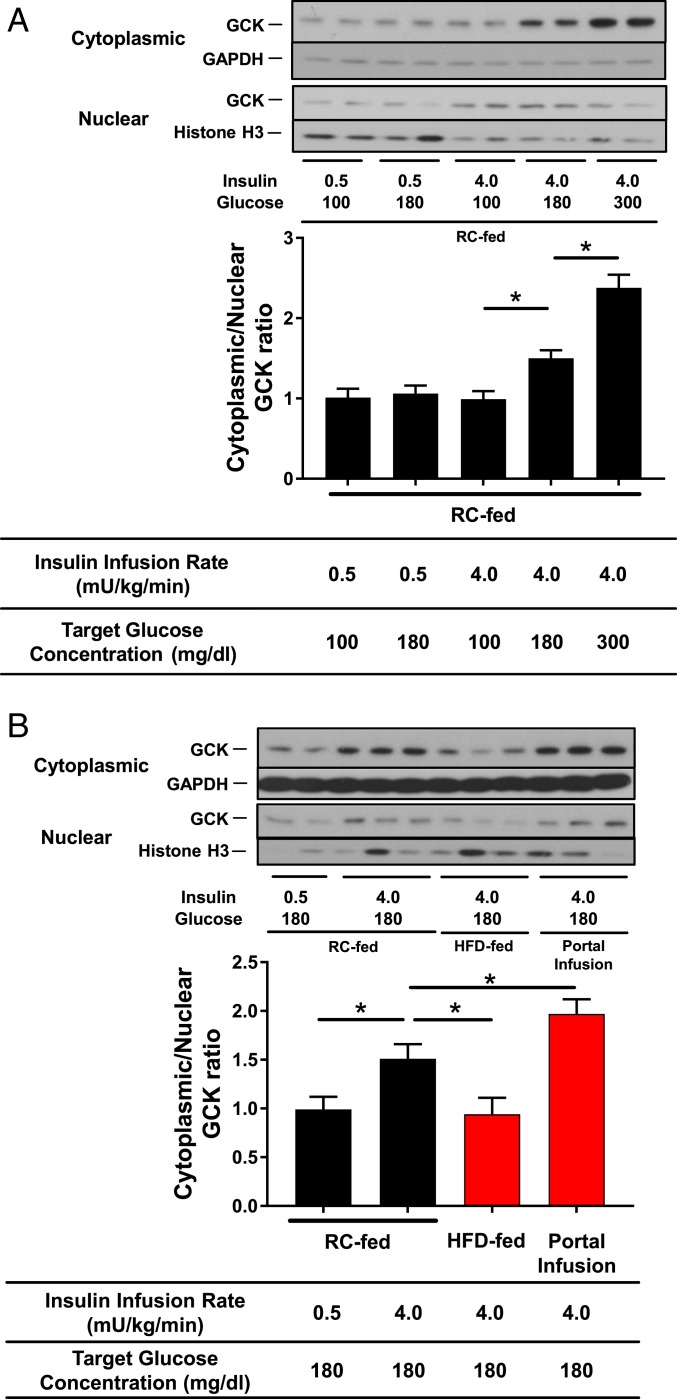
Multiple insulin-regulated enzymes participate in hepatic glycogen synthesis, and the rate-controlling step responsible for insulin stimulation of glycogen synthesis is unknown. We demonstrate that glucokinase (GCK)-mediated glucose phosphorylation is the rate-controlling step in insulin-stimulated hepatic glycogen synthesis in vivo, by use of the somatostatin pancreatic clamp technique using [C]glucose with metabolic control analysis (MCA) in three rat models: 1) regular chow (RC)-fed male rats (control), 2) high fat diet (HFD)-fed rats, and 3) RC-fed rats with portal vein glucose delivery at a glucose infusion rate matched to the control. During hyperinsulinemia, hyperglycemia dose-dependently increased hepatic glycogen synthesis. At similar levels of hyperinsulinemia and hyperglycemia, HFD-fed rats exhibited a decrease and portal delivery rats exhibited an increase in hepatic glycogen synthesis via the direct pathway compared with controls. However, the strong correlation between liver glucose-6-phosphate concentration and net hepatic glycogen synthetic rate was nearly identical in these three groups, suggesting that the main difference between models is the activation of GCK. MCA yielded a high control coefficient for GCK in all three groups. We confirmed these findings in studies of hepatic GCK knockdown using an antisense oligonucleotide. Reduced liver glycogen synthesis in lipid-induced hepatic insulin resistance and increased glycogen synthesis during portal glucose infusion were explained by concordant changes in translocation of GCK. Taken together, these data indicate that the rate of insulin-stimulated hepatic glycogen synthesis is controlled chiefly through GCK translocation.
多种胰岛素调节的酶参与肝糖原合成,而负责胰岛素刺激肝糖原合成的限速步骤尚不清楚。我们通过使用 somatostatin 胰腺夹钳技术,联合 MCA 对三种大鼠模型中的 [C]葡萄糖进行代谢控制分析,证明了葡萄糖激酶(GCK)介导的葡萄糖磷酸化是胰岛素刺激肝糖原合成的限速步骤,这三种模型分别为:1)常规饮食(RC)喂养的雄性大鼠(对照),2)高脂肪饮食(HFD)喂养的大鼠,以及 3)RC 喂养大鼠,门静脉葡萄糖输注速率与对照匹配。在高胰岛素血症期间,高血糖剂量依赖性地增加肝糖原合成。在相似的高胰岛素血症和高血糖水平下,与对照相比,HFD 喂养的大鼠通过直接途径表现出肝糖原合成的减少,门静脉输送大鼠表现出肝糖原合成的增加。然而,在这三组中,肝 6-磷酸葡萄糖浓度与净肝糖原合成率之间的强相关性几乎相同,表明模型之间的主要区别在于 GCK 的激活。MCA 在所有三组中均得出 GCK 的高控制系数。我们使用反义寡核苷酸在肝 GCK 敲低研究中证实了这些发现。脂质诱导的肝胰岛素抵抗中肝糖原合成减少和门静脉葡萄糖输注期间糖原合成增加,通过 GCK 易位的一致变化得到了解释。综上所述,这些数据表明,胰岛素刺激的肝糖原合成的速率主要通过 GCK 易位来控制。