NHC Key Laboratory of Radiobiology, School of Public Health, Jilin University, Changchun 130021, China.
Department of Neurosurgery, China-Japan Union Hospital of Jilin University, Changchun 130031, China.
Oxid Med Cell Longev. 2020 Mar 4;2020:5135893. doi: 10.1155/2020/5135893. eCollection 2020.
The mechanism of enhanced radiosensitivity induced by mitochondrial uncoupling protein UCP2 was investigated in HeLa cells to provide a theoretical basis as a novel target for cervical cancer treatment.
HeLa cells were irradiated with 4 Gy X-radiation at 1.0 Gy/min. The expression of UCP2 mRNA and protein was assayed by real-time quantitative polymerase chain reaction and western blotting. UCP2 siRNA and negative control siRNA fragments were constructed and transfected into HeLa cells 24 h after irradiation. The effect of UCP2 silencing and irradiation on HeLa cells was determined by colony formation, CCK-8 cell viability, H2AX immunofluorescence assay of DNA damage, Annexin V-FITC/PI apoptosis assay, and propidium iodide cell cycle assay. The effects on mitochondrial structure and function were investigated with fluorescent probes including dichlorodihydrofluorescein diacetate (DCFH-DA) assay of reactive oxygen species (ROS), rhodamine 123, and MitoTracker Green assay of mitochondrial structure and function.
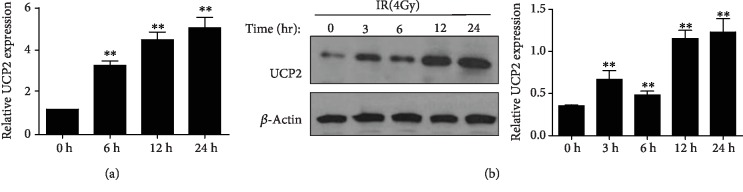
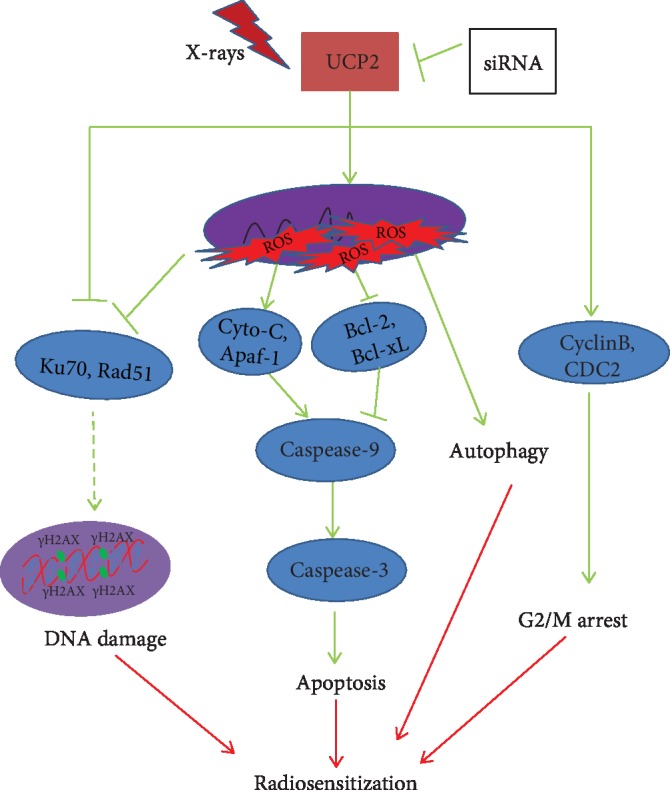
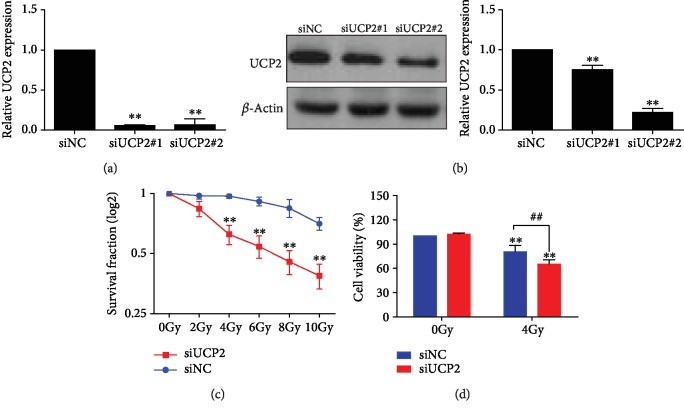
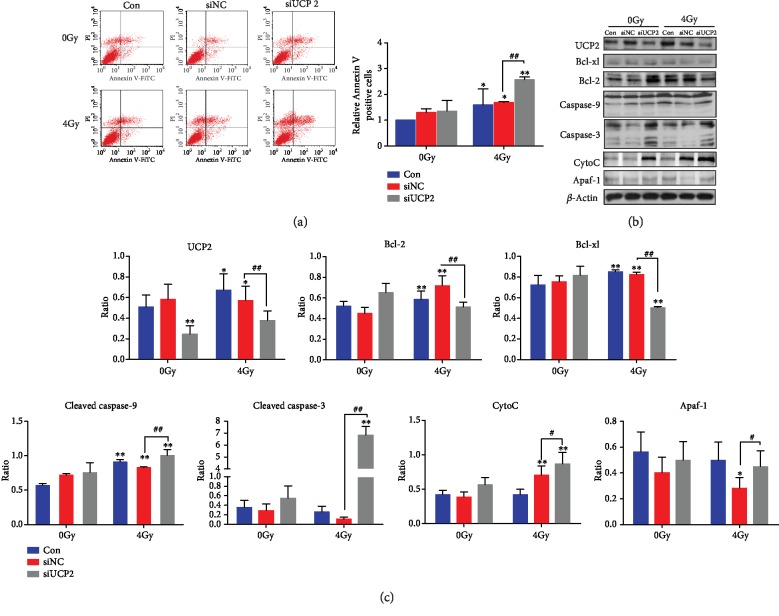
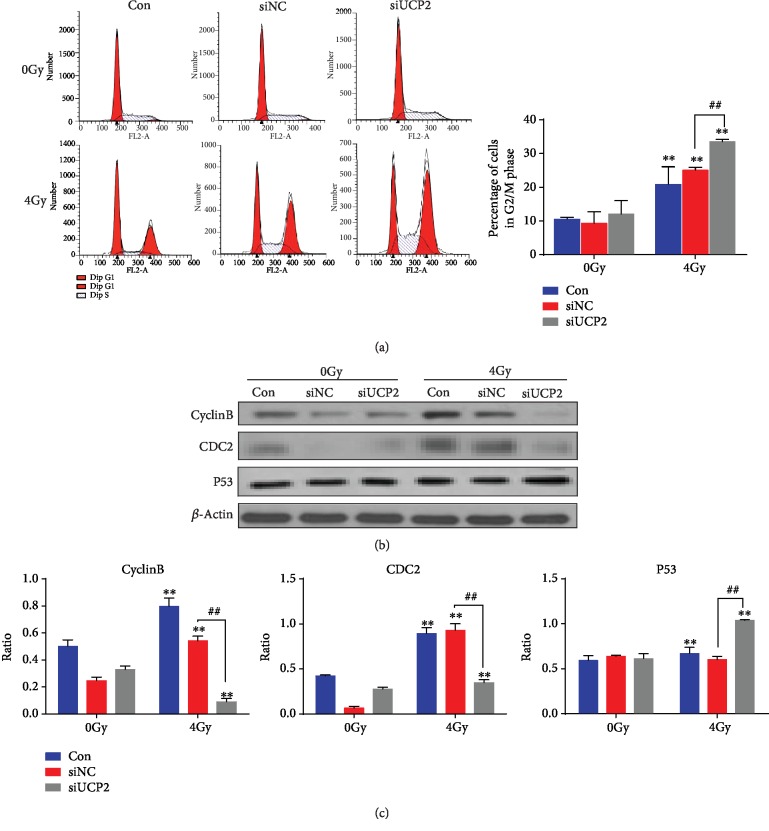
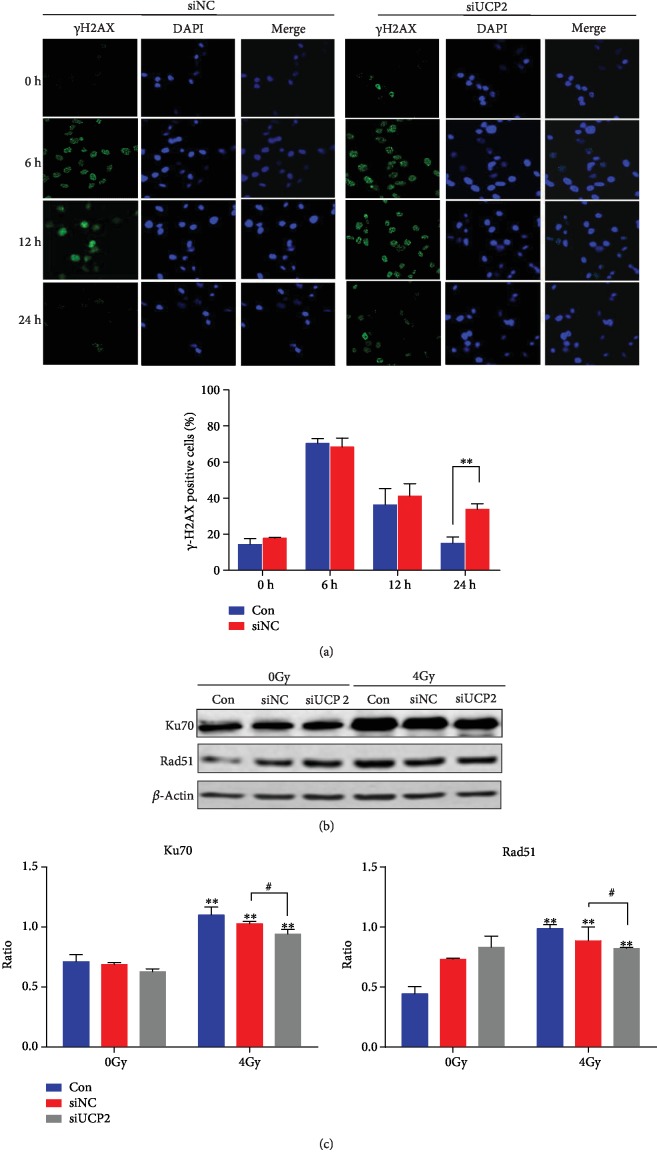
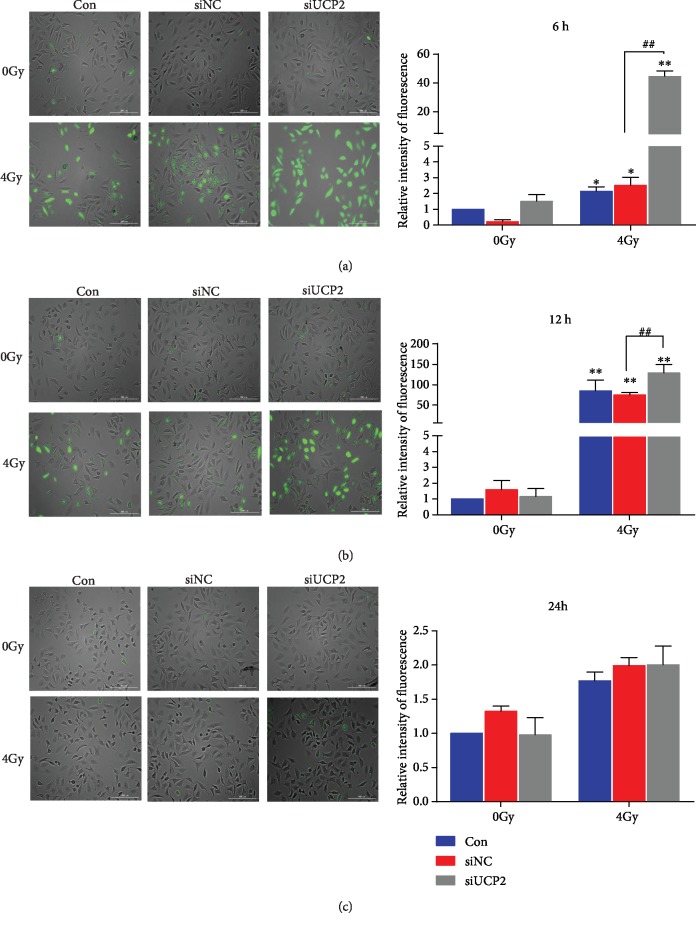
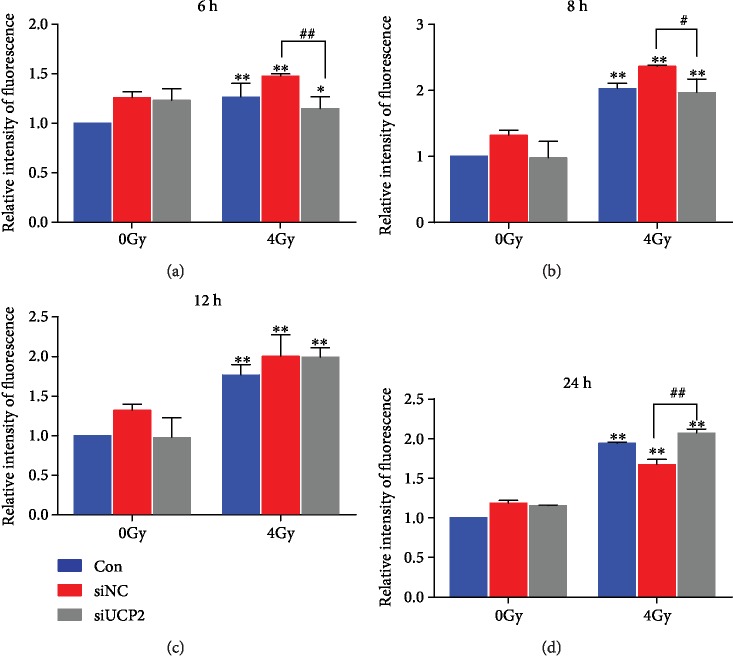
Irradiation upregulated UCP2 expression, and UCP2 knockdown decreased the survival of irradiated HeLa cells. UCP2 silencing sensitized HeLa cells to irradiation-induced DNA damage and led to increased apoptosis, cell cycle arrest in G2/M, and increased mitochondrial ROS. Increased radiosensitivity was associated with an activation of P53, decreased Bcl-2, Bcl-xl, cyclin B, CDC2, Ku70, and Rad51 expression, and increased Apaf-1, cytochrome c, caspase-3, and caspase-9 expression.
UCP2 inhibition augmented the radiosensitivity of cervical cancer cells, and it may be a potential target of radiotherapy of advanced cervical cancer.
研究线粒体解偶联蛋白 UCP2 诱导增强放射敏感性的机制,为宫颈癌治疗的新靶点提供理论依据。
用 1.0 Gy/min 的剂量以 4 Gy X 射线照射 HeLa 细胞。用实时定量聚合酶链反应和蛋白质印迹法检测 UCP2 mRNA 和蛋白质的表达。构建 UCP2 siRNA 和阴性对照 siRNA 片段,并在照射后 24 小时转染 HeLa 细胞。通过集落形成、CCK-8 细胞活力、DNA 损伤的 H2AX 免疫荧光检测、Annexin V-FITC/PI 凋亡检测和碘化丙啶细胞周期检测,确定 UCP2 沉默和照射对 HeLa 细胞的影响。用荧光探针如二氯二氢荧光素二乙酸酯(DCFH-DA)检测活性氧(ROS)、罗丹明 123 和 MitoTracker Green 检测线粒体结构和功能,研究线粒体结构和功能的影响。
照射上调 UCP2 的表达,UCP2 敲低降低了照射后 HeLa 细胞的存活率。UCP2 沉默使 HeLa 细胞对辐射诱导的 DNA 损伤敏感,并导致细胞凋亡增加、细胞周期停滞在 G2/M 期以及线粒体 ROS 增加。增加的放射敏感性与 P53 的激活、Bcl-2、Bcl-xl、细胞周期蛋白 B、CDC2、Ku70 和 Rad51 表达的降低以及 Apaf-1、细胞色素 c、caspase-3 和 caspase-9 表达的增加有关。
UCP2 抑制增强了宫颈癌细胞的放射敏感性,可能是晚期宫颈癌放射治疗的潜在靶点。