Liu Wenjun, Palovcak Anna, Li Fang, Zafar Alyan, Yuan Fenghua, Zhang Yanbin
1Department of Biochemistry and Molecular Biology, University of Miami Miller School of Medicine, Gautier Building Room 311, 1011 NW 15th Street, Miami, FL 33136 USA.
2Sylvester Comprehensive Cancer Center, University of Miami Miller School of Medicine, Miami, FL 33136 USA.
Cell Biosci. 2020 Mar 16;10:39. doi: 10.1186/s13578-020-00401-7. eCollection 2020.
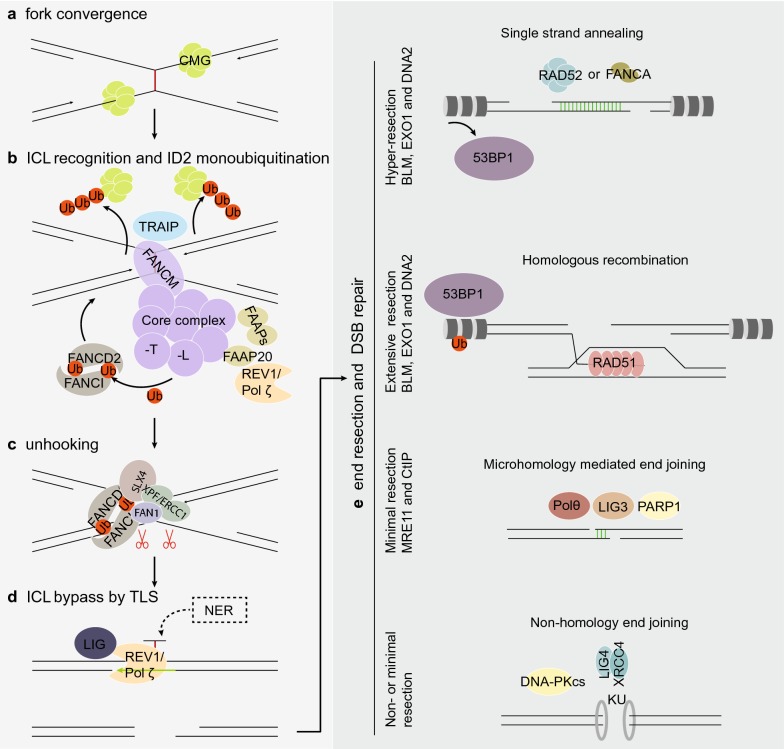
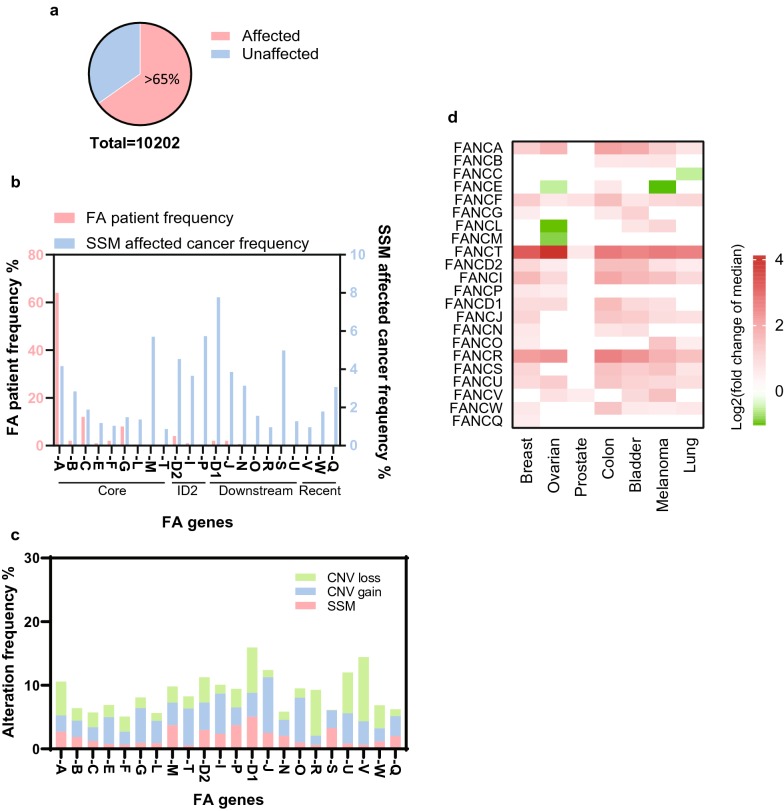
Fanconi anemia (FA) is a recessive genetic disorder caused by biallelic mutations in at least one of 22 FA genes. Beyond its pathological presentation of bone marrow failure and congenital abnormalities, FA is associated with chromosomal abnormality and genomic instability, and thus represents a genetic vulnerability for cancer predisposition. The cancer relevance of the FA pathway is further established with the pervasive occurrence of FA gene alterations in somatic cancers and observations of FA pathway activation-associated chemotherapy resistance. In this article we describe the role of the FA pathway in canonical interstrand crosslink (ICL) repair and possible contributions of FA gene alterations to cancer development. We also discuss the perspectives and potential of targeting the FA pathway for cancer intervention.
范可尼贫血(FA)是一种隐性遗传疾病,由22个FA基因中至少一个的双等位基因突变引起。除了骨髓衰竭和先天性异常的病理表现外,FA还与染色体异常和基因组不稳定有关,因此代表了癌症易感性的遗传脆弱性。体细胞癌中普遍存在FA基因改变以及FA通路激活相关的化疗耐药性观察结果,进一步证实了FA通路与癌症的相关性。在本文中,我们描述了FA通路在经典链间交联(ICL)修复中的作用以及FA基因改变对癌症发展的可能影响。我们还讨论了针对FA通路进行癌症干预的前景和潜力。