Kiyosue Kazuyuki, Miwa Yoshihiro
Functional Biomolecule Research Group and DAILAB, Biomedical Research Institute, National Institute of Advanced Industrial Science and Technology (AIST), Osaka 563-8577, Japan.
Faculty of Medicine, University of Tsukuba, Tsukuba 305-8575, Japan.
Heliyon. 2020 Mar 11;6(3):e03504. doi: 10.1016/j.heliyon.2020.e03504. eCollection 2020 Mar.
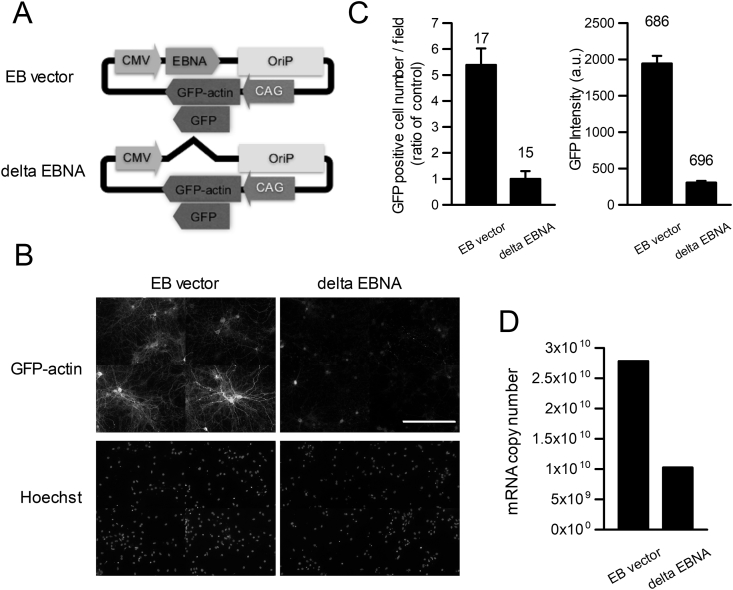
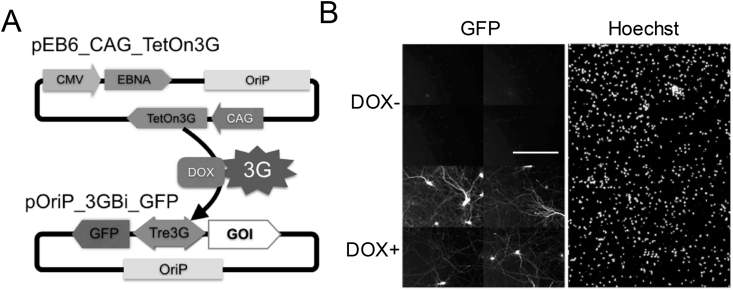
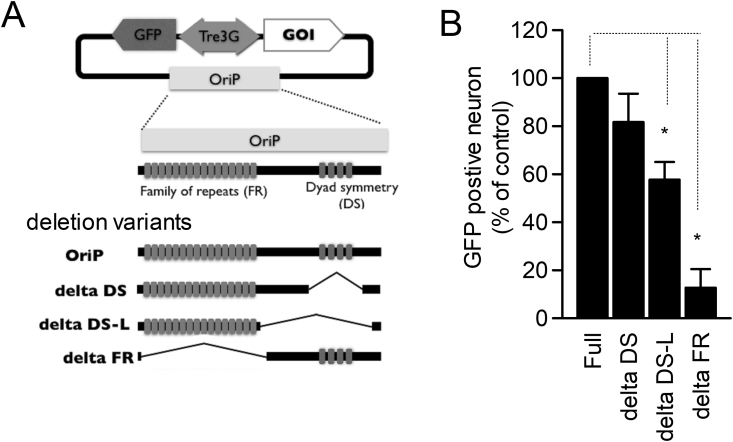
Exogenous gene expression is a fundamental and indispensable technique for testing gene function in neurons. Several ways to express exogenous genes in neurons are available, but each method has pros and cons. The lentivirus vector is useful for high efficiency gene transfer to neurons and stabilizes gene expression via genome integration, but this integration may destroy the host genome. The Epstein-Barr virus (EBV)-derived vector (EB vector) is an accessible and useful vector in human cell lines because the vector is not integrated into the host genome but stays in the nucleus as an episome. However, there has been no report on this process in rodent neurons. We examined the usefulness of the EB vector for testing gene function in neurons. We found that EB vector-derived exogenous proteins such as green fluorescent protein (GFP) and GFP-tagged actin were easily detectable even after three weeks of transfection. Second, a tetracycline-induced gene expression system in the EB vector was active after three weeks of transfection, indicating that plasmids were retained in neurons for up to three weeks. Third, we determined that only Family of repeat element of the plasmid vector is essential for its long-term presence in neurons. These results show that the modified EB vector is a useful tool for examining gene function in neurons.
外源基因表达是检测神经元基因功能的一项基本且不可或缺的技术。在神经元中表达外源基因有几种方法,但每种方法都有其优缺点。慢病毒载体可高效地将基因转移到神经元中,并通过基因组整合使基因表达稳定,但这种整合可能会破坏宿主基因组。爱泼斯坦-巴尔病毒(EBV)衍生载体(EB载体)在人类细胞系中是一种易于使用的载体,因为该载体不会整合到宿主基因组中,而是以附加体的形式留在细胞核中。然而,在啮齿类神经元中尚未有关于此过程的报道。我们研究了EB载体在检测神经元基因功能方面的实用性。我们发现,即使在转染三周后,EB载体衍生的外源蛋白,如绿色荧光蛋白(GFP)和GFP标记的肌动蛋白,仍易于检测到。其次,EB载体中的四环素诱导基因表达系统在转染三周后仍具有活性,这表明质粒在神经元中保留了长达三周的时间。第三,我们确定质粒载体的重复元件家族是其在神经元中长期存在所必需的。这些结果表明,修饰后的EB载体是检测神经元基因功能的一种有用工具。