Peris David, Labandeira Conrad C, Barrón Eduardo, Delclòs Xavier, Rust Jes, Wang Bo
Institute of Geosciences, University of Bonn, 53115 Bonn, Germany.
Department of Paleobiology, National Museum of Natural History, Smithsonian Institution, Washington, DC 20013, USA; Department of Entomology and Behavior, Ecology, Evolution and Systematics Program, University of Maryland, College Park, MD 20742, USA; College of Life Sciences, Capital Normal University, 100048 Beijing, China.
iScience. 2020 Mar 27;23(3):100913. doi: 10.1016/j.isci.2020.100913. Epub 2020 Mar 18.
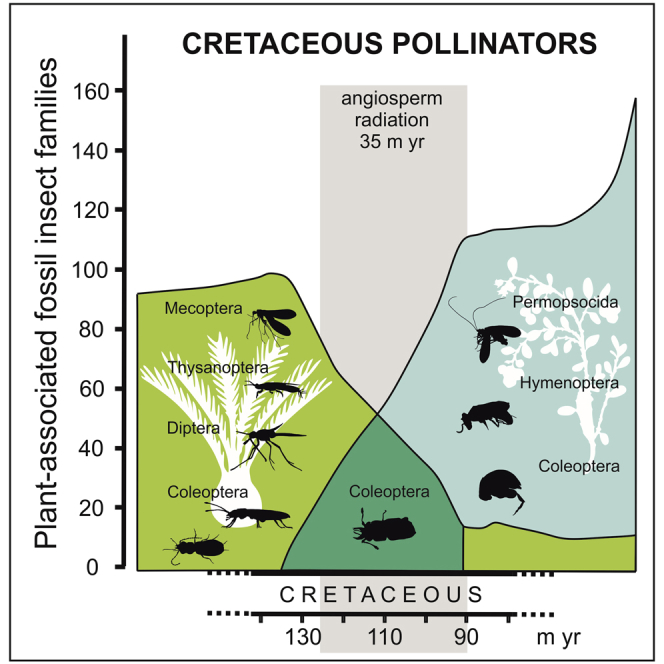
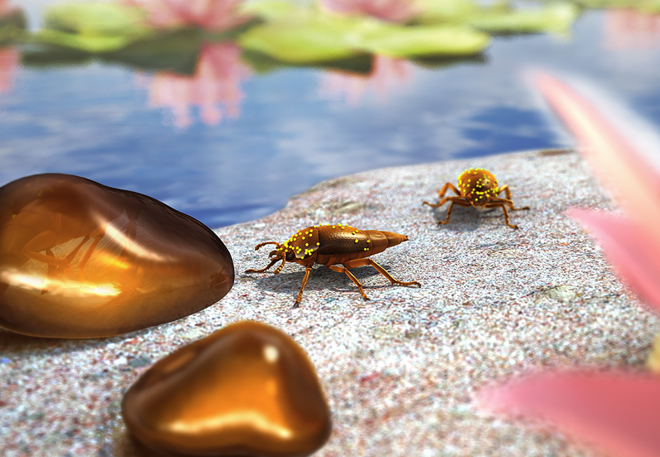
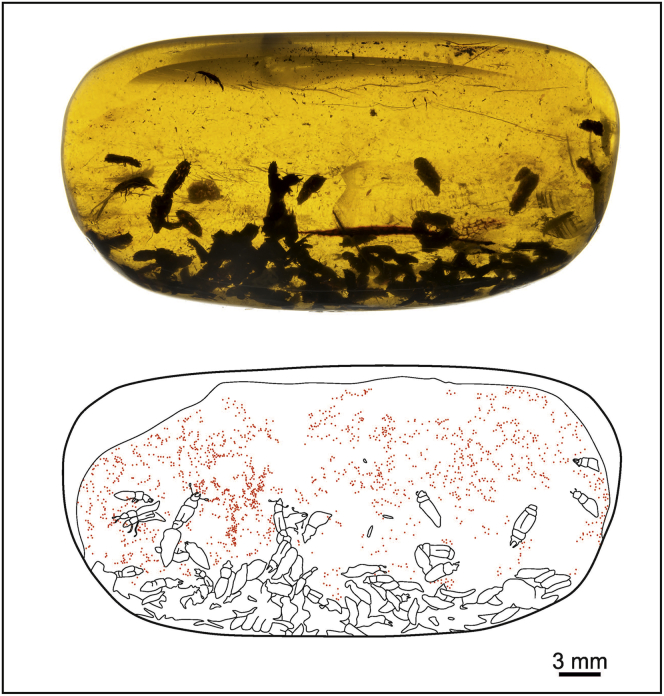
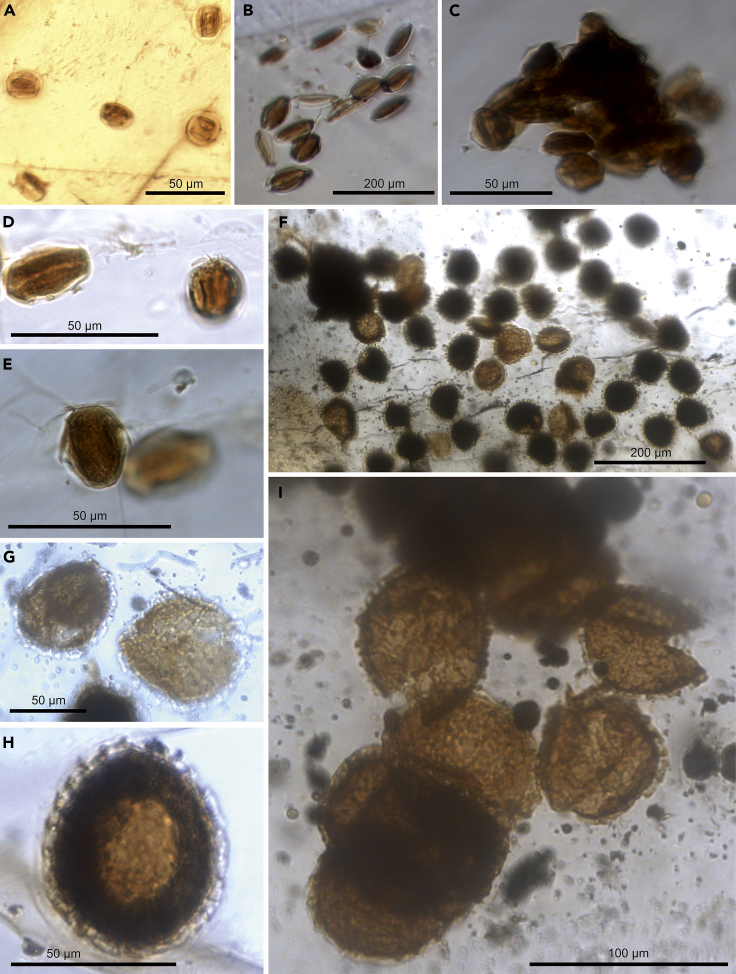
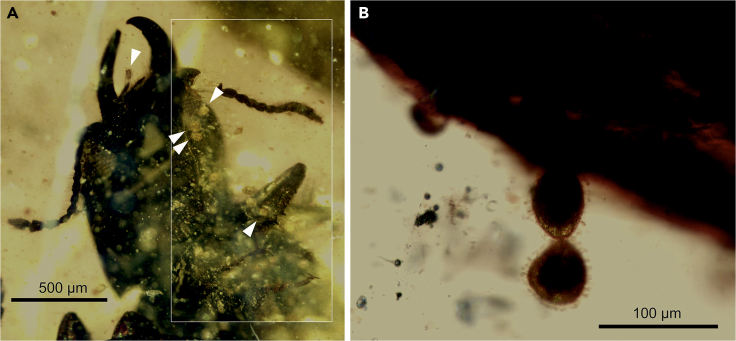
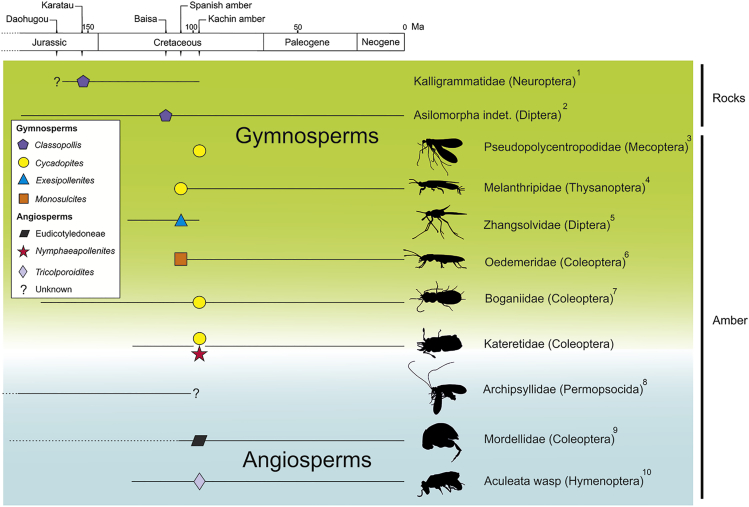
The Cretaceous fossil record of amber provides a variety of evidence that is essential for greater understanding of early pollination strategies. Here, we describe four pieces of ca. 99-million-year-old (early Cenomanian) Myanmar amber from Kachin containing four closely related genera of short-winged flower beetles (Coleoptera: Kateretidae) associated with abundant pollen grains identified as three distinct palynomorphotypes of the gymnosperm Cycadopites and Praenymphaeapollenites cenomaniensis gen. and sp. nov., a form-taxon of pollen from a basal angiosperm lineage of water lilies (Nymphaeales: Nymphaeaceae). We demonstrate how a gymnosperm to angiosperm plant-host shift occurred during the mid-Cretaceous, from a generalist pollen-feeding family of beetles, which served as a driving mechanism for the subsequent success of flowering plants.
琥珀的白垩纪化石记录提供了各种证据,这些证据对于更深入地了解早期授粉策略至关重要。在此,我们描述了来自克钦邦的四块约9900万年前(早森诺曼期)的缅甸琥珀,其中含有四个密切相关的短翅花甲虫属(鞘翅目:卡特雷特科),这些甲虫与大量花粉粒有关,这些花粉粒被鉴定为裸子植物苏铁粉属和森诺曼前睡莲粉属(新属新种)的三种不同孢粉形态类型,苏铁粉属是一种来自睡莲科(睡莲目:睡莲科)基部被子植物谱系的花粉形态分类单元。我们展示了在白垩纪中期,从一个以花粉为食的多食性甲虫科,如何发生了从裸子植物到被子植物的寄主转移,这一转移成为了随后开花植物成功的驱动机制。