Pellegrini Laura, Sileno Sara, D'Agostino Marco, Foglio Eleonora, Florio Maria Cristina, Guzzanti Vincenzo, Russo Matteo Antonio, Limana Federica, Magenta Alessandra
Institute of Oncology Research (IOR), 6500 Bellinzona, Switzerland.
Istituto Dermopatico dell'Immacolata, IDI-IRCCS, Experimental Immunology Laboratory, Via dei Monti di Creta 104, 00167 Rome, Italy.
Cancers (Basel). 2020 Mar 17;12(3):704. doi: 10.3390/cancers12030704.
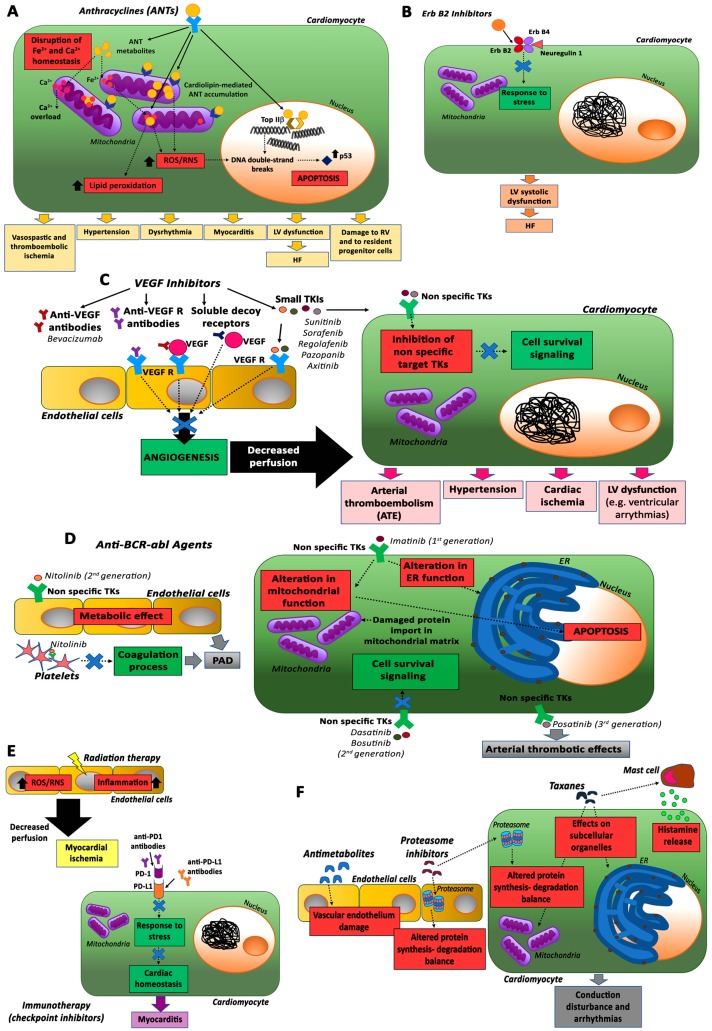
Cancer treatment has made significant progress in the cure of different types of tumors. Nevertheless, its clinical use is limited by unwanted cardiotoxicity. Aside from the conventional chemotherapy approaches, even the most newly developed, i.e., molecularly targeted therapy and immunotherapy, exhibit a similar frequency and severity of toxicities that range from subclinical ventricular dysfunction to severe cardiomyopathy and, ultimately, congestive heart failure. Specific mechanisms leading to cardiotoxicity still remain to be elucidated. For instance, oxidative stress and DNA damage are considered key players in mediating cardiotoxicity in different treatments. microRNAs (miRNAs) act as key regulators in cell proliferation, cell death, apoptosis, and cell differentiation. Their dysregulation has been associated with adverse cardiac remodeling and toxicity. This review provides an overview of the cardiotoxicity induced by different oncologic treatments and potential miRNAs involved in this effect that could be used as possible therapeutic targets.
癌症治疗在不同类型肿瘤的治愈方面取得了显著进展。然而,其临床应用受到不良心脏毒性的限制。除了传统的化疗方法外,即使是最新开发的方法,即分子靶向治疗和免疫治疗,也表现出相似的毒性频率和严重程度,范围从亚临床心室功能障碍到严重的心肌病,最终发展为充血性心力衰竭。导致心脏毒性的具体机制仍有待阐明。例如,氧化应激和DNA损伤被认为是不同治疗中介导心脏毒性的关键因素。微小RNA(miRNA)在细胞增殖、细胞死亡、凋亡和细胞分化中起关键调节作用。它们的失调与不良心脏重塑和毒性有关。本综述概述了不同肿瘤治疗诱导的心脏毒性以及参与此效应的潜在miRNA,这些miRNA可作为可能的治疗靶点。