Department of Spinal Surgery, Nanfang Hospital, Southern Medical University, Guangzhou, 510515, Guangdong, China.
J Neuroinflammation. 2020 Mar 20;17(1):90. doi: 10.1186/s12974-020-01751-2.
Inflammatory response mediated by oxidative stress is considered as an important pathogenesis of spinal cord injury (SCI). Advanced oxidation protein products (AOPPs) are novel markers of oxidative stress and their role in inflammatory response after SCI remained unclear. This study aimed to investigate the role of AOPPs in SCI pathogenesis and explore the possible underlying mechanisms.
A C5 hemi-contusion injury was induced in Sprague-Dawley rats to confirm the involvement of AOPPs after SCI. For in vivo study, apocynin, the NADPH oxidase inhibitor was used to study the neuroprotective effects after SCI. For in vitro study, the BV2 microglia cell lines were pretreated with or without the inhibitor or transfected with or without small interference RNA (siRNA) and then stimulated with AOPPs. A combination of molecular and histological methods was used to clarify the mechanism and explore the signaling pathway both in vivo and in vitro. One-way analysis of variance (ANOVA) was conducted with Bonferroni post hoc tests to examine the differences between groups.
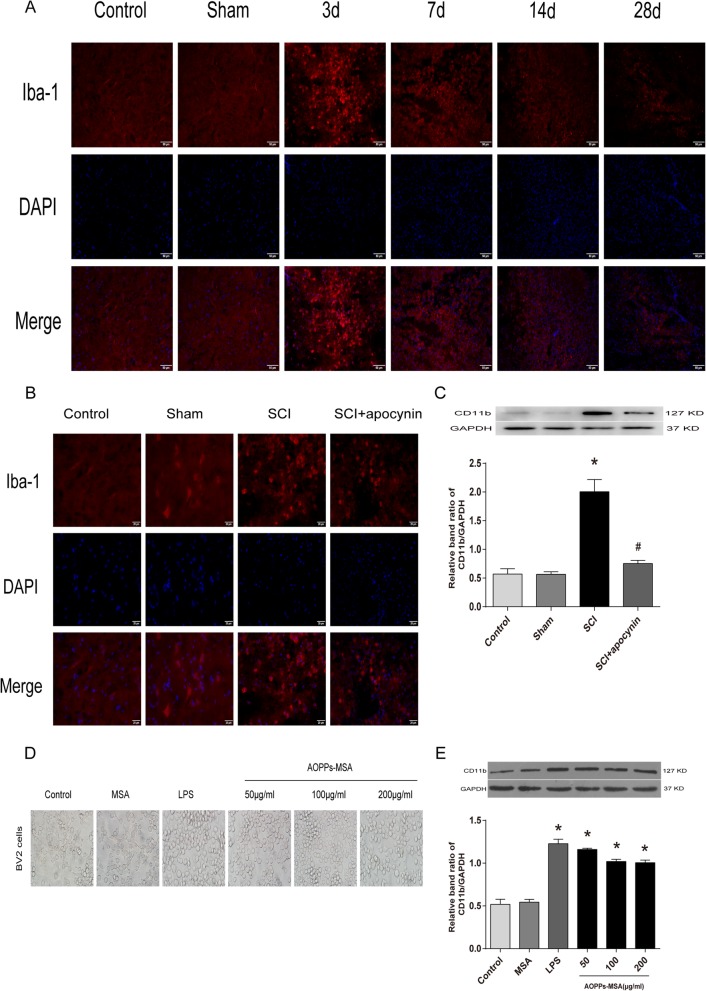
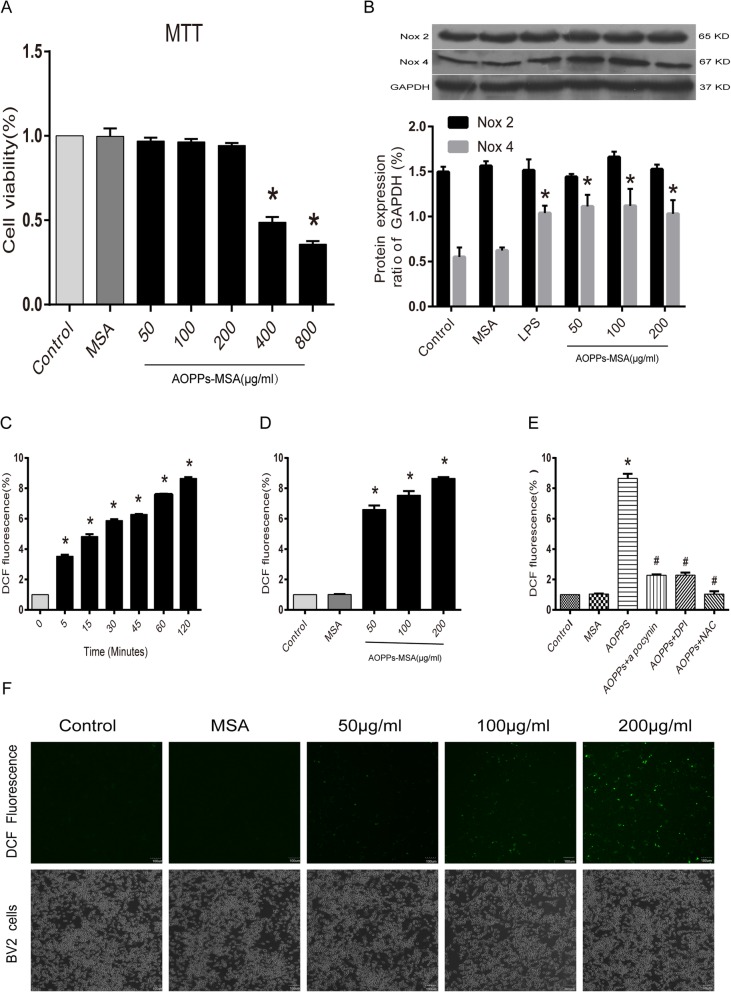
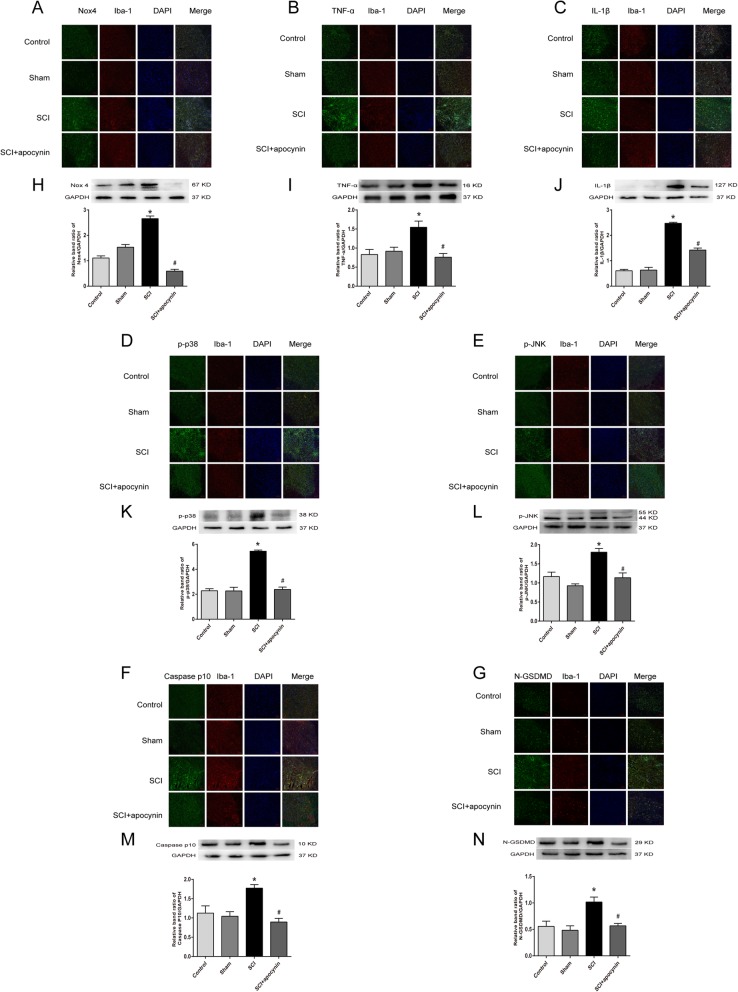
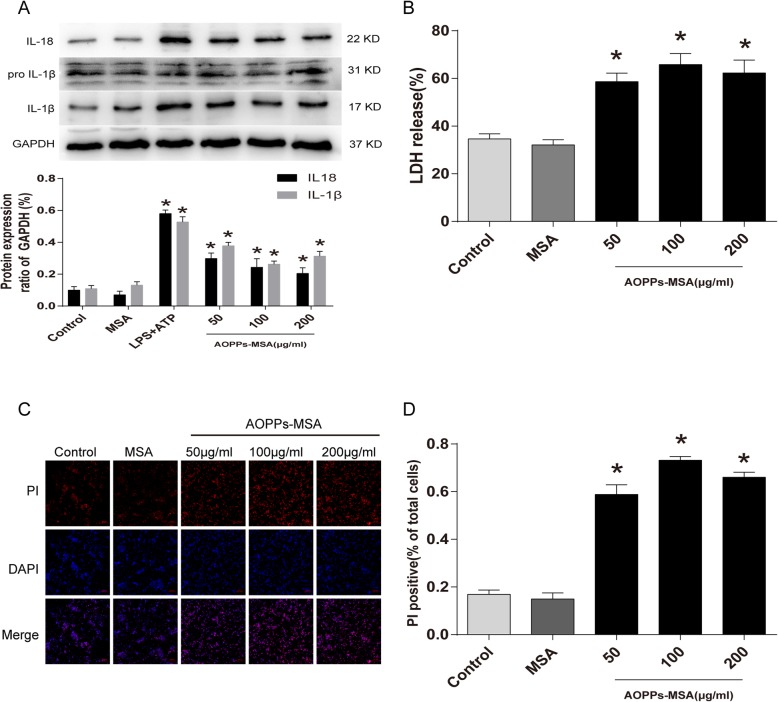
The levels of AOPPs in plasma and cerebrospinal fluid as well as the contents in the spinal cord showed significant increase after SCI. Meanwhile, apocynin ameliorated tissue damage in the spinal cord after SCI, improving the functional recovery. Immunofluorescence staining and western blot analysis showed activation of microglia after SCI, which was in turn inhibited by apocynin. Pretreated BV2 cells with AOPPs triggered excessive generation of reactive oxygen species (ROS) by activating NADPH oxidase. Increased ROS induced p38 MAPK and JNK phosphorylation, subsequently triggering nuclear translocation of NF-κB p65 to express pro-inflammatory cytokines. Also, treatment of BV2 cells with AOPPs induced NLRP3 inflammasome activation and cleavage of Gasdermin-d (GSDMD), causing pyroptosis. This was confirmed by cleavage of caspase-1, production of downstream mature interleukin (IL)-1β and IL-18 as well as rupture of rapid cell membrane.
Collectively, these data indicated AOPPs as biomarkers of oxidative stress, modulating inflammatory response in SCI by multiple signaling pathways, which also included the induction of NADPH oxidase dependent ROS, and NLRP3-mediated pyroptosis, and activation of MAPKs and NF-κB.
氧化应激介导的炎症反应被认为是脊髓损伤(SCI)的重要发病机制。晚期氧化蛋白产物(AOPPs)是氧化应激的新型标志物,但其在 SCI 后炎症反应中的作用尚不清楚。本研究旨在探讨 AOPPs 在 SCI 发病机制中的作用,并探讨其可能的潜在机制。
采用 C5 半切伤法诱导 Sprague-Dawley 大鼠 SCI,以证实 SCI 后 AOPPs 的参与。在体内研究中,使用 NADPH 氧化酶抑制剂烟酰胺腺嘌呤二核苷酸磷酸(apocynin)研究 SCI 后的神经保护作用。在体外研究中,先用或不用抑制剂预处理 BV2 小胶质细胞系,或用或不用小干扰 RNA(siRNA)转染,然后用 AOPPs 刺激。采用分子和组织学方法结合,在体内和体外阐明机制并探讨信号通路。采用单因素方差分析(ANOVA),并用 Bonferroni 事后检验比较组间差异。
SCI 后血浆和脑脊液中的 AOPPs 水平以及脊髓中的含量均明显升高。同时,apocynin 改善了 SCI 后脊髓组织损伤,促进了功能恢复。免疫荧光染色和 Western blot 分析显示,SCI 后小胶质细胞激活,apocynin 抑制小胶质细胞激活。用 AOPPs 预处理 BV2 细胞可通过激活 NADPH 氧化酶引起大量活性氧(ROS)生成。增加的 ROS 诱导 p38 MAPK 和 JNK 磷酸化,随后触发 NF-κB p65 核转位以表达促炎细胞因子。此外,用 AOPPs 处理 BV2 细胞可诱导 NLRP3 炎性体激活和 Gasdermin-D(GSDMD)裂解,导致细胞焦亡。这通过裂解半胱天冬酶-1、产生下游成熟白介素(IL)-1β和 IL-18 以及快速细胞膜破裂得到证实。
综上所述,这些数据表明 AOPPs 作为氧化应激的生物标志物,通过多条信号通路调节 SCI 中的炎症反应,包括诱导 NADPH 氧化酶依赖性 ROS 和 NLRP3 介导的细胞焦亡,以及 MAPKs 和 NF-κB 的激活。