Umeå Plant Science Centre, Department of Plant Physiology, Umeå University, Umeå, 901 87, Sweden.
Institute for Biochemistry and Biology, University of Potsdam, Potsdam, Germany.
Sci Rep. 2020 Mar 19;10(1):5073. doi: 10.1038/s41598-020-61758-w.
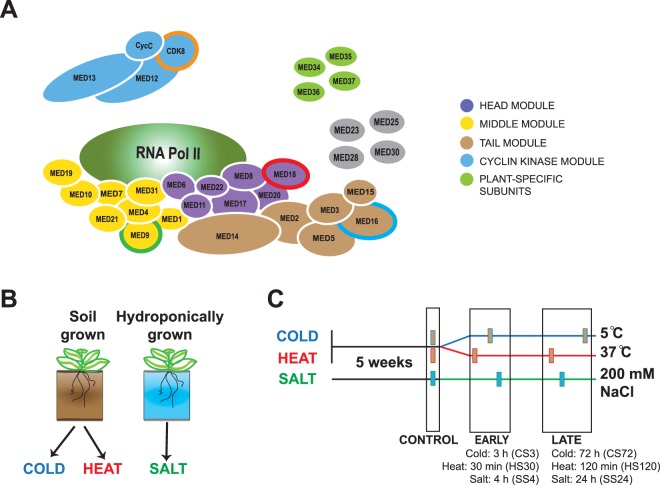
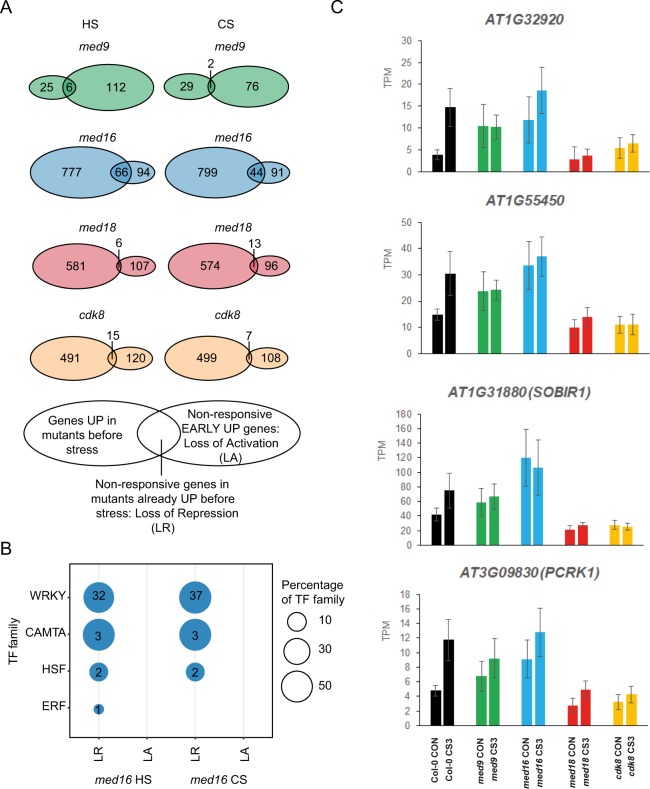
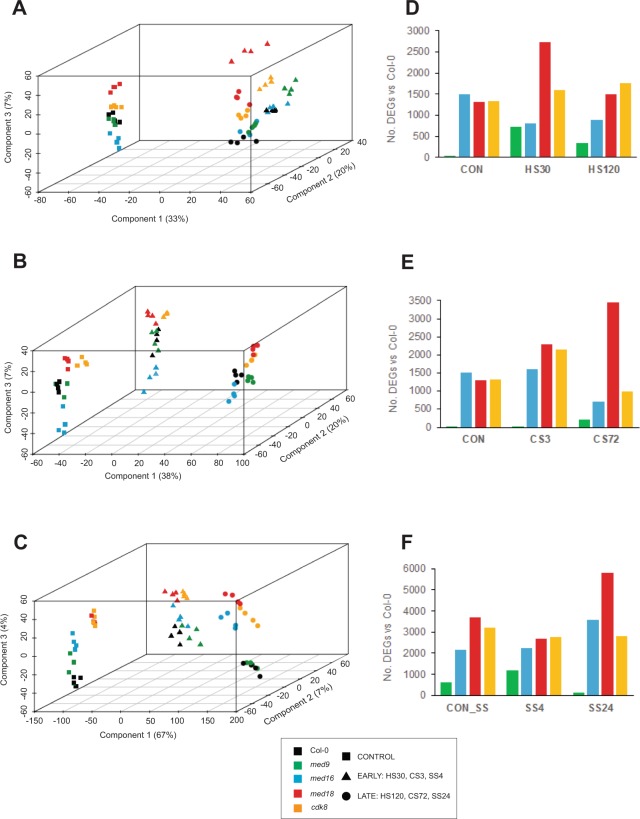
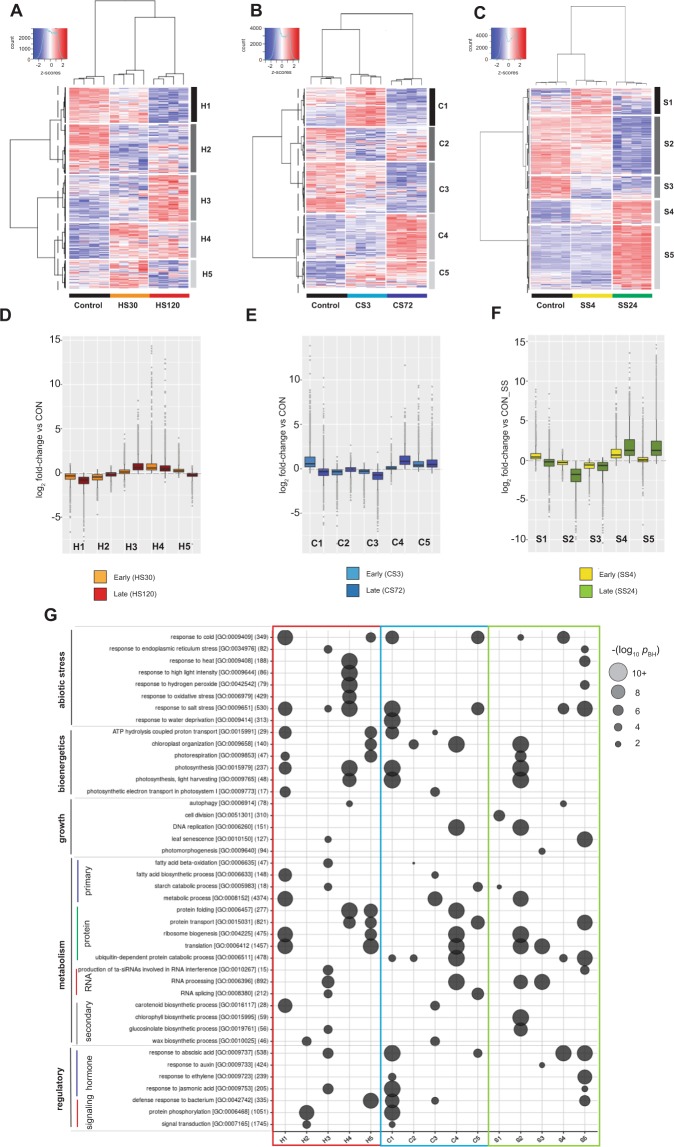
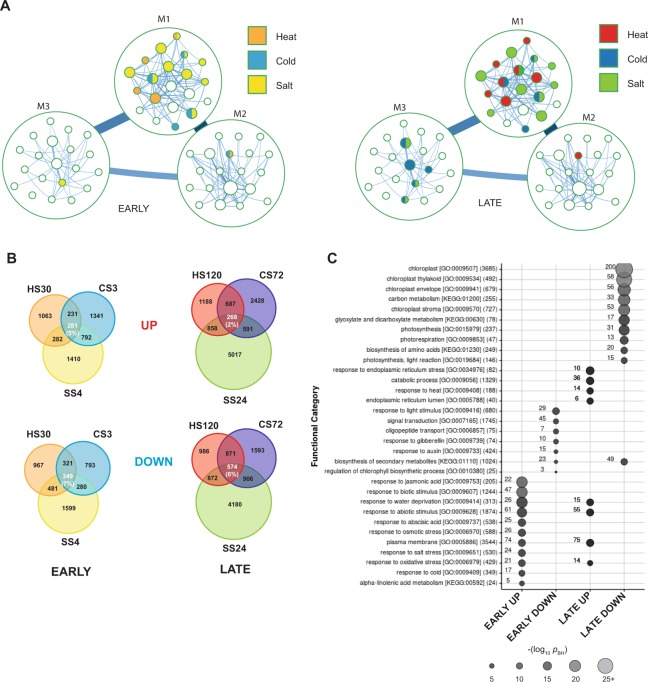
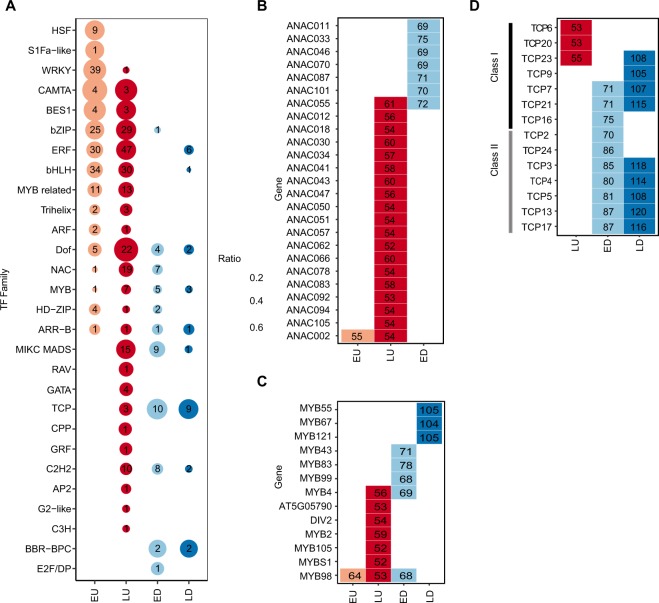
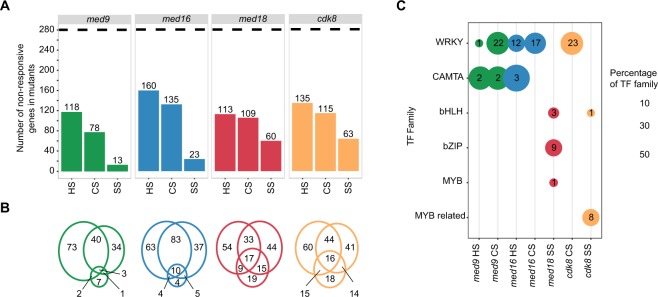
Adverse environmental conditions are detrimental to plant growth and development. Acclimation to abiotic stress conditions involves activation of signaling pathways which often results in changes in gene expression via networks of transcription factors (TFs). Mediator is a highly conserved co-regulator complex and an essential component of the transcriptional machinery in eukaryotes. Some Mediator subunits have been implicated in stress-responsive signaling pathways; however, much remains unknown regarding the role of plant Mediator in abiotic stress responses. Here, we use RNA-seq to analyze the transcriptional response of Arabidopsis thaliana to heat, cold and salt stress conditions. We identify a set of common abiotic stress regulons and describe the sequential and combinatorial nature of TFs involved in their transcriptional regulation. Furthermore, we identify stress-specific roles for the Mediator subunits MED9, MED16, MED18 and CDK8, and putative TFs connecting them to different stress signaling pathways. Our data also indicate different modes of action for subunits or modules of Mediator at the same gene loci, including a co-repressor function for MED16 prior to stress. These results illuminate a poorly understood but important player in the transcriptional response of plants to abiotic stress and identify target genes and mechanisms as a prelude to further biochemical characterization.
不利的环境条件会对植物的生长和发育造成损害。植物对非生物胁迫条件的适应涉及信号通路的激活,这些信号通路通常通过转录因子(TFs)的网络导致基因表达的变化。共激活因子复合物 Mediator 是高度保守的共调节因子复合物,也是真核生物转录机制的重要组成部分。一些 Mediator 亚基已被牵连到应激响应信号通路中;然而,关于植物 Mediator 在非生物胁迫反应中的作用,仍有许多未知之处。在这里,我们使用 RNA-seq 分析了拟南芥对热、冷和盐胁迫条件的转录反应。我们确定了一组常见的非生物胁迫调节因子,并描述了参与其转录调控的 TF 的顺序和组合性质。此外,我们确定了 Mediator 亚基 MED9、MED16、MED18 和 CDK8 以及与不同胁迫信号通路相关的假定 TF 在特定胁迫中的作用。我们的数据还表明,在同一基因座上,Mediator 的亚基或模块具有不同的作用模式,包括 MED16 在胁迫前的共抑制功能。这些结果阐明了植物对非生物胁迫的转录反应中一个理解甚少但很重要的参与者,并确定了靶基因和机制,作为进一步生化特征分析的前奏。