Department of Neurology, University Medical Center Hamburg-Eppendorf, Martinistr. 52, 20246, Hamburg, Germany.
BIH Center for Regenerative Therapies, Charité University Medicine Berlin, Augustenburger Platz 1, 13353, Berlin, Germany.
Cancer Immunol Immunother. 2020 Jul;69(7):1307-1313. doi: 10.1007/s00262-020-02548-1. Epub 2020 Mar 19.
Malignant peripheral nerve sheath tumors (MPNSTs) are rare aggressive sarcomas with poor prognosis. More than half of MPNSTs develop from benign precursor tumors associated with neurofibromatosis type 1 (NF1) which is a tumor suppressor gene disorder. Early detection of malignant transformation in NF1 patients is pivotal to improving survival. The primary aim of this study was to evaluate the role of immuno-modulators as candidate biomarkers of malignant transformation in NF1 patients with plexiform neurofibromas as well as predictors of response to immunotherapeutic approaches.
Sera from a total of 125 NF1 patients with quantified internal tumor load were included, and 25 of them had MPNSTs. A total of six immuno-modulatory factors (IGFBP-1, PD-L1, IFN-α, GM-CSF, PGE-2, and AXL) were measured in these sera using respective ELISA.
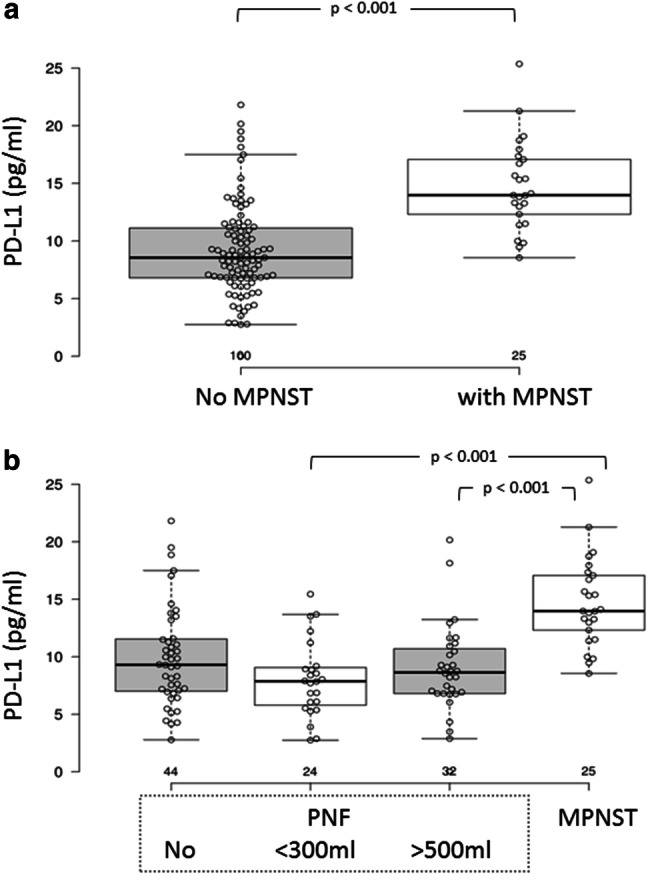
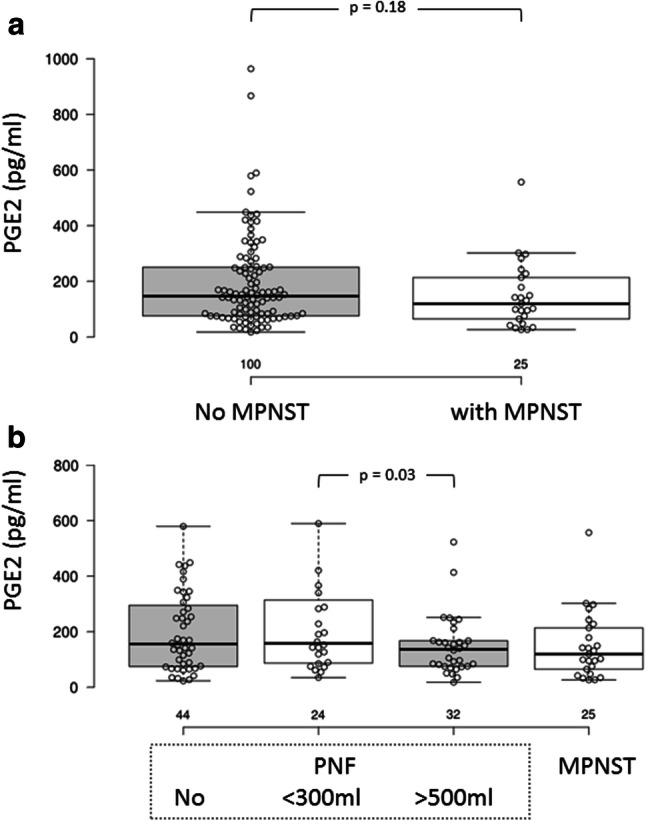
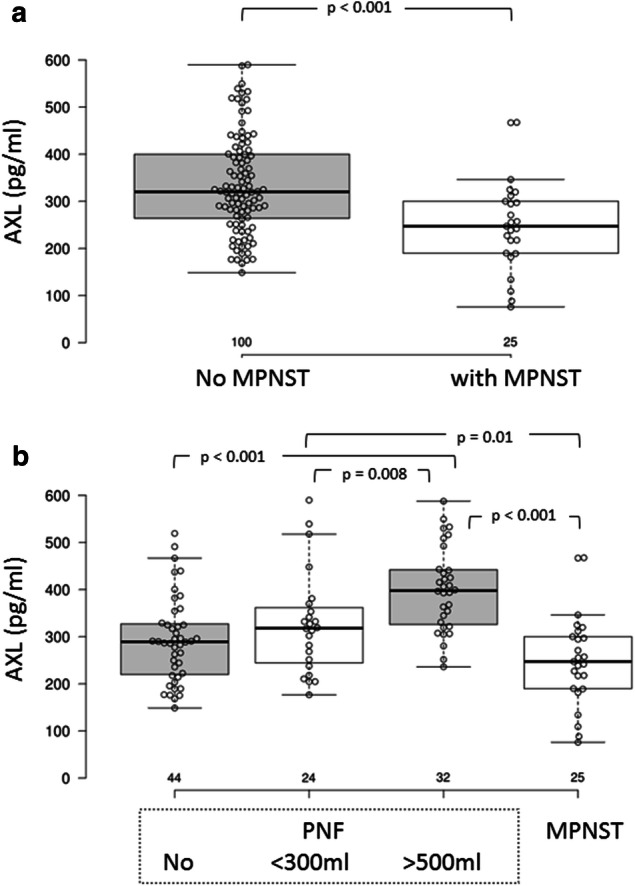
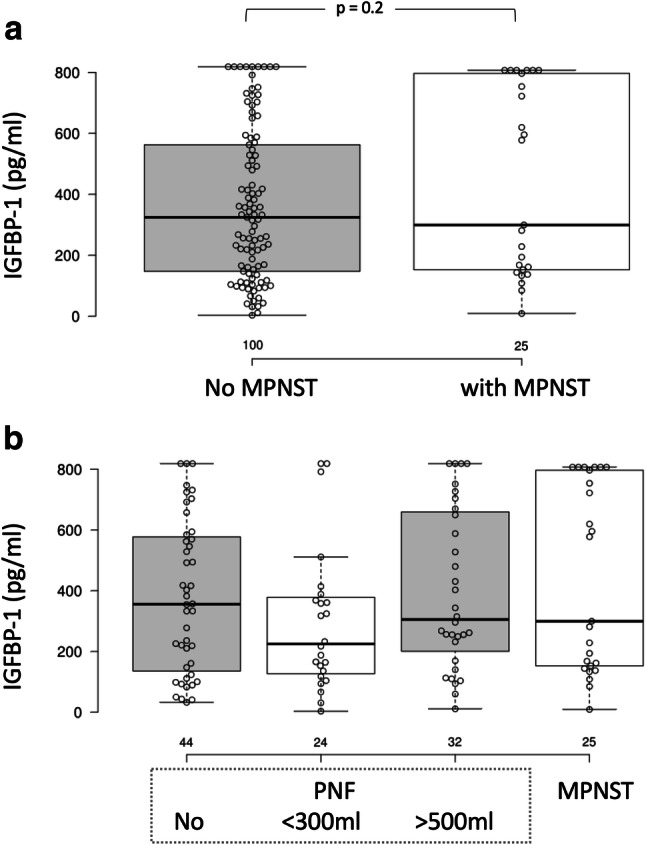
NF1 patients with MPNSTs had significantly elevated PD-L1 levels in their sera compared to NF1 patients without MPNSTs. By contrast, AXL concentrations were significantly lower in sera of NF1-MPNST patients. IGFBP-1 and PGE2 serum levels did not differ between the two patient groups. IFN-α and GM-CSF were below the detectable level in most samples.
The immuno-modulator PD-L1 is upregulated in MPNST patients and therefore may provide as a potential biomarker of malignant transformation in patients with NF1 and as a response predictor for immunotherapeutic approaches.
恶性外周神经鞘瘤(MPNST)是一种罕见的侵袭性肉瘤,预后不良。超过一半的 MPNST 由与神经纤维瘤病 1 型(NF1)相关的良性前体肿瘤发展而来,NF1 是一种肿瘤抑制基因紊乱。早期发现 NF1 患者的恶性转化对于提高生存率至关重要。本研究的主要目的是评估免疫调节剂作为 NF1 患者丛状神经纤维瘤中恶性转化的候选生物标志物的作用,以及对免疫治疗方法反应的预测因子。
共纳入了 125 名 NF1 患者的血清,这些患者的内部肿瘤负荷已被量化,其中 25 名患者患有 MPNST。使用各自的 ELISA 方法测量了这些血清中的六种免疫调节剂因子(IGFBP-1、PD-L1、IFN-α、GM-CSF、PGE-2 和 AXL)。
与没有 MPNST 的 NF1 患者相比,患有 MPNST 的 NF1 患者血清中的 PD-L1 水平显著升高。相比之下,NF1-MPNST 患者的血清 AXL 浓度明显较低。IGFBP-1 和 PGE2 血清水平在两组患者之间没有差异。IFN-α和 GM-CSF 在大多数样本中低于检测水平。
免疫调节剂 PD-L1 在 MPNST 患者中上调,因此可能作为 NF1 患者恶性转化的潜在生物标志物,并作为免疫治疗方法的反应预测因子。