Mohammed Shafeeq A, Ambrosini Samuele, Lüscher Thomas, Paneni Francesco, Costantino Sarah
Center for Molecular Cardiology, University of Zürich, Zurich, Switzerland.
Research, Education and Development, Royal Brompton and Harefield Hospital Trust and Imperial College, London, United Kingdom.
Front Cardiovasc Med. 2020 Mar 4;7:28. doi: 10.3389/fcvm.2020.00028. eCollection 2020.
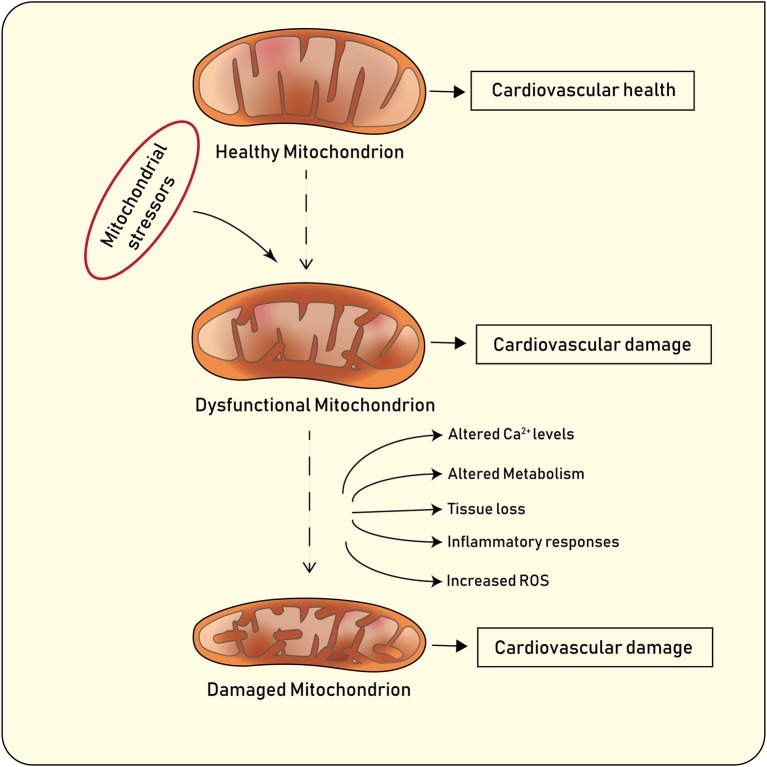
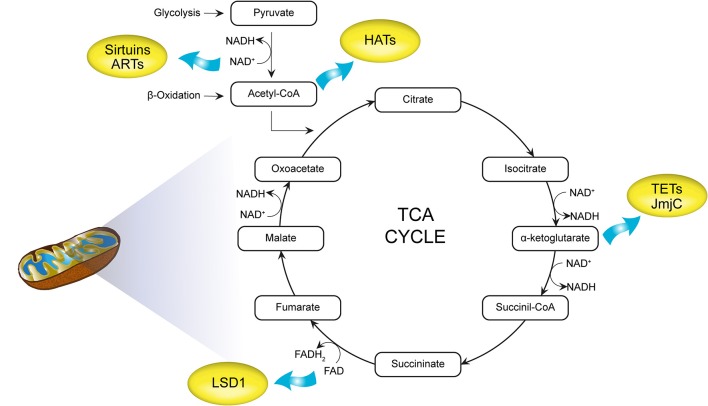
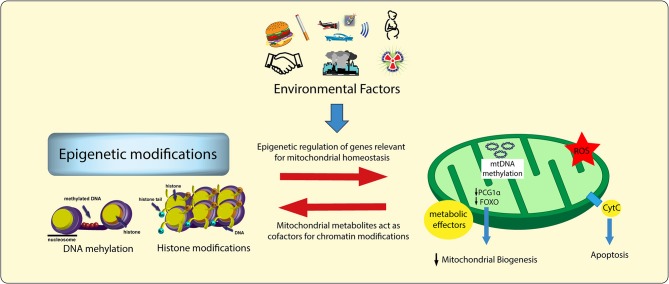
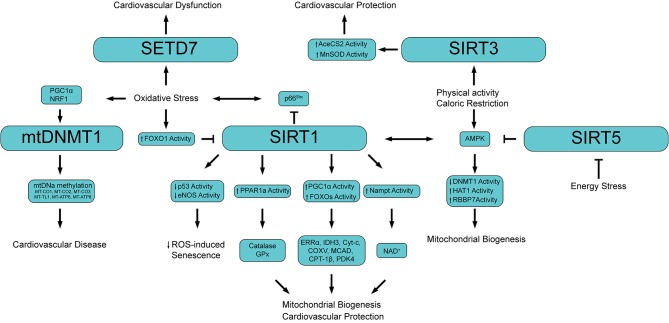
The molecular signatures of epigenetic regulation and chromatin architecture are emerging as pivotal regulators of mitochondrial function. Recent studies unveiled a complex intersection among environmental factors, epigenetic signals, and mitochondrial metabolism, ultimately leading to alterations of vascular phenotype and increased cardiovascular risk. Changing environmental conditions over the lifetime induce covalent and post-translational chemical modification of the chromatin template which sensitize the genome to establish new transcriptional programs and, hence, diverse functional states. On the other hand, metabolic alterations occurring in mitochondria affect the availability of substrates for chromatin-modifying enzymes, thus leading to maladaptive epigenetic signatures altering chromatin accessibility and gene transcription. Indeed, several components of the epigenetic machinery require intermediates of cellular metabolism (ATP, AcCoA, NADH, α-ketoglutarate) for enzymatic function. In the present review, we describe the emerging role of epigenetic modifications as fine tuners of gene transcription in mitochondrial dysfunction and vascular disease. Specifically, the following aspects are described in detail: (i) mitochondria and vascular function, (ii) mitochondrial ROS, (iii) epigenetic regulation of mitochondrial function; (iv) the role of mitochondrial metabolites as key effectors for chromatin-modifying enzymes; (v) epigenetic therapies. Understanding epigenetic routes may pave the way for new approaches to develop personalized therapies to prevent mitochondrial insufficiency and its complications.
表观遗传调控和染色质结构的分子特征正逐渐成为线粒体功能的关键调节因子。最近的研究揭示了环境因素、表观遗传信号和线粒体代谢之间的复杂交叉点,最终导致血管表型改变和心血管风险增加。一生中不断变化的环境条件会诱导染色质模板的共价和翻译后化学修饰,使基因组敏感地建立新的转录程序,从而产生不同的功能状态。另一方面,线粒体中发生的代谢改变会影响染色质修饰酶的底物可用性,进而导致适应不良的表观遗传特征,改变染色质可及性和基因转录。事实上,表观遗传机制的几个组成部分需要细胞代谢的中间产物(ATP、乙酰辅酶A、NADH、α-酮戊二酸)来发挥酶功能。在本综述中,我们描述了表观遗传修饰作为线粒体功能障碍和血管疾病中基因转录精细调节因子的新作用。具体而言,将详细描述以下几个方面:(i)线粒体与血管功能;(ii)线粒体活性氧;(iii)线粒体功能的表观遗传调控;(iv)线粒体代谢产物作为染色质修饰酶关键效应物的作用;(v)表观遗传疗法。了解表观遗传途径可能为开发个性化疗法以预防线粒体功能不全及其并发症的新方法铺平道路。