Golubkina Nadezhda, Logvinenko Lidia, Novitsky Maxim, Zamana Svetlana, Sokolov Sergey, Molchanova Anna, Shevchuk Oksana, Sekara Agneszka, Tallarita Alessio, Caruso Gianluca
Agrochemical Research Center, Federal Scientific Center of Vegetable Production, 143072 Moscow, Russia.
Nikita Botanic Gardens, National Scientific Center of the RAS, 298648 Yalta, Russia.
Plants (Basel). 2020 Mar 18;9(3):375. doi: 10.3390/plants9030375.
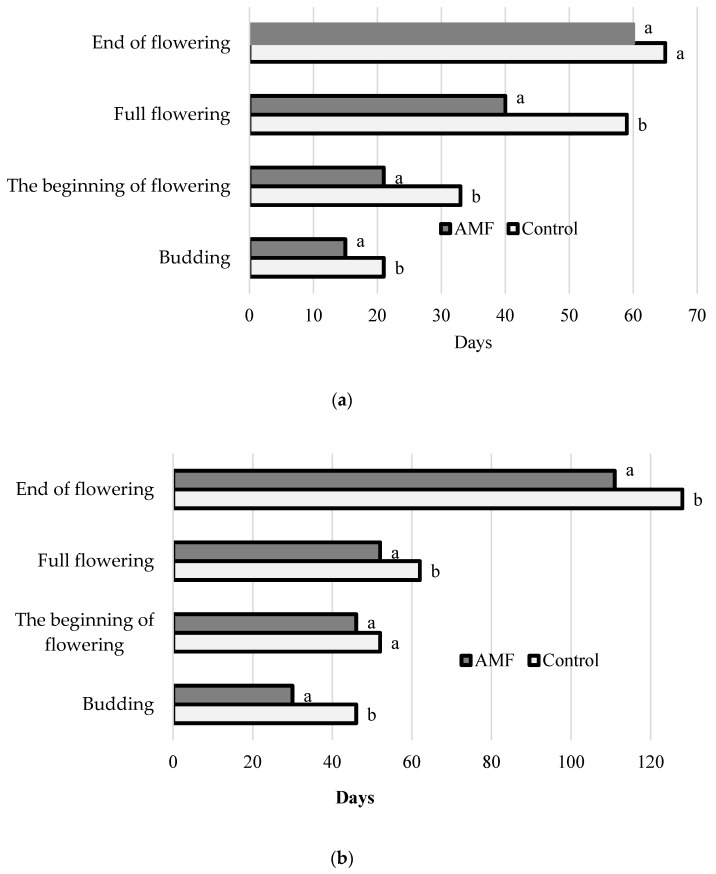
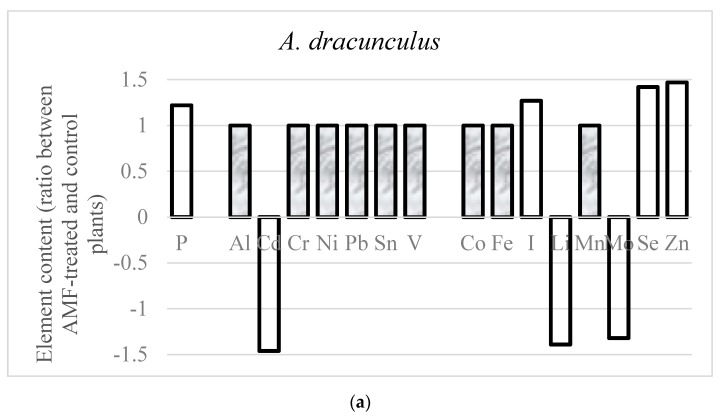
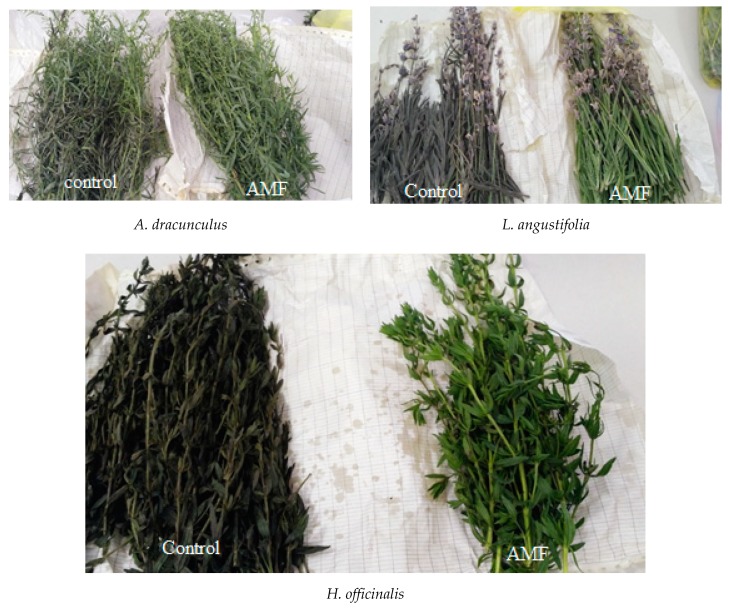
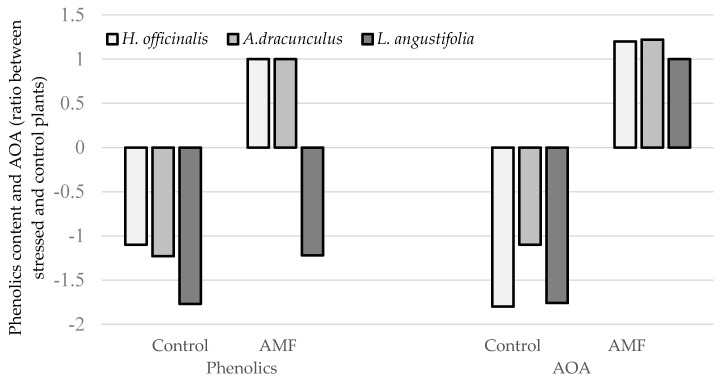
Utilization of arbuscular mycorrhizal fungi (AMF) for enhancing growth and development as well as production of essential oil in aromatic plants has been increasingly drawing research interest. In order to assess the AMF effects on different aromatic species, an open-field experiment was carried out using (tarragon), (lavender) and (hyssop). AMF stimulated the growth of tarragon and lavender plants, whereas hyssop showed a slight developmental slowing; nonetheless, a significant increase in essential oil content in the three species was seen. AMF application increased the biomass of and by 20-35%. No differences in antioxidant activity and phenolics content were recorded at harvest between the control and AMF-inoculated plants, but the latter showed a significant increase in antioxidant status upon storage at high temperature and humidity compared to the untreated control. The enhancement of abiotic stress resistance during storage in plants inoculated with AMF was the highest in , and the lowest in , while the untreated control plants showed a significant decrease in phenolics, ascorbic acid and chlorophyll content, as well as antioxidant activity, upon the abiotic stress. AMF inoculation differentially affected the mineral composition, increasing the accumulation of Se, I and Zn in , and decreasing the levels of heavy metals and Co, Fe, Li, Mn in . Based on the outcome of the present research, AMF inoculation resulted in a significant enhancement of the overall performances of , and , and also in the improvement of plant antioxidant status upon storage in stress conditions.
利用丛枝菌根真菌(AMF)促进芳香植物的生长发育以及提高其精油产量越来越受到研究关注。为了评估AMF对不同芳香植物品种的影响,开展了一项露天试验,使用了龙蒿、薰衣草和牛膝草。AMF促进了龙蒿和薰衣草植株的生长,而牛膝草的生长略有减缓;尽管如此,这三个品种的精油含量均显著增加。施用AMF使龙蒿和薰衣草的生物量增加了20%至35%。在收获时,对照植株和接种AMF的植株在抗氧化活性和酚类物质含量方面没有差异,但与未处理的对照相比,接种AMF的植株在高温高湿条件下储存后抗氧化状态显著提高。接种AMF的植株在储存期间对非生物胁迫抗性的增强在龙蒿中最高,在牛膝草中最低,而未处理的对照植株在遭受非生物胁迫后酚类物质、抗坏血酸和叶绿素含量以及抗氧化活性均显著下降。AMF接种对矿物质组成有不同影响,增加了龙蒿中硒、碘和锌的积累,降低了牛膝草中重金属以及钴、铁、锂、锰的含量。基于本研究结果,接种AMF显著提高了龙蒿、薰衣草和牛膝草的整体性能,并且在胁迫条件下储存时也改善了植物的抗氧化状态。