Graduate School of Medical Technology and Health Welfare Sciences, Hiroshima International University, 555-36 Kurose-Gakuendai, Bldg3, Rm3807, Higashi-Hiroshima, Hiroshima, 739-2695, Japan.
Hiroshima Prefectural Rehabilitation Center, 295-3 Taguchi, Saijo-cho, Higashi-Hiroshima, Hiroshima, 739-0036, Japan.
J Orthop Surg Res. 2020 Mar 20;15(1):114. doi: 10.1186/s13018-020-1570-6.
Total knee arthroplasty (TKA) is commonly performed around the world. Implant designs include fixed-bearing and mobile-bearing. Mobile-bearing design was developed as a rotating platform that allows axial rotation of the insert around the longitudinal axis. This phenomenon may limit full exploitation of the characteristics of the mobile-bearing insert, which may cause wearing and reduce longevity. However, there is limited knowledge on rotational behavior of the polyethylene mobile-bearing insert under weight-bearing conditions. We aimed at determining the rotational motion of each component at full extension and flexed positions during a squatting activity after TKA.
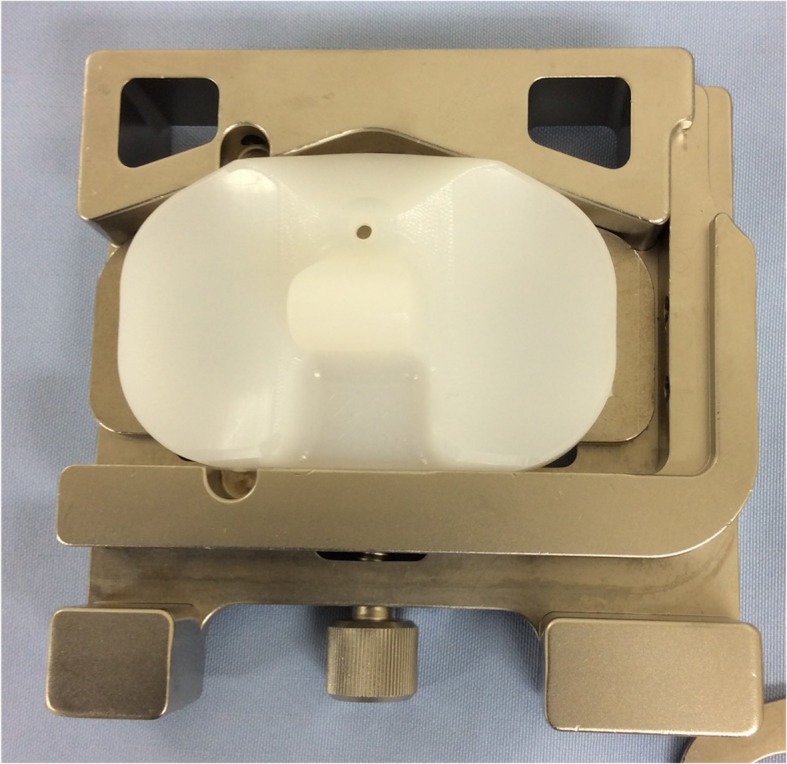
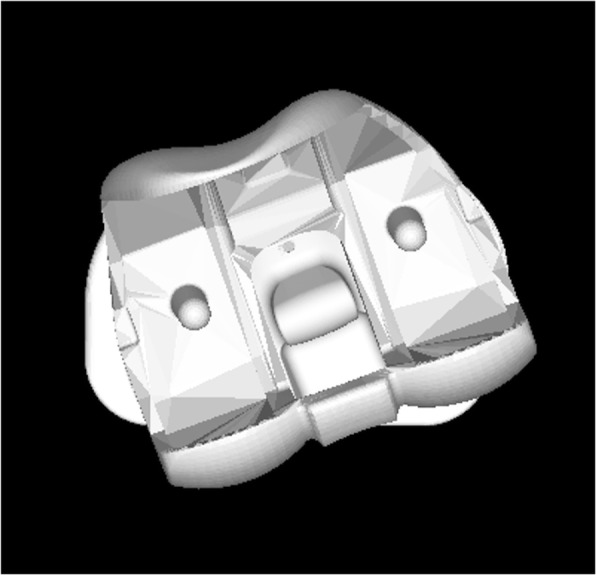
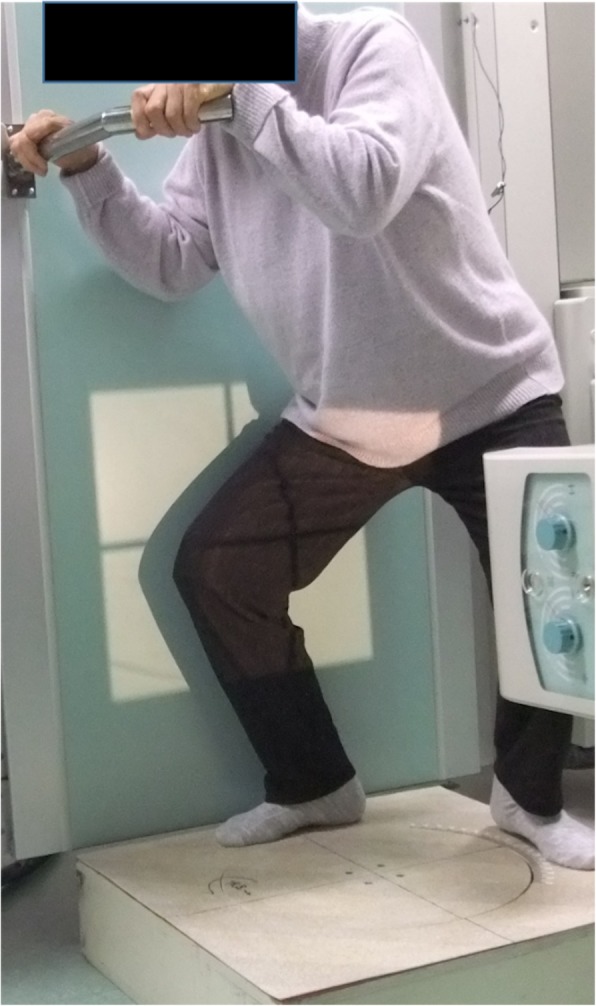
This study was a cross-sectional study (level 4) involving patients with severe knee osteoarthritis scheduled to receive TKA. We examined 13 knees of 11 patients after mobile-bearing TKA (NexGen LPS-Flex, Zimmer Inc.) at 10 weeks and 1 year postoperatively. Four identical metallic beads were embedded into the insert. Wide-base squatting was chosen for analyses. Three-dimensional in vivo poses of the prostheses were created using a 3D-to-2D registration technique. During flexion, rotation of the femoral component relative to the insert (FEM/INS) and tibial component (FEM/TIB) as well as insert rotation relative to the tibial component (INS/TIB) were computed. Repeated measure 2-way ANOVA and post hoc test was used.
In the fully extended position, FEM/INS was significantly smaller than INS/TIB both at 10 weeks (- 0.3° vs. 6.3°, p = .013) and 1 year (- 0.8° vs. 4.9°, p = .011), respectively. During the squatting activity, rotation motions of FEM/TIB, FEM/INS, INS/TIB were 5.7°, 5.9°, and 1.8° at 10 weeks and 6.3°, 5.5°, and 1.6° at 1 year, respectively. Rotation motion of FEM/INS was significantly greater than that of INS/TIB at both 10 weeks (p < .001) and 1 year (p < .001).
The mobile-bearing insert enhances the compatibility of FEM/INS in extension; the amount of INS/TIB rotation is significantly smaller than that of FEM/INS during a squatting activity. This information will inform surgeons to take caution to perform TKA with a fixed insert in which 6.3° of rotational offset would be added to the rotational alignment at FEM/INS at full extension.
UMIN-CTR, UMIN000024196. Retrospectively registered on 9 September 2016.
全膝关节置换术(TKA)在世界范围内广泛应用。假体设计包括固定平台和活动平台。活动平台设计为旋转平台,允许插入物围绕纵轴轴向旋转。这种现象可能会限制活动平台插入物特性的充分发挥,从而导致磨损和寿命缩短。然而,对于负重条件下聚乙烯活动平台插入物的旋转行为,我们知之甚少。我们旨在确定 TKA 后深蹲活动中膝关节完全伸直和弯曲位置时每个组件的旋转运动。
这是一项横断面研究(4 级),纳入了计划接受 TKA 的严重膝关节骨关节炎患者。我们在术后 10 周和 1 年时对 11 例患者的 13 个膝关节(NexGen LPS-Flex,Zimmer Inc.)进行了检查。在插入物中嵌入了 4 个相同的金属珠。选择宽基深蹲进行分析。使用 3D 到 2D 配准技术创建假体的三维体内姿势。在膝关节弯曲过程中,计算股骨组件相对于插入物(FEM/INS)和胫骨组件(FEM/TIB)的旋转以及插入物相对于胫骨组件的旋转(INS/TIB)。使用重复测量 2 因素方差分析和事后检验。
在完全伸直位置,FEM/INS 在术后 10 周(-0.3°对 6.3°,p=0.013)和 1 年(-0.8°对 4.9°,p=0.011)时均显著小于 INS/TIB。在深蹲活动中,FEM/TIB、FEM/INS、INS/TIB 的旋转运动在术后 10 周时分别为 5.7°、5.9°和 1.8°,在术后 1 年时分别为 6.3°、5.5°和 1.6°。FEM/INS 的旋转运动在术后 10 周(p<0.001)和 1 年(p<0.001)时均显著大于 INS/TIB。
活动平台插入物增强了 FEM/INS 在伸直时的兼容性;在深蹲活动中,INS/TIB 的旋转量明显小于 FEM/INS。这些信息将提醒外科医生在 TKA 中谨慎使用固定插入物,因为在完全伸直时 FEM/INS 的旋转对线会增加 6.3°的旋转偏移。
UMIN-CTR,UMIN000024196. 2016 年 9 月 9 日回顾性注册。