Department of Clinical medicine, Weifang Medical University, 7166# Baotong West Street, Weifang, Shandong, 261053, P. R. China.
Department of Psychology, Weifang Medical University, 7166# Baotong West Street, Weifang, Shandong, 261053, P. R. China.
Transl Psychiatry. 2020 Mar 20;10(1):101. doi: 10.1038/s41398-020-0782-1.
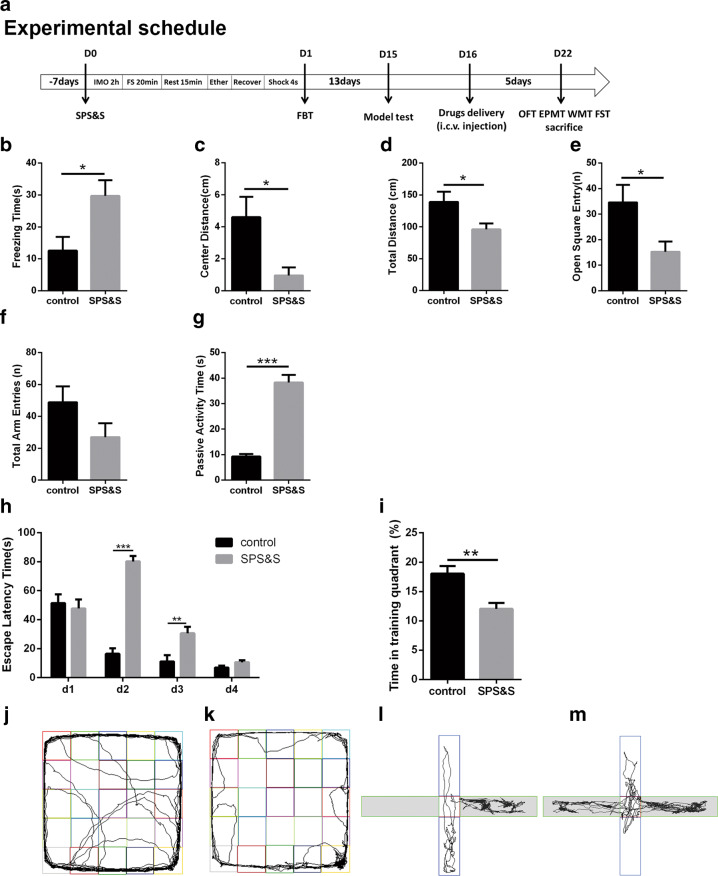
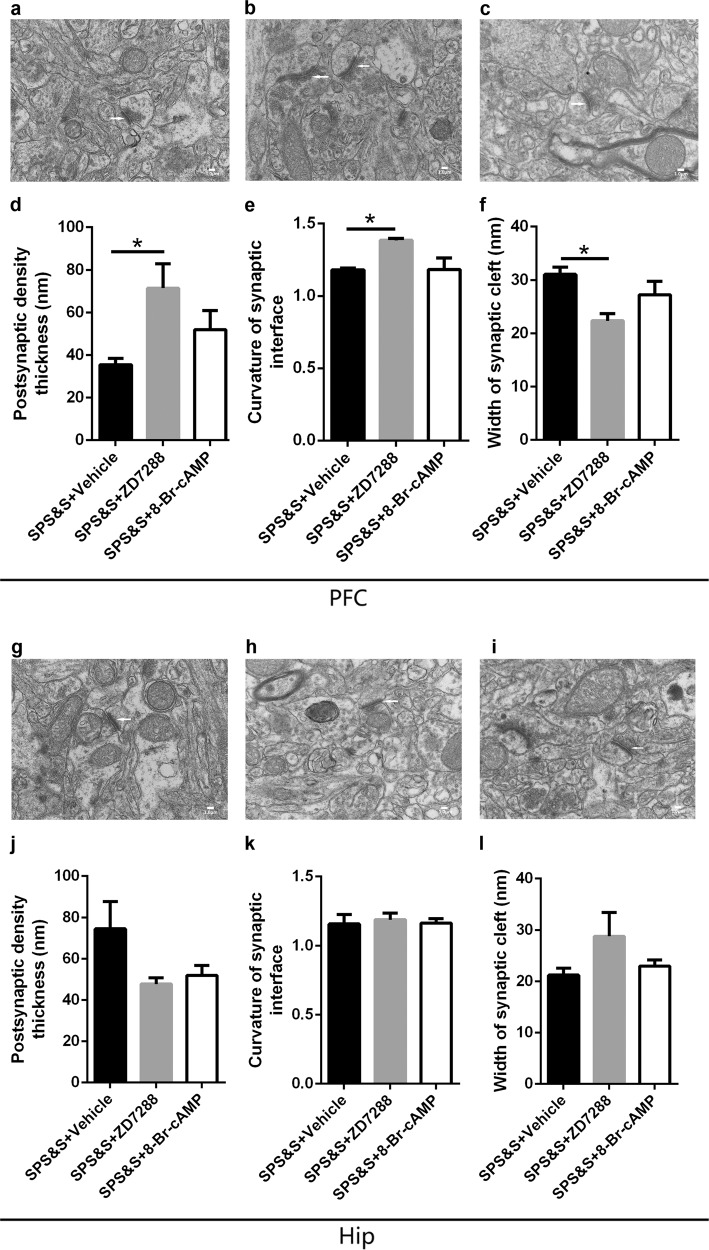
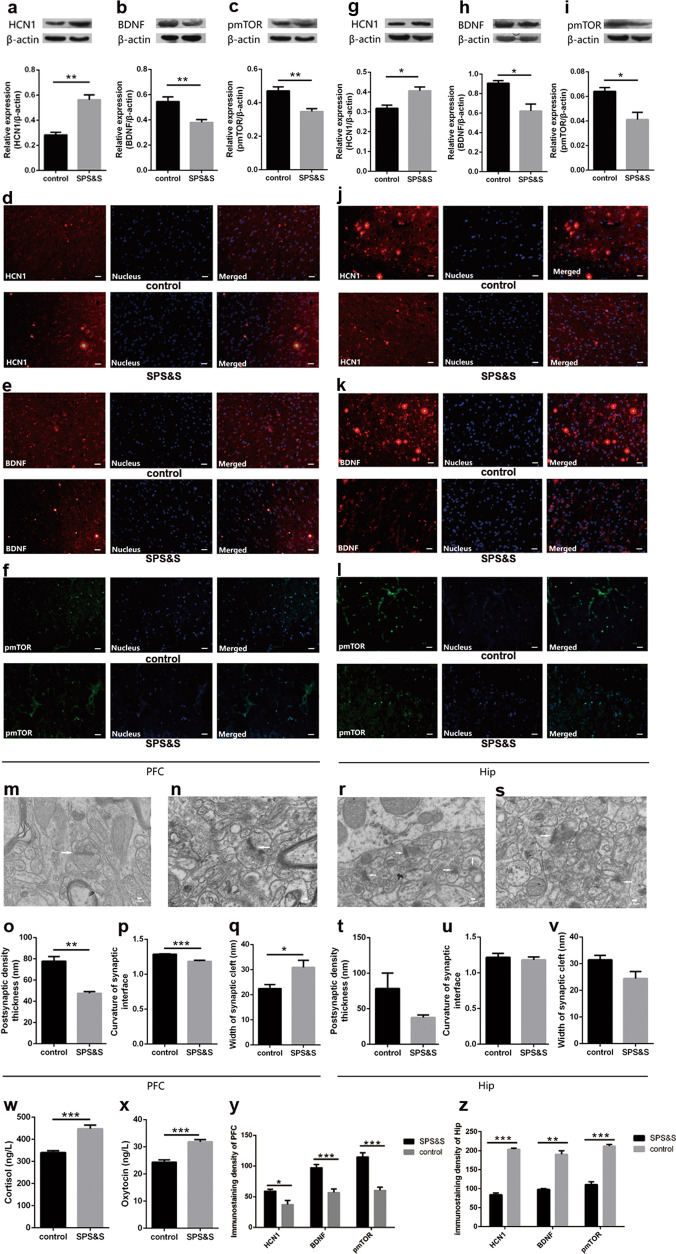
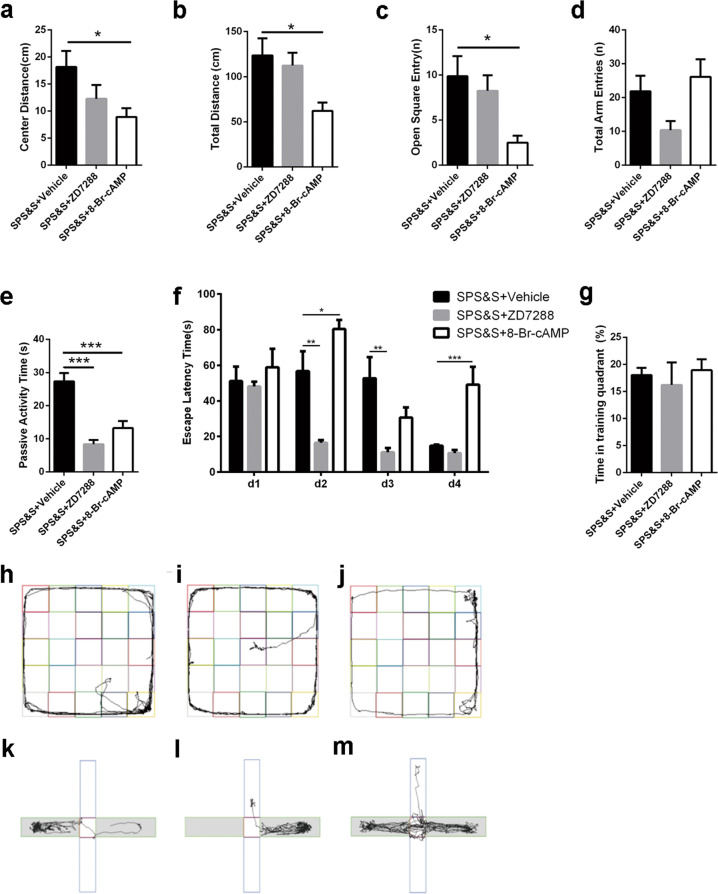
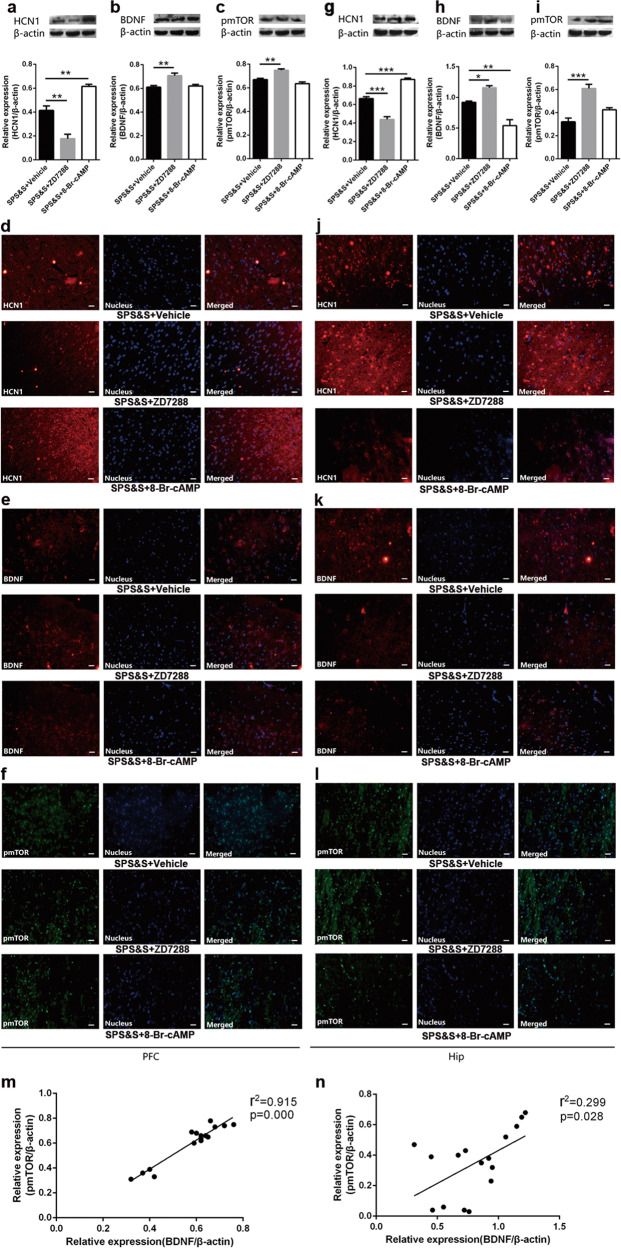
The function of the hyperpolarization-activated cyclic nucleotide-gated channel 1 (HCN1) and the expression of brain-derived neurotrophic factor (BDNF) may be involved in the pathogenesis of post-traumatic stress disorder (PTSD). This study aims to explore the role of the HCN1 channel, BDNF, and mTOR in the actions of PTSD and to examine whether synaptic transmission or plasticity is involved in the regulation of this disease. In the present study, rats were exposed to the single prolonged stress and electric foot shock (SPS&S) procedure, which can induce PTSD-like behaviors in rats. ZD7288 was administered by intracerebroventricular (i.c.v.) injection to one experimental group to inhibit the function of the HCN1 ion channel while 8-Br-cAMP was administered to another group to activate the function of the HCN1 ion channel. A series of behavioral tests and biochemical assessments of certain proteins (HCN1, BDNF, and pmTOR) and synaptic ultrastructure in the prefrontal cortex (PFC) and hippocampus (Hip) were then conducted. The SPS&S procedure induced apparent PTSD-like symptoms in rats. The administration of ZD7288 reduced the immobility time and escape latency time in the forced swim test (FST) and water maze test (WMT) with a decreased level of HCN1, upregulated BDNF-mTOR signaling pathways in the PFC and Hip, and synaptic ultrastructure changes in the PFC. In contrast, the administration of 8-Br-cAMP, which led to a higher level of HCN1 in PFC and Hip, resulted in a decreased number of entries to the open arms without significant change in total arm entries in the elevated plus maze test (EPMT) as well as a shorter center square distance and total distance in the open field test (OFT). Extended escape latency time was also observed in the WMT although there was no alteration of BDNF-mTOR signaling pathways and synaptic ultrastructure in the PFC and Hip. Overall, the inhibition of HCN1, which can alleviate PTSD-like behavior of rats by relieving depression and improving learning ability, may be related to the upregulated BDNF-mTOR signaling pathways and synaptic transmission.
超极化激活环核苷酸门控通道 1(HCN1)的功能和脑源性神经营养因子(BDNF)的表达可能与创伤后应激障碍(PTSD)的发病机制有关。本研究旨在探讨 HCN1 通道、BDNF 和 mTOR 在 PTSD 中的作用,并研究突触传递或可塑性是否参与了这种疾病的调节。在本研究中,采用单次延长应激和电脚刺激(SPS&S)程序对大鼠进行暴露,该程序可诱导大鼠出现 PTSD 样行为。一组实验中,通过脑室内(i.c.v.)注射 ZD7288 抑制 HCN1 离子通道的功能,另一组则通过 8-Br-cAMP 激活 HCN1 离子通道的功能。然后对一系列行为测试以及前额叶皮层(PFC)和海马(Hip)中某些蛋白质(HCN1、BDNF 和 pmTOR)和突触超微结构的生化评估进行了研究。SPS&S 程序导致大鼠出现明显的 PTSD 样症状。ZD7288 的给药减少了强迫游泳试验(FST)和水迷宫试验(WMT)中的不动时间和逃避潜伏期,同时降低了 HCN1 水平,上调了 PFC 和 Hip 中的 BDNF-mTOR 信号通路,并改变了 PFC 的突触超微结构。相比之下,8-Br-cAMP 的给药导致 PFC 和 Hip 中 HCN1 水平升高,增加了进入高架十字迷宫试验(EPMT)开臂的次数,但总臂进入次数没有显著变化,同时还缩短了开放场试验(OFT)中的中央方格距离和总距离。虽然 PFC 和 Hip 中的 BDNF-mTOR 信号通路和突触超微结构没有改变,但 WMT 中的延长逃避潜伏期时间也被观察到。总之,通过缓解抑郁和提高学习能力,抑制 HCN1 可减轻大鼠的 PTSD 样行为,这可能与上调的 BDNF-mTOR 信号通路和突触传递有关。