Department of Biochemistry, Duke University Medical Center, 303 Research Drive,Durham, NC 27710, USA.
Department of Biochemistry, Duke University Medical Center, 303 Research Drive,Durham, NC 27710, USA.
J Mol Biol. 2020 Aug 21;432(18):4946-4963. doi: 10.1016/j.jmb.2020.03.017. Epub 2020 Mar 19.
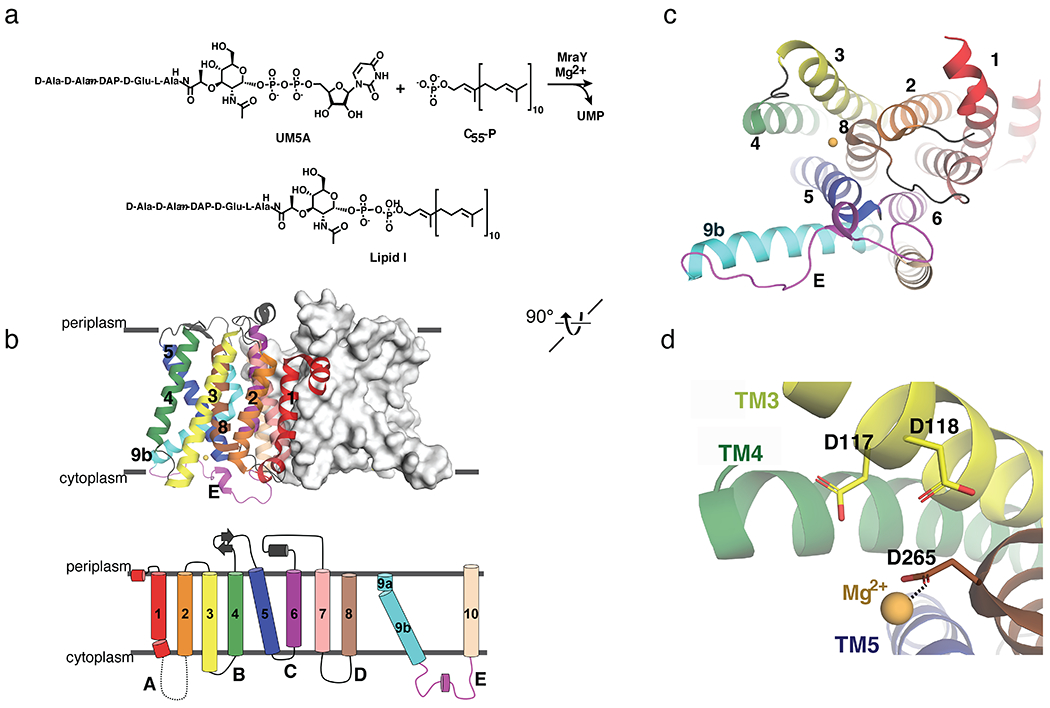
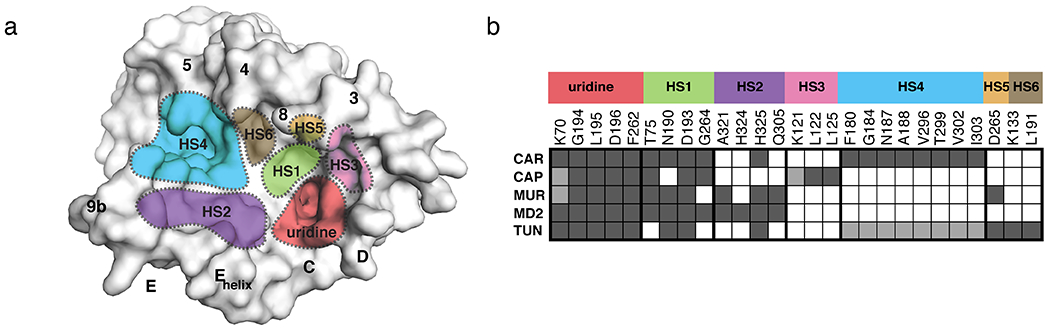
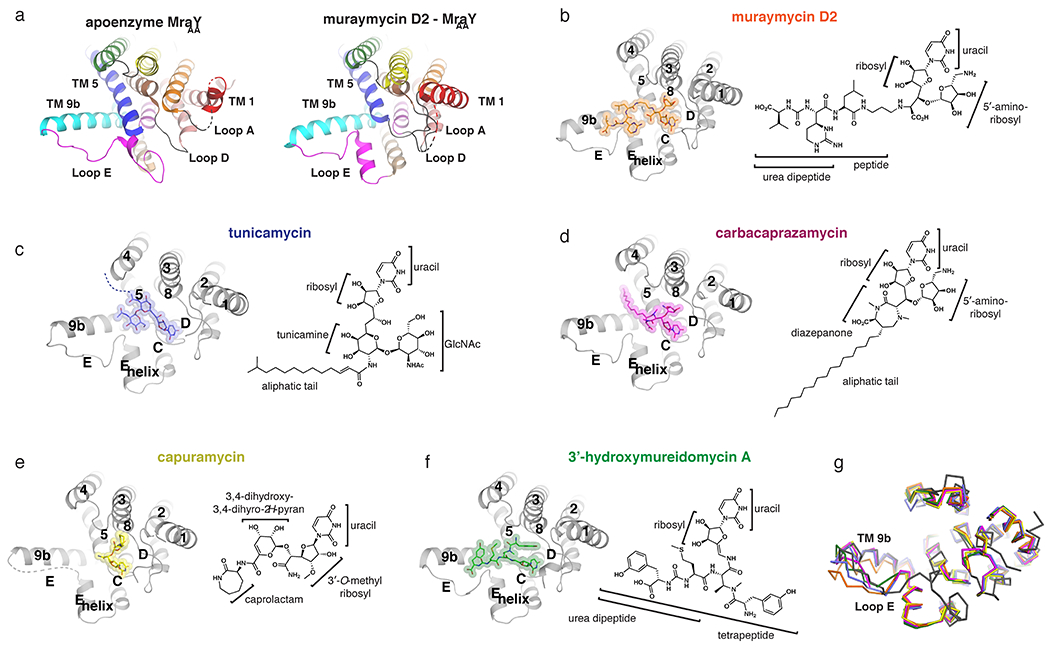
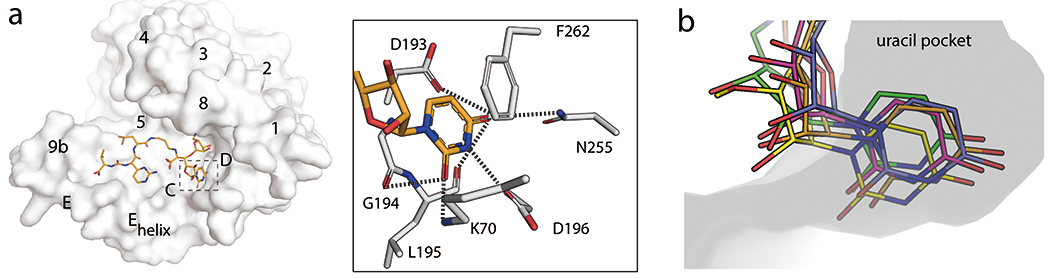
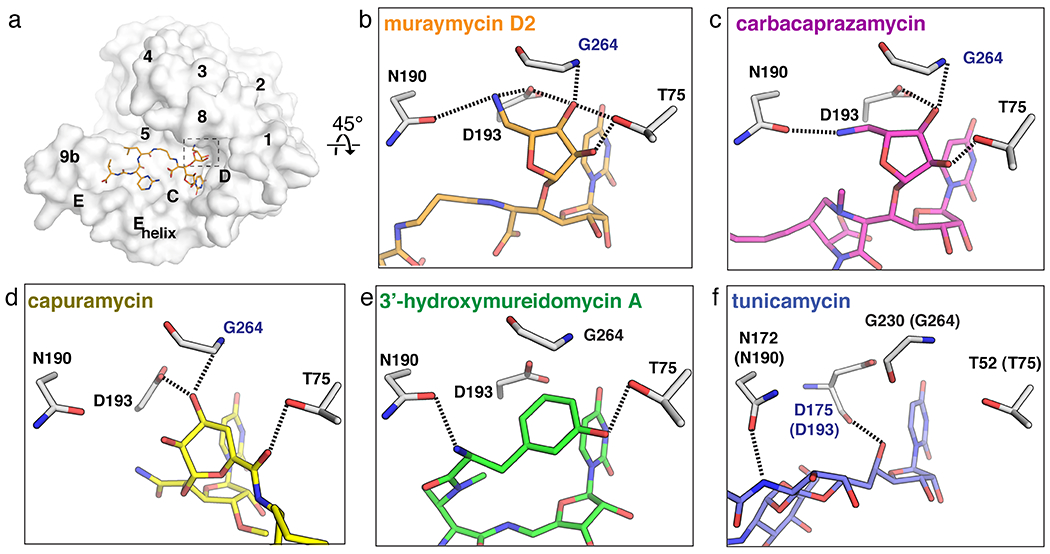
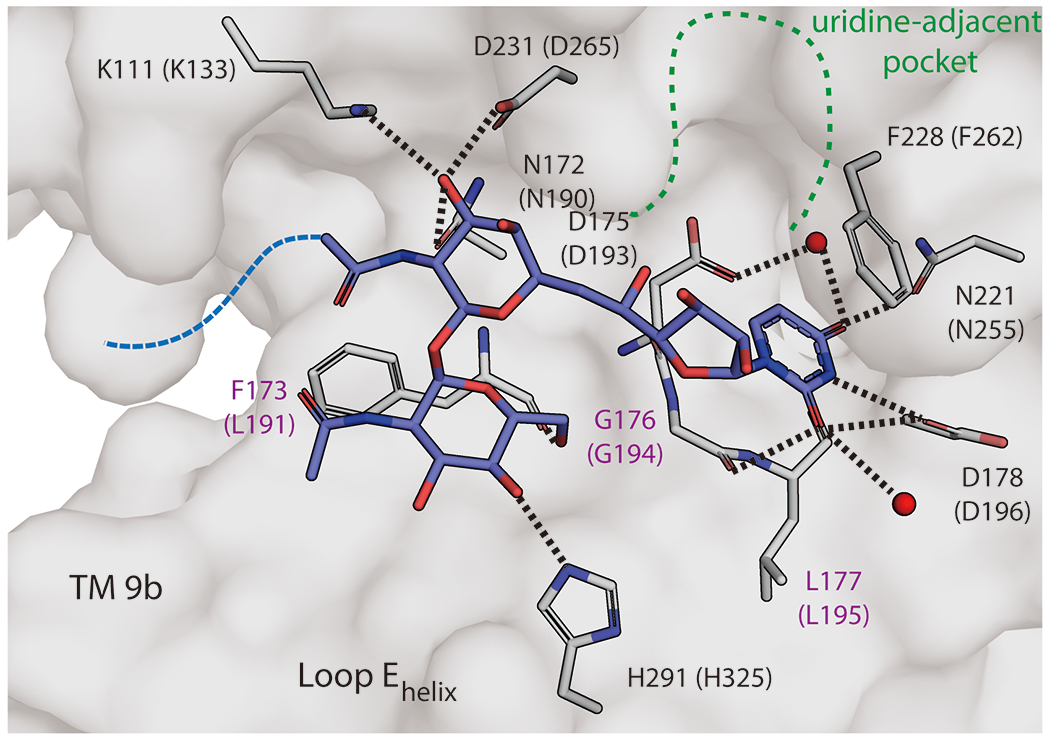
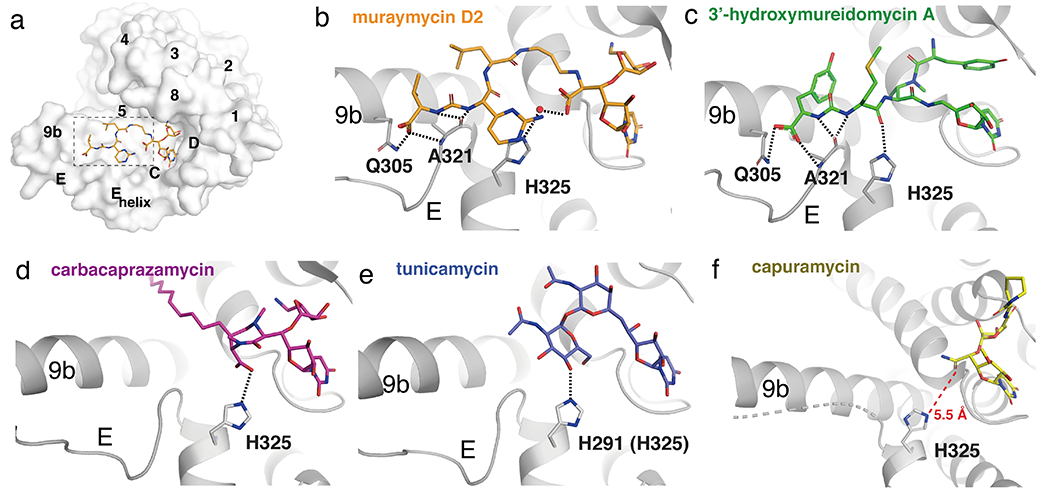
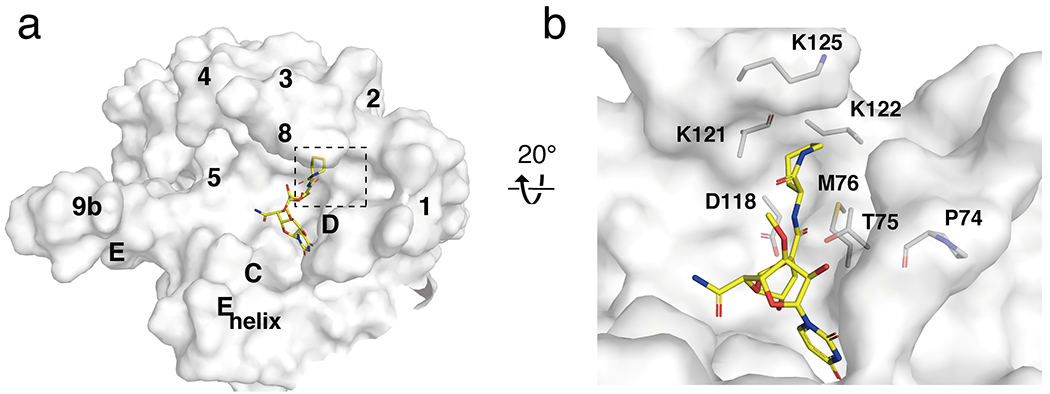
The widespread emergence of antibiotic resistance in pathogens necessitates the development of antibacterial agents inhibiting underexplored targets in bacterial metabolism. One such target is phospho-MurNAc-pentapeptide translocase (MraY), an essential integral membrane enzyme that catalyzes the first committed step of peptidoglycan biosynthesis. MraY has long been considered a promising candidate for antibiotic development in part because it is the target of five classes of naturally occurring nucleoside inhibitors with potent in vivo and in vitro antibacterial activity. Although these inhibitors each have a nucleoside moiety, they vary dramatically in their core structures, and they have different activity properties. Until recently, the structural basis of MraY inhibition was poorly understood. Several recent structures of MraY and its human paralog, GlcNAc-1-P-transferase, have provided insights into MraY inhibition that are consistent with known inhibitor activity data and can inform rational drug design for this important antibiotic target.
抗生素耐药性在病原体中的广泛出现,需要开发抑制细菌代谢中未充分研究的靶标的抗菌药物。磷酸-MurNAc-五肽转位酶(MraY)就是这样一个靶标,它是一种必需的膜内酶,催化肽聚糖生物合成的第一步。MraY 长期以来被认为是抗生素开发的一个有前途的候选者,部分原因是它是五种天然存在的核苷抑制剂的靶标,这些抑制剂在体内和体外均具有很强的抗菌活性。尽管这些抑制剂都有核苷部分,但它们的核心结构却大不相同,而且活性特性也不同。直到最近,MraY 抑制的结构基础仍知之甚少。最近的几项 MraY 及其人类同源物 GlcNAc-1-P-转移酶的结构研究,为 MraY 抑制提供了一些见解,这些见解与已知抑制剂的活性数据一致,并为这一重要的抗生素靶标提供了合理的药物设计信息。