Department of Medicine University of Toledo College of Medicine and Life Sciences Toledo OH.
Department of Medical Microbiology and Immunology University of Toledo College of Medicine and Life Sciences Toledo OH.
J Am Heart Assoc. 2020 Apr 7;9(7):e014072. doi: 10.1161/JAHA.119.014072. Epub 2020 Mar 21.
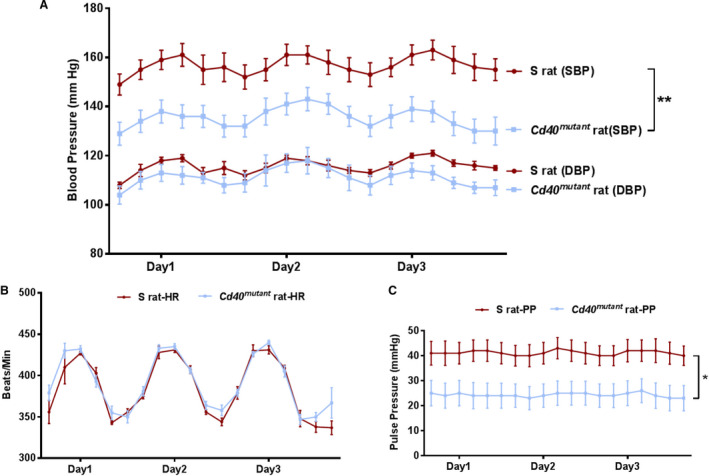
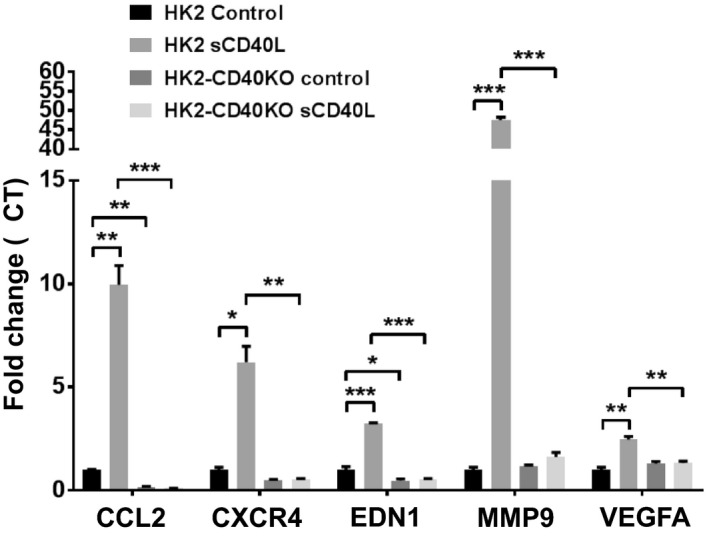
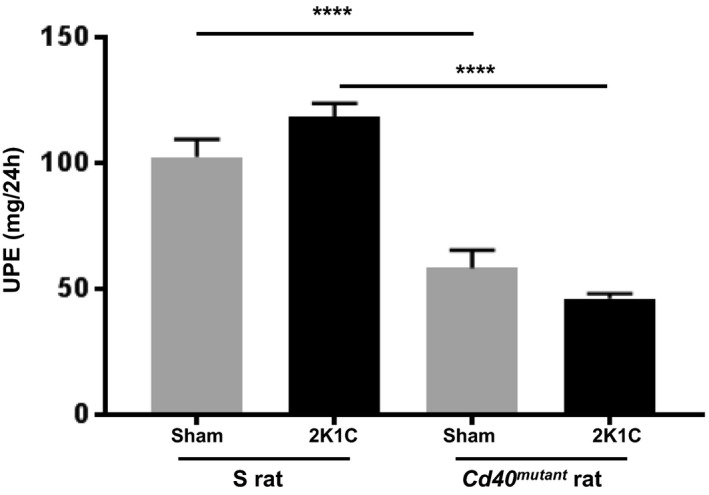
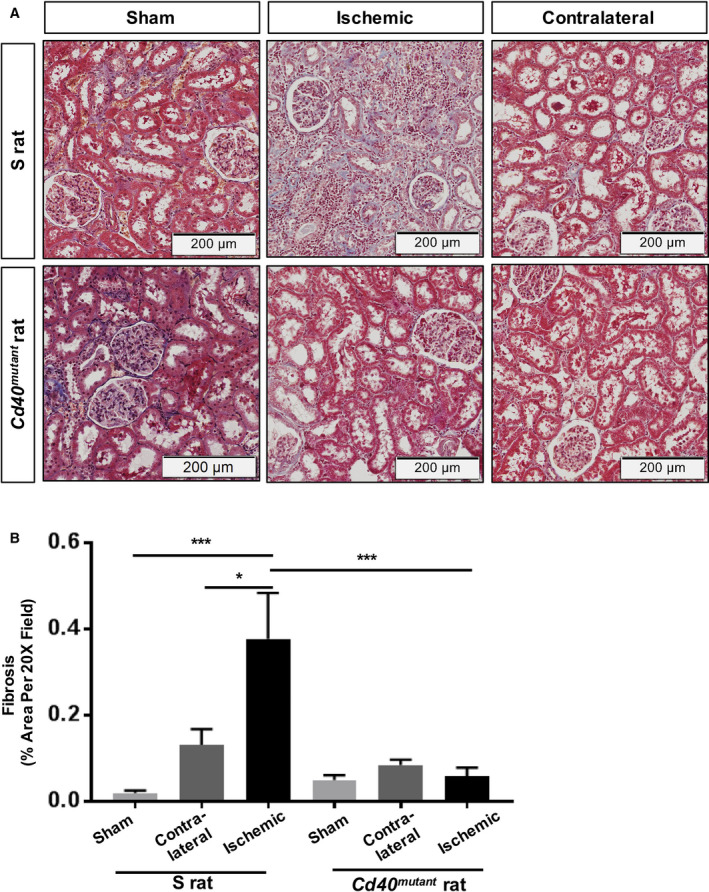
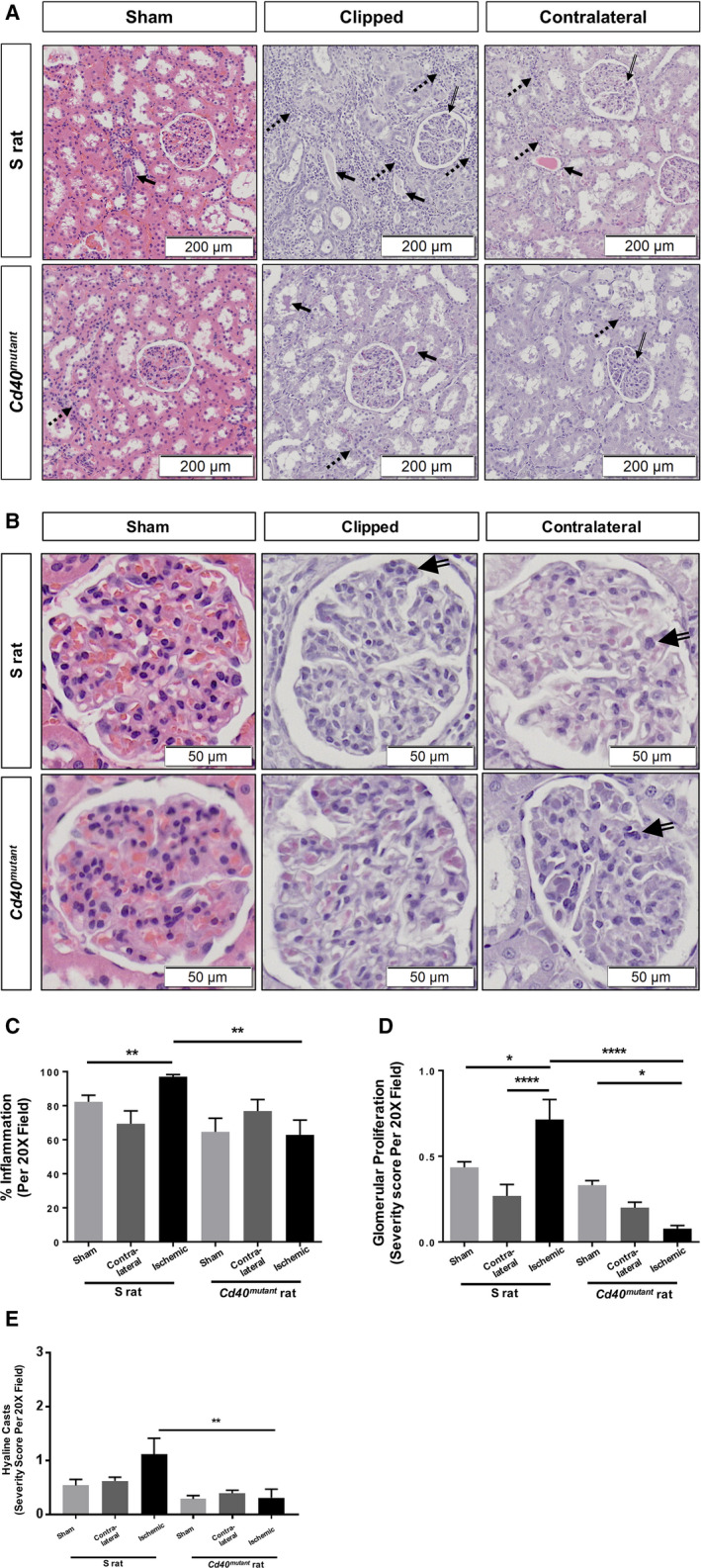
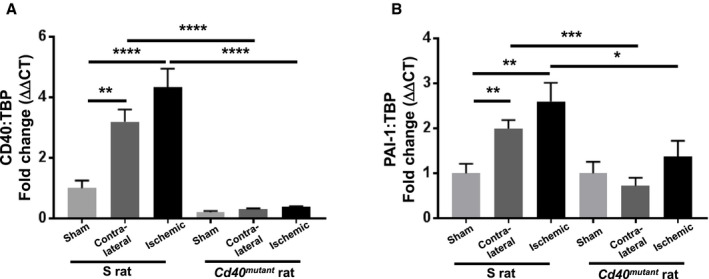
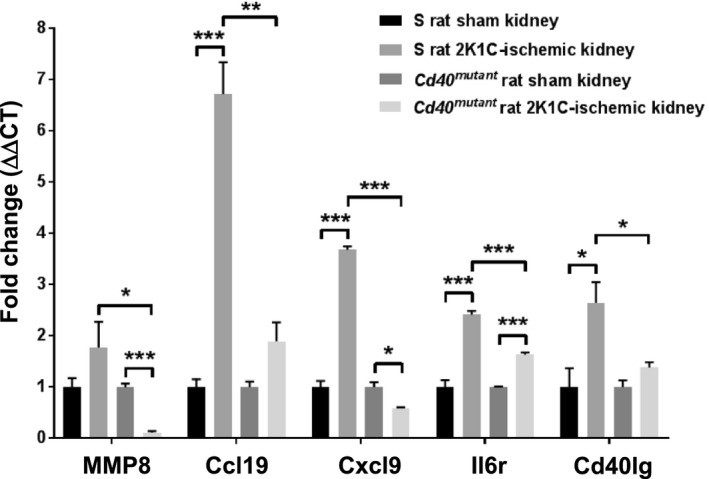
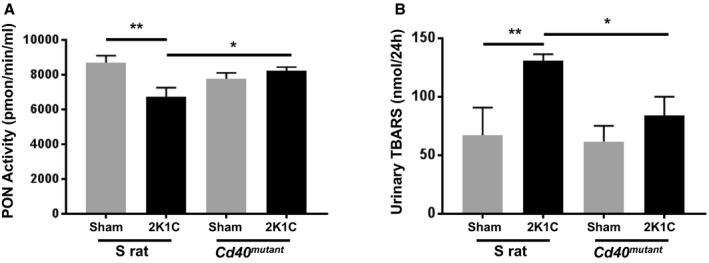
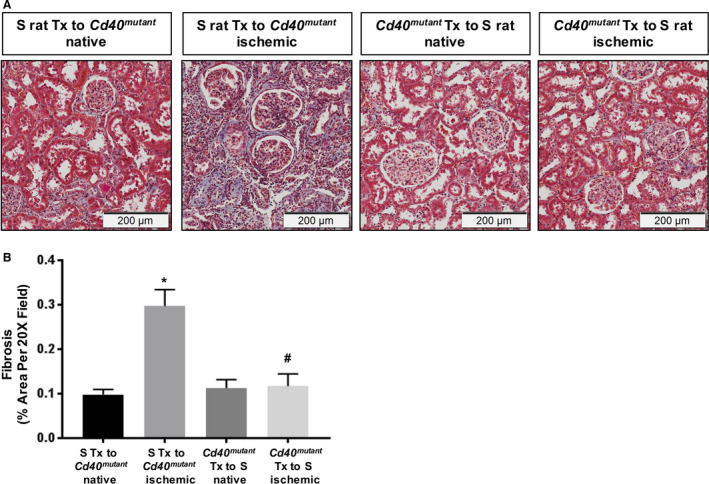
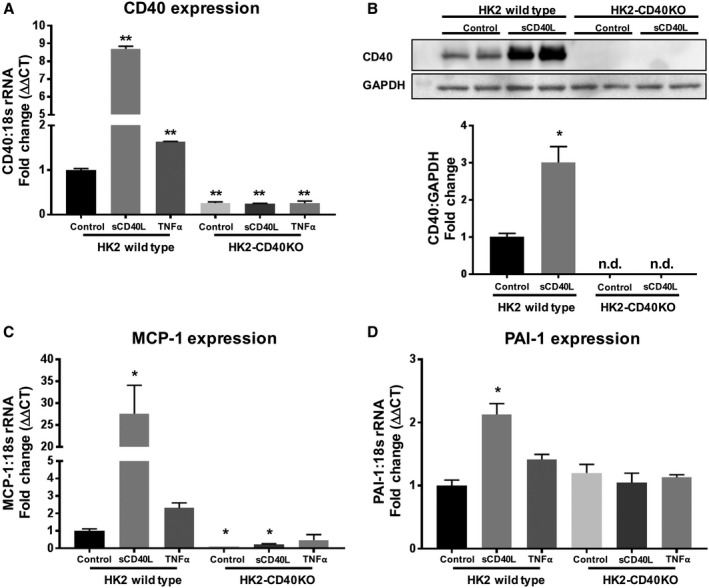
Background Renal artery stenosis is a common cause of renal ischemia, contributing to the development of chronic kidney disease. To investigate the role of local CD40 expression in renal artery stenosis, Goldblatt 2-kidney 1-clip surgery was performed on hypertensive Dahl salt-sensitive rats (S rats) and genetically modified S rats in which CD40 function is abolished (). Methods and Results Four weeks following the 2-kidney 1-clip procedure, rats demonstrated significantly reduced blood pressure and renal fibrosis in the ischemic kidneys compared with S rat controls. Similarly, disruption of Cd40 resulted in reduced 24-hour urinary protein excretion in rats versus S rat controls (46.2±1.9 versus 118.4±5.3 mg/24 h; <0.01), as well as protection from oxidative stress, as indicated by increased paraoxonase activity in rats versus S rat controls (<0.01). Ischemic kidneys from rats demonstrated a significant decrease in gene expression of the profibrotic mediator, plasminogen activator inhibitor-1 (<0.05), and the proinflammatory mediators, C-C motif chemokine ligand 19 (<0.01), C-X-C Motif Chemokine Ligand 9 (<0.01), and interleukin-6 receptor (<0.001), compared with S rat ischemic kidneys, as assessed by quantitative PCR assay. Reciprocal renal transplantation documented that CD40 exclusively expressed in the kidney contributes to ischemia-induced renal fibrosis. Furthermore, human CD40-knockout proximal tubule epithelial cells suggested that suppression of CD40 signaling significantly inhibited expression of proinflammatory and -fibrotic genes. Conclusions Taken together, our data suggest that activation of CD40 induces a significant proinflammatory and -fibrotic response and represents an attractive therapeutic target for treatment of ischemic renal disease.
肾动脉狭窄是肾缺血的常见原因,导致慢性肾脏病的发展。为了研究局部 CD40 表达在肾动脉狭窄中的作用,对高血压 Dahl 盐敏感大鼠(S 大鼠)和功能丧失的 CD40 基因修饰 S 大鼠()进行了 Goldblatt 双肾一夹手术。
双肾一夹术后 4 周,与 S 大鼠对照组相比,缺血肾脏中的 大鼠血压明显降低,肾纤维化减少。同样,Cd40 的破坏导致 大鼠 24 小时尿蛋白排泄量减少(46.2±1.9 与 118.4±5.3 mg/24 h;<0.01),并且氧化应激得到保护,与 S 大鼠对照组相比, 大鼠中的对氧磷酶活性增加(<0.01)。与 S 大鼠缺血肾脏相比, 大鼠的纤维生成介质纤溶酶原激活物抑制剂-1(<0.05)和促炎介质 C-C 基序趋化因子配体 19(<0.01)、C-X-C 基序趋化因子配体 9(<0.01)和白细胞介素-6 受体(<0.001)的基因表达显著降低,通过定量 PCR 分析评估。互惠性肾移植证明,仅在肾脏中表达的 CD40 有助于缺血诱导的肾纤维化。此外,人 CD40 敲除近端肾小管上皮细胞表明,抑制 CD40 信号显著抑制促炎和促纤维化基因的表达。
综上所述,我们的数据表明,CD40 的激活诱导了显著的促炎和促纤维化反应,代表了治疗缺血性肾病的一个有吸引力的治疗靶点。