Wu Hao, Zhang Xiangxiang, Han Dali, Cao Jinlong, Tian Junqiang
Department of Urology, Lanzhou University Second Hospital, Lanzhou, Gansu, P.R. China.
Urology Institute, Lanzhou University Second Hospital, Lanzhou, Gansu, P.R. China.
PeerJ. 2020 Mar 12;8:e8721. doi: 10.7717/peerj.8721. eCollection 2020.
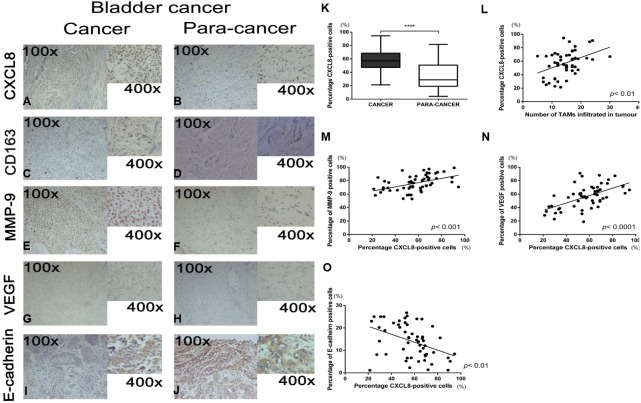
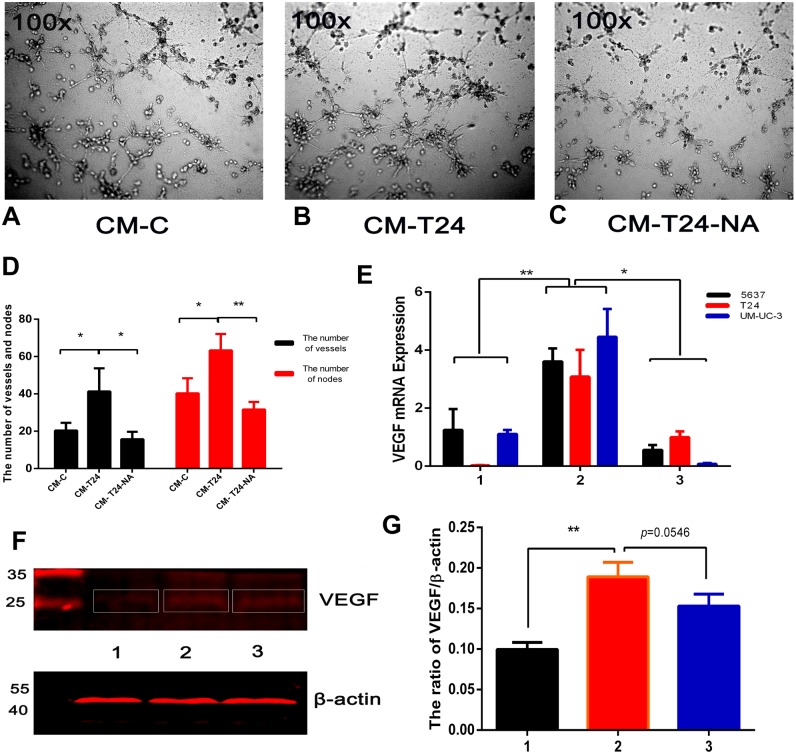
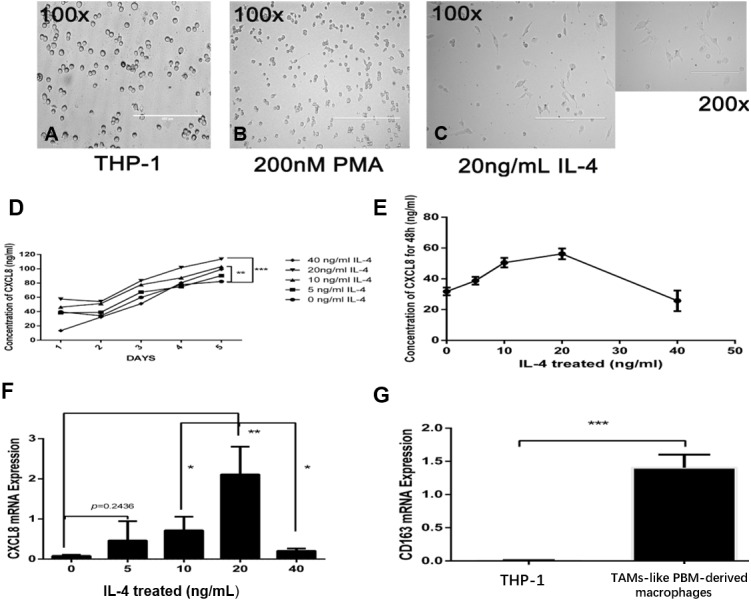
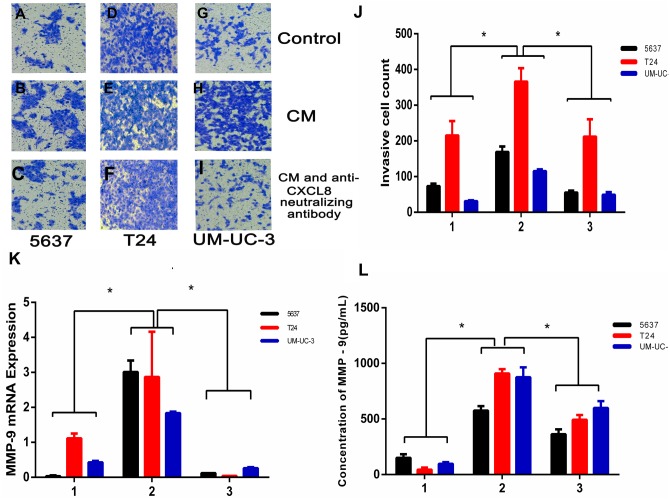
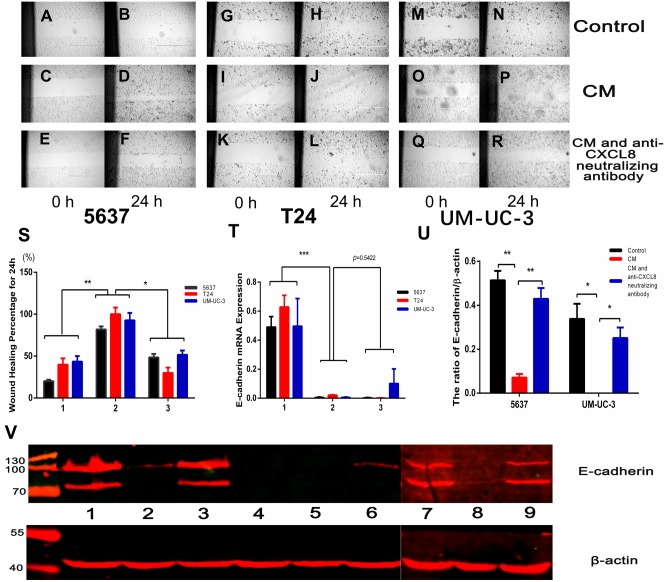
Tumour-associated macrophages (TAMs) are associated with both the progression and poor prognosis of a variety of solid tumours. This study aimed to investigate and clarify the tumour-promoting role of CXCL8 secreted by TAMs in the urothelial carcinoma microenvironment of the bladder. Immunohistochemistry ( = 55) was used to detect Chemokine (C-X-C motif) ligand 8 (CXCL8), CD163 (a TAM marker), Matrixmetalloproteinase-9 (MMP-9), vascular endothelial growth factor (VEGF), and E-cadherin in cancerous and adjacent tissues of bladder cancer patients. TAMs-like PBM (peripheral blood mononuclear)-derived macrophages were developed using experiments. T24, 5637, and UM-UC-3 were treated with conditioned medium (CM) for the experimental intervention group, without CM for the blank control group, and with CM and an anti-CXCL8 neutralizing antibody for the experimental control group, respectively. The immunohistochemical study showed that the expression of CXCL8 was significantly upregulated as the number of infiltrating TAMs increased in the tumour tissues. A high expression of CXCL8 significantly correlated with an increase in the expression of MMP-9 and VEGF and a decrease in expression of E-cadherin in the microenvironment. This revealed that TAM-derived CXCL8 is highly associated with bladder cancer migration, invasion, and angiogenesis. The concentration of CXCL8 was significantly higher in CM collected from TAM-like PBM-derived macrophages than that from THP-1 cells. In subsequent in vitro experiments, we found that CM derived from TAM-like PBM-derived macrophages can also increase the migration rate, invasiveness, and pro-angiogenic properties of tumour cells. Additionally, the effect of CXCL8 was significantly diminished by the addition of an anti-CXCL8 neutralizing antibody to CM. The infiltration of TAMs in the tumour microenvironment leads to the elevation of CXCL8, which in turn promotes the secretion of MMP-9, VEGF, and E-cadherin by bladder cancer cells. This alters the migration, invasion, and pro-angiogenic capacity of bladder cancer cells and accelerates cancer progression.
肿瘤相关巨噬细胞(TAM)与多种实体瘤的进展和不良预后相关。本研究旨在探讨并阐明TAM分泌的CXCL8在膀胱尿路上皮癌微环境中的促肿瘤作用。采用免疫组织化学方法(n = 55)检测膀胱癌患者癌组织及癌旁组织中趋化因子(C-X-C基序)配体8(CXCL8)、CD163(一种TAM标志物)、基质金属蛋白酶-9(MMP-9)、血管内皮生长因子(VEGF)和E-钙黏蛋白。通过实验培养出类似TAM的外周血单核细胞(PBM)来源的巨噬细胞。实验干预组的T24、5637和UM-UC-3细胞分别用条件培养基(CM)处理,空白对照组不用CM处理,实验对照组用CM和抗CXCL8中和抗体处理。免疫组织化学研究表明,随着肿瘤组织中浸润性TAM数量的增加,CXCL8的表达显著上调。CXCL8的高表达与微环境中MMP-9和VEGF表达的增加以及E-钙黏蛋白表达的降低显著相关。这表明TAM来源的CXCL8与膀胱癌的迁移、侵袭和血管生成高度相关。从类似TAM的PBM来源的巨噬细胞收集的CM中CXCL8的浓度明显高于从THP-1细胞收集的CM。在随后的体外实验中,我们发现类似TAM的PBM来源的巨噬细胞产生的CM也能提高肿瘤细胞的迁移率、侵袭性和促血管生成特性。此外,向CM中添加抗CXCL8中和抗体可显著减弱CXCL8的作用。肿瘤微环境中TAM的浸润导致CXCL8升高,进而促进膀胱癌细胞分泌MMP-9、VEGF和E-钙黏蛋白。这改变了膀胱癌细胞的迁移、侵袭和促血管生成能力,加速了癌症进展。