Roger Adams Laboratory, Department of Chemistry, University of Illinois, Urbana, IL, USA.
Department of Chemistry and Biochemistry, University of California, Los Angeles, CA, USA.
Nat Chem. 2020 Apr;12(4):412-423. doi: 10.1038/s41557-020-0421-8. Epub 2020 Mar 23.
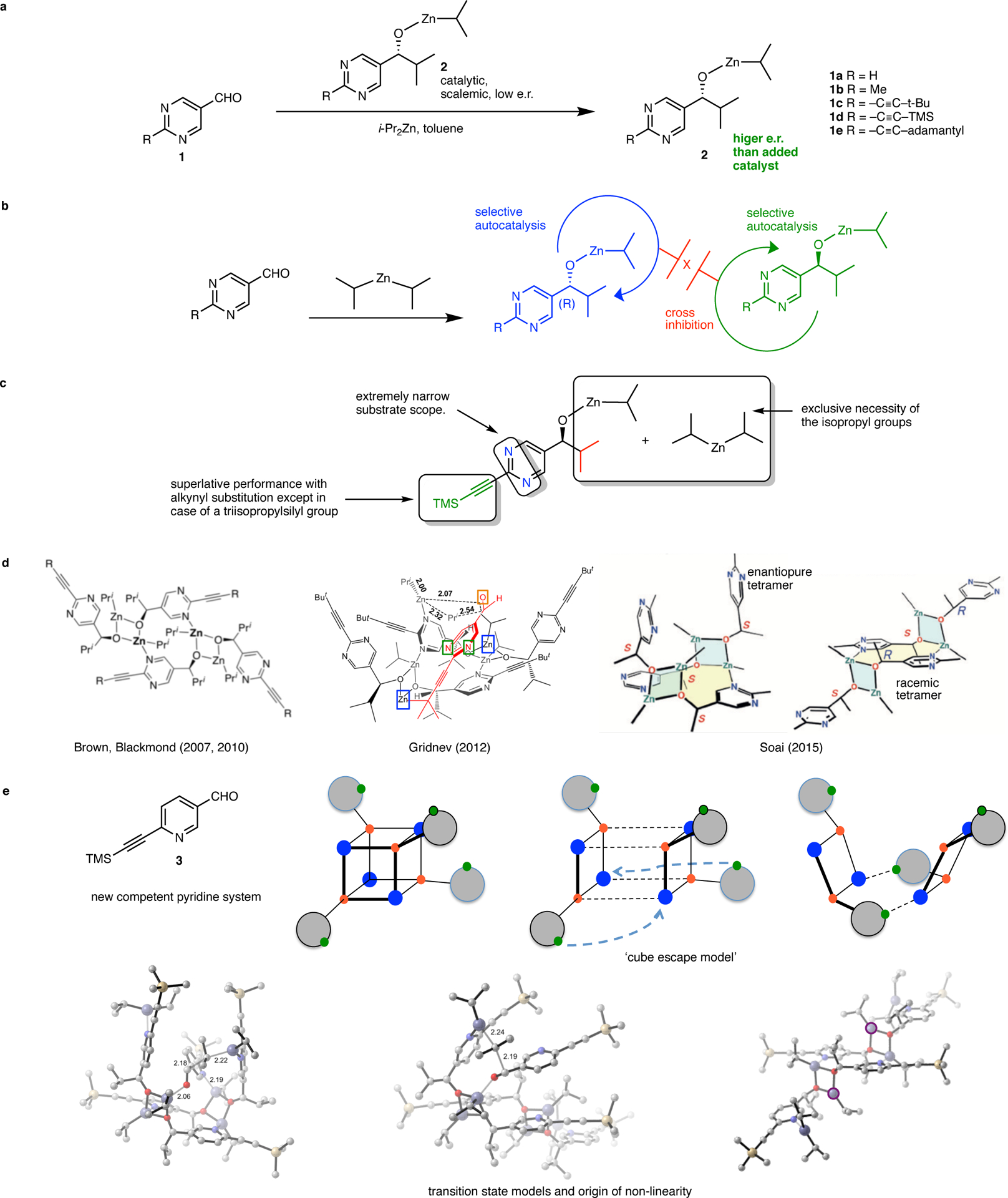
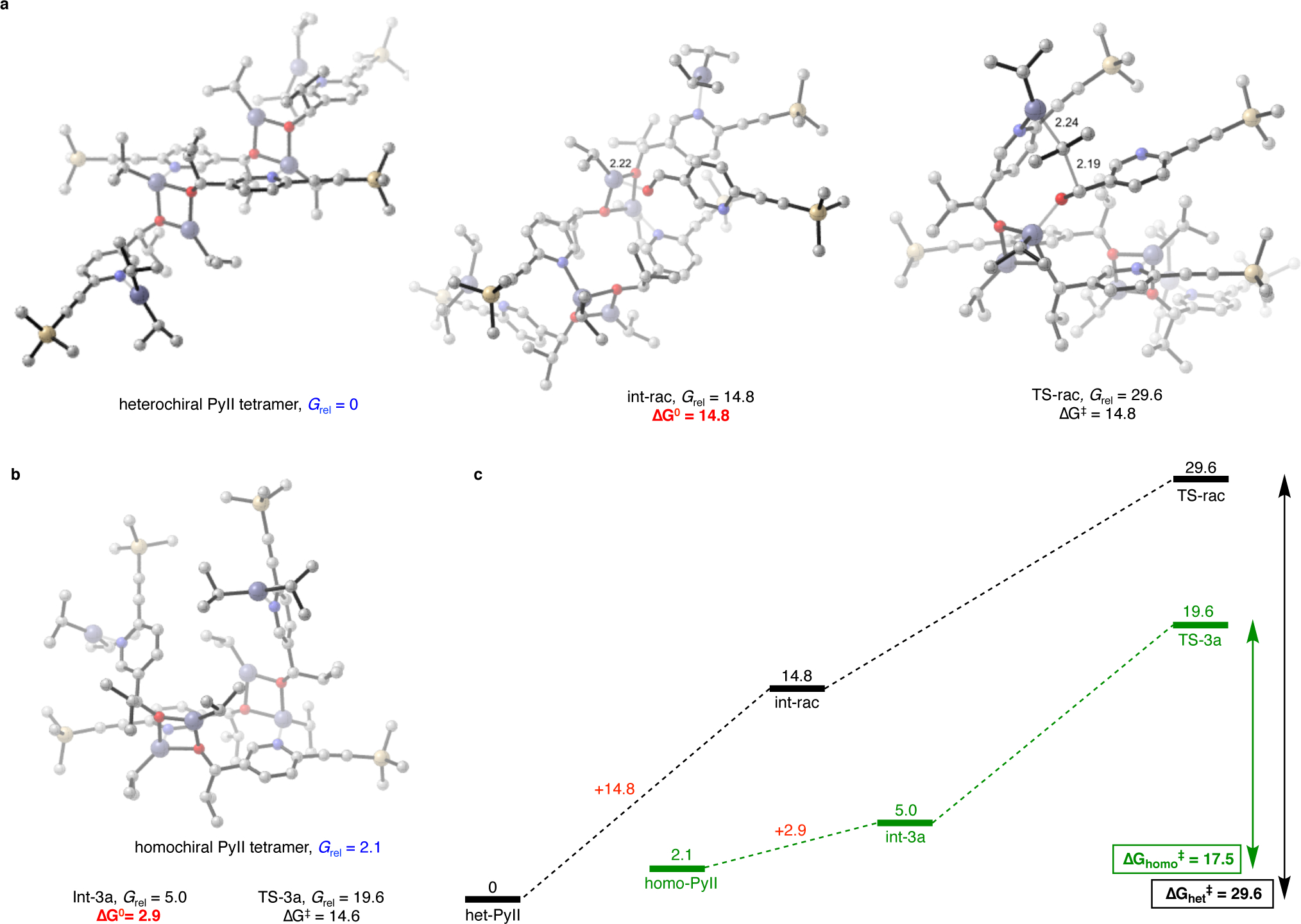
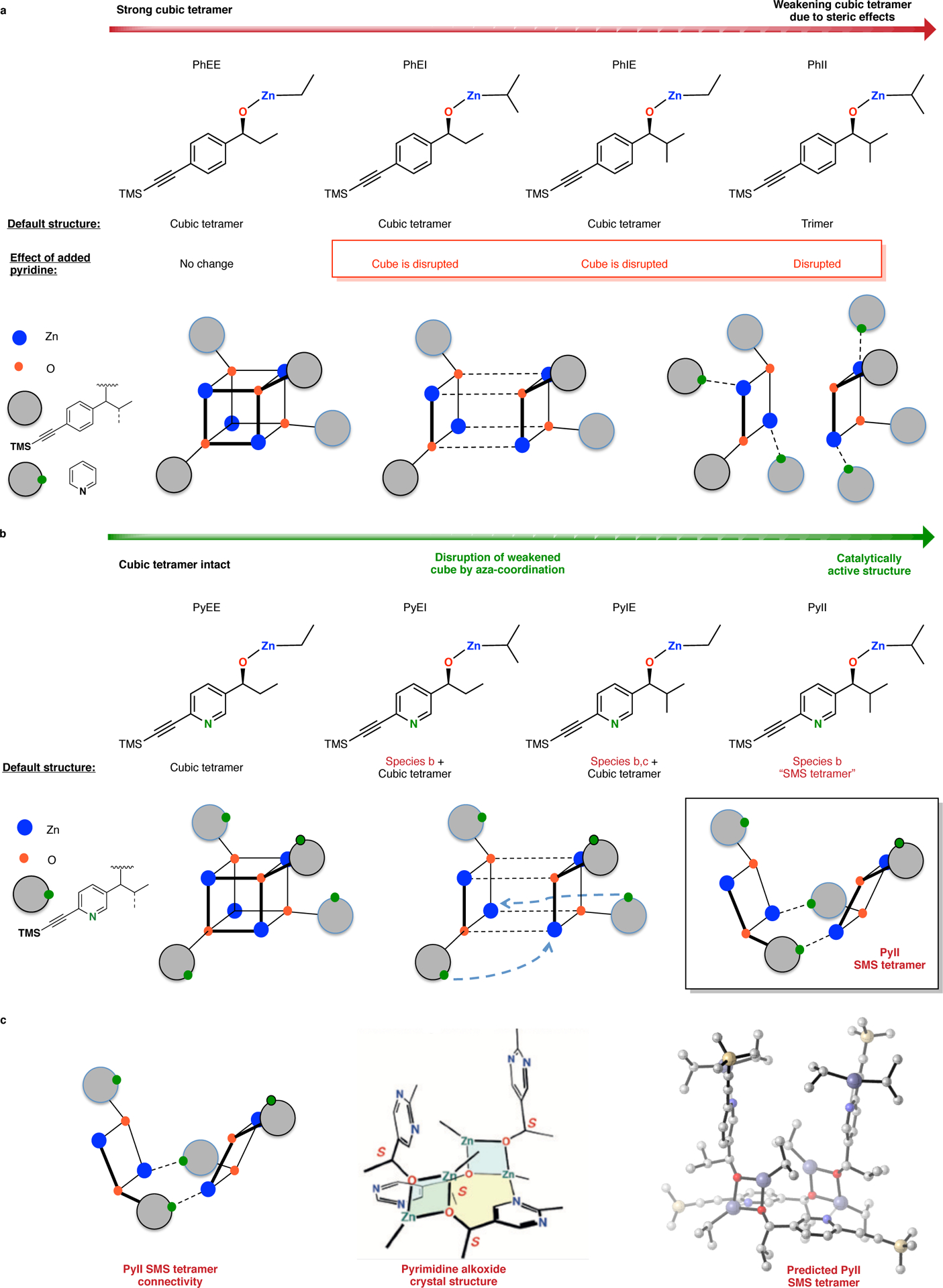
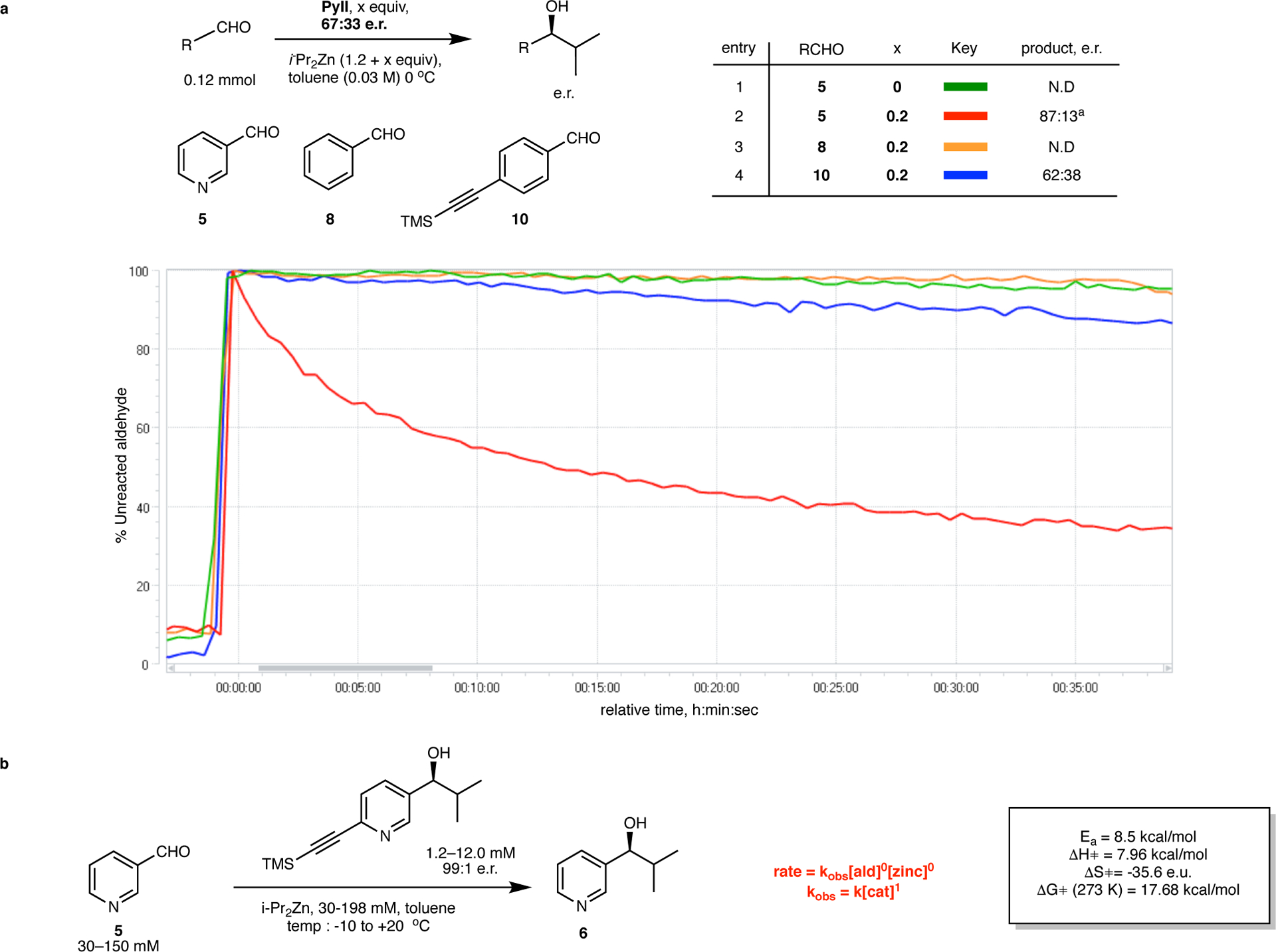
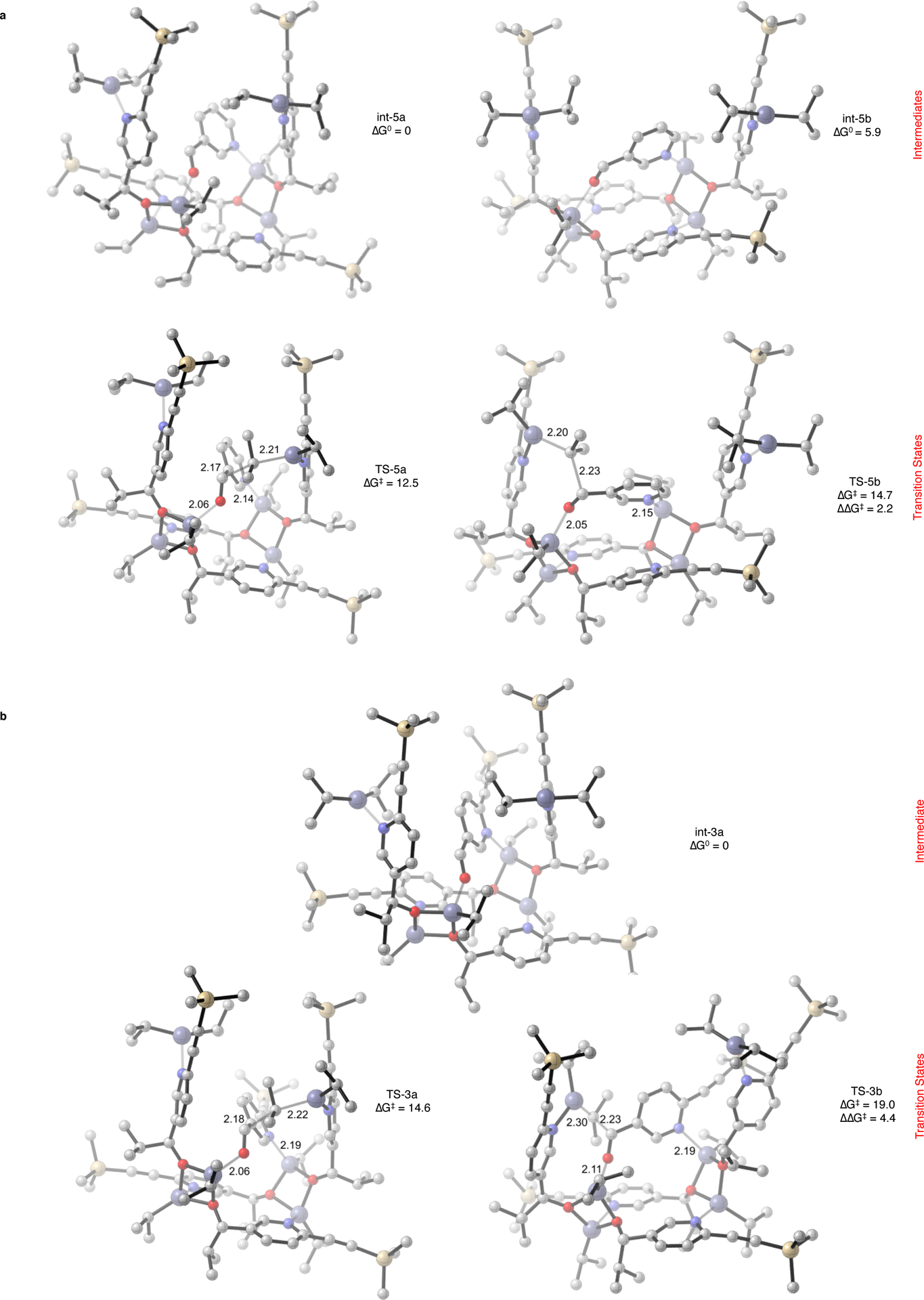
The Soai reaction has profoundly impacted chemists' perspective of autocatalysis, chiral symmetry breaking, absolute asymmetric synthesis and its role in the origin of biological homochirality. Here we describe the unprecedented observation of asymmetry-amplifying autocatalysis in the alkylation of 5-(trimethylsilylethynyl)pyridine-3-carbaldehyde using diisopropylzinc. Kinetic studies with a surrogate substrate and spectroscopic analysis of a series of zinc alkoxides that incorporate specific structural mutations reveal a 'pyridine-assisted cube escape'. The new tetrameric cluster functions as a catalyst that activates the substrate through a two-point binding mode and poises a coordinated diisopropylzinc moiety for alkyl group transfer. Transition-state models leading to both the homochiral and heterochiral products were validated by density functional theory calculations. Moreover, experimental and computational analysis of the heterochiral complex provides a definitive explanation for the nonlinear behaviour of this system. Our deconstruction of the Soai system reveals the structural logic for autocatalyst evolution, function and substrate compatibility-a central mechanistic aspect of this iconic transformation.
Soai 反应深刻地影响了化学家们对自动催化、手性对称破缺、绝对不对称合成以及其在手性生物起源中的作用的看法。在这里,我们描述了在使用二异丙基锌对 5-(三甲基硅基乙炔基)吡啶-3-甲醛进行烷基化反应中,前所未有的不对称放大自动催化的观察结果。通过替代底物的动力学研究和一系列锌烷氧化物的光谱分析,揭示了一种“吡啶辅助的立方逃逸”。新的四聚体簇作为一种催化剂,通过两点结合模式激活底物,并使配位的二异丙基锌部分为烷基转移做好准备。导致同手性和异手性产物的过渡态模型通过密度泛函理论计算得到了验证。此外,对异手性配合物的实验和计算分析为该体系的非线性行为提供了明确的解释。我们对 Soai 体系的解构揭示了自动催化剂进化、功能和底物兼容性的结构逻辑,这是这一标志性转化的一个核心机制方面。