Section of Pharmacogenetics, Department of Physiology and Pharmacology, Karolinska Institutet, 17177, Stockholm, Sweden.
Hum Genet. 2020 May;139(5):623-646. doi: 10.1007/s00439-020-02150-6. Epub 2020 Mar 23.
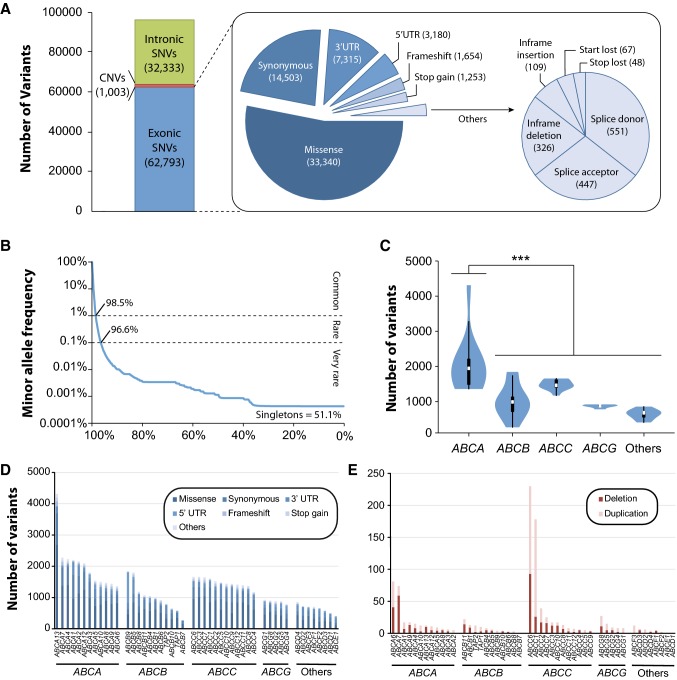
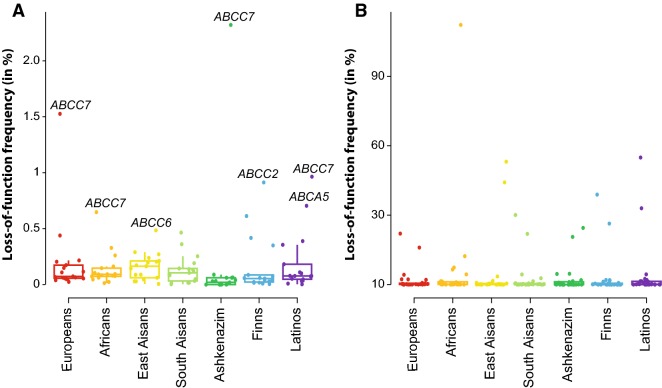
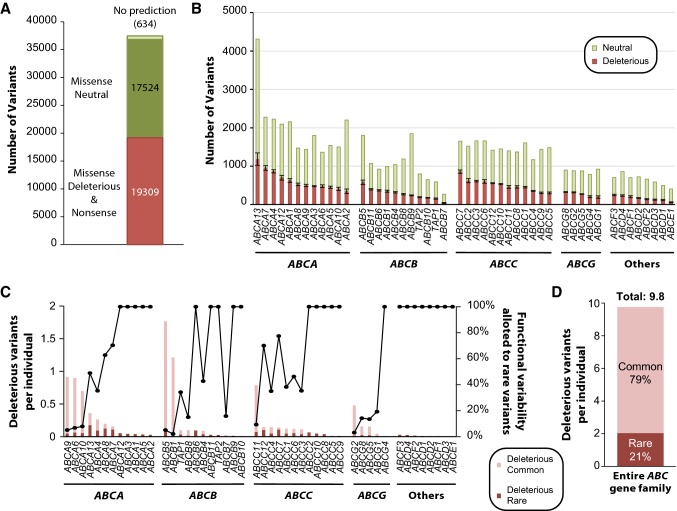
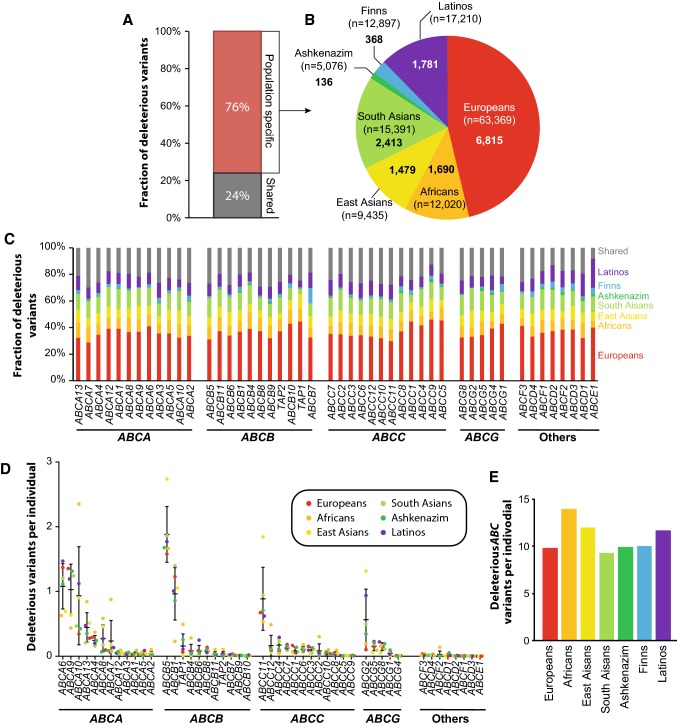
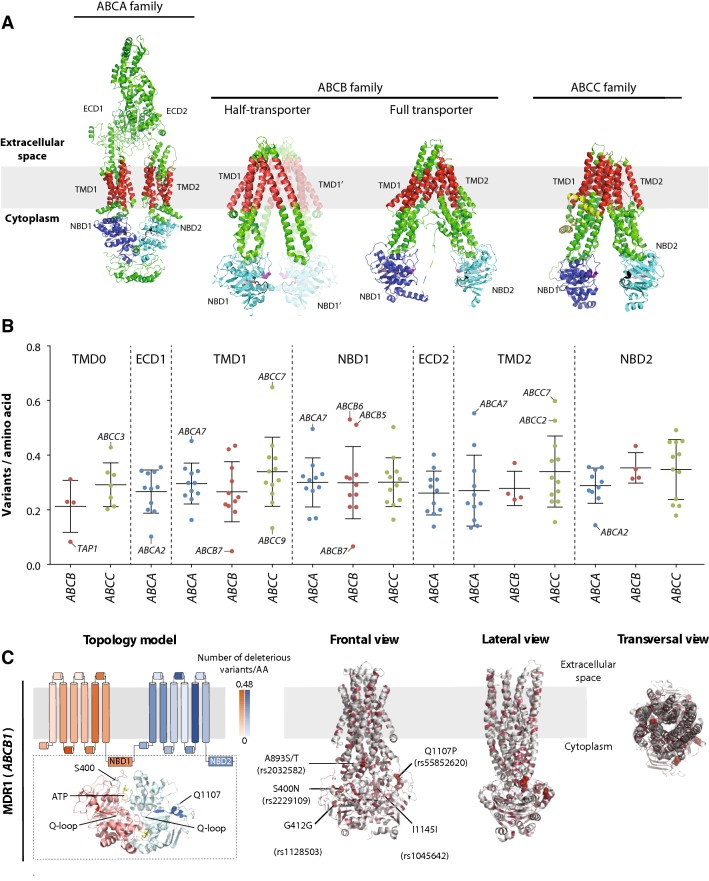
ATP-binding cassette (ABC) transporters constitute a superfamily of 48 structurally similar membrane transporters that mediate the ATP-dependent cellular export of a plethora of endogenous and xenobiotic substances. Importantly, genetic variants in ABC genes that affect gene function have clinically important effects on drug disposition and can be predictors of the risk of adverse drug reactions and efficacy of chemotherapeutics, calcium channel blockers, and protease inhibitors. Furthermore, loss-of-function of ABC transporters is associated with a variety of congenital disorders. Despite their clinical importance, information about the frequencies and global distribution of functionally relevant ABC variants is limited and little is known about the overall genetic complexity of this important gene family. Here, we systematically mapped the genetic landscape of the entire human ABC superfamily using Next-Generation Sequencing data from 138,632 individuals across seven major populations. Overall, we identified 62,793 exonic variants, 98.5% of which were rare. By integrating five computational prediction algorithms with structural mapping approaches using experimentally determined crystal structures, we found that the functional ABC variability is extensive and highly population-specific. Every individual harbored between 9.3 and 13.9 deleterious ABC variants, 76% of which were found only in a single population. Carrier rates of pathogenic variants in ABC transporter genes associated with autosomal recessive congenital diseases, such as cystic fibrosis or pseudoxanthoma elasticum, closely mirrored the corresponding population-specific disease prevalence, thus providing a novel resource for rare disease epidemiology. Combined, we provide the most comprehensive, systematic, and consolidated overview of ethnogeographic ABC transporter variability with important implications for personalized medicine, clinical genetics, and precision public health.
三磷酸腺苷结合盒(ABC)转运蛋白构成了一个由 48 种结构相似的膜转运蛋白组成的超家族,这些转运蛋白介导了大量内源性和外源性物质的 ATP 依赖性细胞外排。重要的是,影响基因功能的 ABC 基因中的遗传变异对药物处置具有重要的临床影响,并可预测药物不良反应的风险和化疗药物、钙通道阻滞剂和蛋白酶抑制剂的疗效。此外,ABC 转运蛋白的功能丧失与多种先天性疾病有关。尽管它们具有重要的临床意义,但关于功能相关 ABC 变体的频率和全球分布的信息有限,并且对这个重要基因家族的整体遗传复杂性知之甚少。在这里,我们使用来自七个主要人群的 138632 个人的下一代测序数据,系统地绘制了整个人类 ABC 超家族的遗传图谱。总的来说,我们鉴定了 62793 个外显子变异,其中 98.5%是罕见的。通过将五个计算预测算法与使用实验确定的晶体结构进行的结构映射方法相结合,我们发现功能 ABC 变异性广泛且高度具有种群特异性。每个个体携带 9.3 到 13.9 种有害的 ABC 变体,其中 76%只存在于一个群体中。与常染色体隐性先天性疾病(如囊性纤维化或弹性假黄瘤)相关的 ABC 转运蛋白基因的致病性变体的携带者率与相应的人群特异性疾病患病率密切相关,因此为罕见疾病流行病学提供了一种新的资源。总的来说,我们提供了最全面、系统和综合的关于 ABC 转运蛋白种族地理变异性的概述,对个性化医学、临床遗传学和精准公共卫生具有重要意义。